

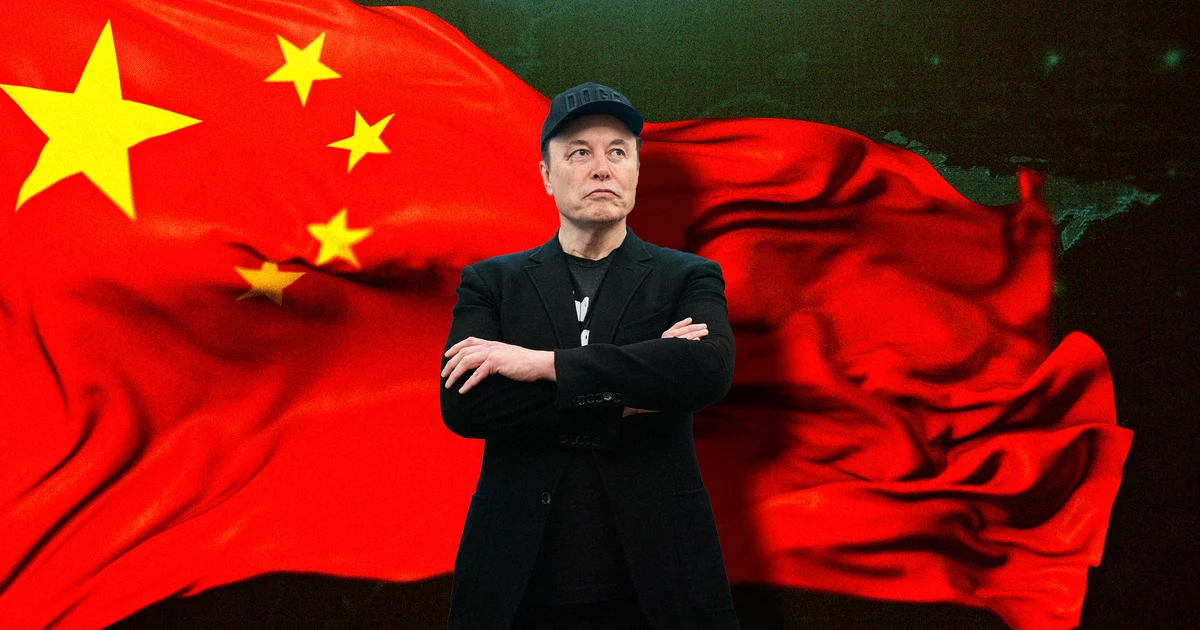

A Fault Line Exposed: Chinese Capital and the American Space Frontier
The revelation that Chinese-linked capital has quietly found its way onto SpaceX’s cap table, routed through the labyrinthine corridors of offshore investment vehicles, lands with the force of a seismic tremor in the American defense and technology landscape. This is not merely a matter of dollars and cents—indeed, the financial stake itself appears modest—but rather a question of signal value, of what it means for a critical U.S. defense contractor to be even partially beholden, however indirectly, to interests aligned with a peer competitor. In the era of strategic competition, where the boundaries between private innovation and national security are increasingly porous, the SpaceX case crystallizes the tensions at the heart of America’s technological future.
The Strategic Stakes: Space as Weaponized Infrastructure
Space is no longer a serene domain of scientific exploration; it is now weaponized infrastructure. The cadence of micro-launches, the omnipresence of Starlink’s communications mesh, and the hypersonic testbeds that underpin next-generation deterrence—all are inextricably linked to the fortunes of companies like SpaceX. For Beijing, even a minority equity position can be leveraged for more than mere financial return. Board-level information rights, informal deal flow, and the ever-present specter of cyber-adjacent reconnaissance transform what might once have been a passive investment into a potential vector for strategic insight.
The U.S. defense establishment is evolving from a doctrine of access-assumption to one of access-denial. No longer is it tolerable to leave ambiguity around data flows or control rights inside the walls of Tier-1 contractors. Congressional scrutiny has sharpened: Democrats are demanding a full Pentagon and NASA accounting of Chinese ownership exposure in the sector. The Committee on Foreign Investment in the United States (CFIUS) is poised to expand its reach, and recertification of existing defense contracts may soon become the norm. The message is clear: the provenance of capital is now as consequential as the technology itself.
Dual-Use Dilemmas and the Supply Chain’s Shadow
The dual-use nature of space technology—where civilian and military applications are often indistinguishable—compounds the risk. Starlink’s phased-array antennae and mesh network, celebrated for their civilian utility, have already demonstrated battlefield significance in Ukraine. SpaceX’s vaunted vertical integration shields many processes, yet the reality of globalized supply chains means that avionics and cryogenic components still pass through Asia-based vendors. Chinese equity, however indirect, could complicate the certifications required for trusted suppliers, raising the specter of data exfiltration and supply-chain compromise.
The gravitational pull of data is another concern. Payload telemetry and launch analytics reside on SpaceX’s cloud infrastructure, interfacing with Starlink ground stations scattered across the globe. The aperture for data leakage widens with every new equity-driven influence, no matter how attenuated. In this context, the scrutiny of capital structure becomes inseparable from the imperative of technological security.
Capital, Compliance, and the Coming Era of Financial De-Risking
The capital markets that fueled the American space renaissance are themselves a product of globalization. Space hardware demands billions in upfront investment, and non-traditional investors—sovereign wealth funds, crossover venture capital—have filled the gaps left by risk-averse defense primes. During the 2010s, Chinese limited partners quietly seeded many of these vehicles, their presence often masked by layers of offshore entities. Today, as U.S. interest rates rise and liquidity tightens, the temptation to retain legacy offshore structures grows, even as the political cost escalates.
The decoupling trend is unmistakable. Cross-border venture transactions between the U.S. and China have plummeted by nearly 80% since 2018. The SpaceX episode may well accelerate the “financial de-risking” phase of technological decoupling, compressing private-market valuations and forcing earlier exits or IPOs. Regulatory response is gathering pace: Congress is considering mandatory CFIUS filings for any foreign LP exposure in companies with top-secret contracts, and FinCEN’s new beneficial-ownership rules will soon shine a harsh light on Cayman feeder vehicles.
Navigating the New Normal: Strategic Recommendations and Industry Fallout
The competitive landscape is already shifting. United Launch Alliance, Blue Origin, and a constellation of small-launch startups are positioning themselves as “clean-cap table” alternatives for defense customers. Yet, the Pentagon’s operational timelines favor incumbents; a wholesale reallocation of launches would delay critical intelligence, surveillance, and reconnaissance (ISR) replenishment by years—a risk policymakers are loath to accept.
For contractors, the imperative is clear: proactive cap-table hygiene, buybacks or conversion of suspect shares, and the creation of “national-security tranches” in future fundraising rounds. For government, risk-tier mapping of contractor equity and mandatory data-segmentation audits are fast becoming table stakes. Investors, meanwhile, should brace for a bifurcated market, where companies with unencumbered ownership command premium multiples, and those requiring remediation face punitive financing.
The SpaceX case is less about immediate control and more about the friction between the global flows of venture capital and a new era of strategic rivalry. As capital provenance becomes as critical as technological capability, the architecture of American innovation must adapt—balancing openness with vigilance, and ambition with security.

 By
By

 By
By
 By
By

 By
By
 By
By








