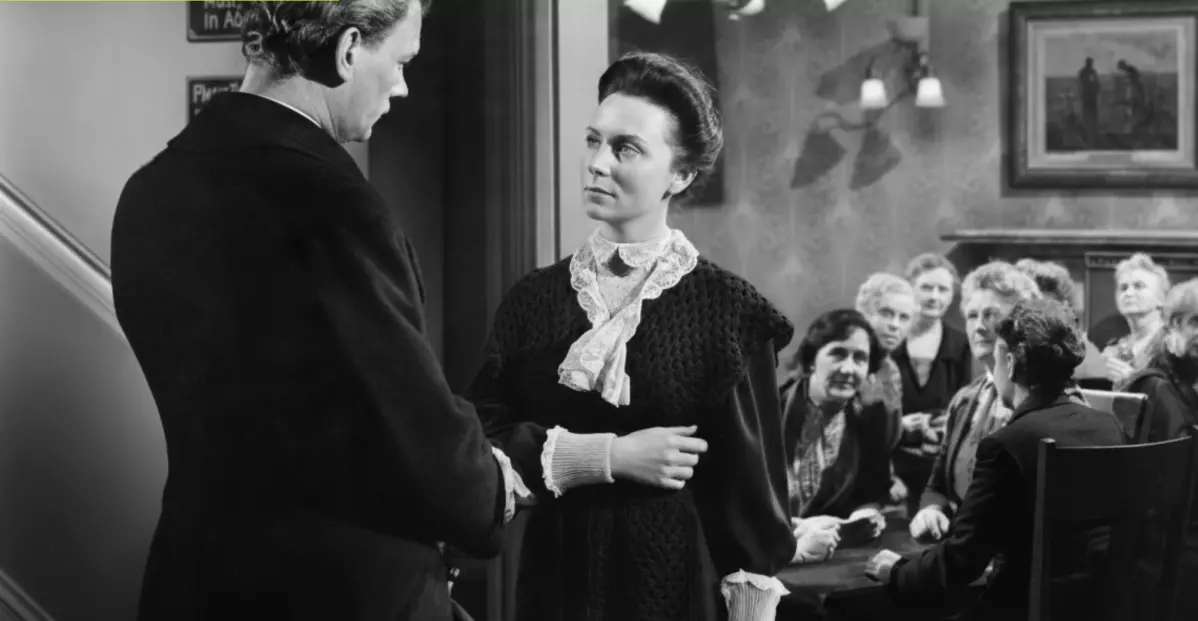

Reanimating Lost Masterpieces: AI’s Audacious Bid to Restore The Magnificent Ambersons
In a move equal parts bravura and provocation, Showrunner—a startup at the vanguard of AI-driven entertainment—has announced its intent to reconstruct Orson Welles’ The Magnificent Ambersons in its original, long-lost 131-minute form. The project, which seeks to digitally resurrect the 43 minutes of footage excised and destroyed by RKO, is both a technical experiment and a cultural gambit, blending proprietary generative models, archival stills, and live-action performances with AI-altered faces. The ambition is clear: to test whether artificial intelligence can not only imitate but also restore the grandeur of cinema’s vanished past.
The Alchemy of Generative AI and Cinematic Restoration
Showrunner’s technical approach is as radical as its aims. At the heart of the project lies FILM-1, a generative model engineered for long-form narrative content. Unlike conventional AI pipelines that often falter over the course of a feature film—succumbing to visual drift and character inconsistency—FILM-1 employs a “keyframe first” methodology. This workflow:
- Separates spatial context from temporal interpolation by anchoring scenes with production stills and interpolating motion using AI, thus preserving fidelity across extended sequences.
- Integrates live actors as motion plates, subsequently face-swapping them into the likenesses of 1940s performers. This hybrid pipeline, reminiscent of real-time rendering in the gaming world, signals a possible convergence of cinematic and interactive toolsets.
- Innovates around data scarcity, leveraging limited archival materials as spatial anchors—a potential template for restoring not just films but museum artifacts, lost television pilots, or early newsreels.
Yet, the experiment is not without its acknowledged limitations. As co-founder Edward Saatchi concedes, current generative models stumble when tasked with sustaining the narrative coherence required for a two-hour film. The frontier, then, is clear: integrating symbolic reasoning or reinforcement learning to ensure plot continuity—a challenge that will define the next phase of AI’s incursion into the creative arts.
IP, Economics, and the Shifting Sands of Ownership
The restoration of Ambersons is not merely a technical feat; it is a flashpoint in the ongoing debate over intellectual property and the economics of legacy content. Showrunner’s decision to proceed without explicit licensing from the current rights holder, echoing its earlier unauthorized South Park episodes, places the project squarely in the legal gray zone between cultural preservation and copyright infringement. This posture underscores several industry-wide dynamics:
- Long-tail asset monetization: Studios possess vast archives of truncated or shelved projects. AI-led restorations offer a pathway to monetize these dormant assets, creating “new-old” content at a fraction of the cost of traditional reshoots.
- Rights friction and legal risk: Recent case law suggests courts are increasingly attentive to the provenance of AI training sets. Any commercial success here could force a renegotiation of royalties and reshape the economics of dormant IP.
- Labor and valuation implications: The hybridization of AI and human performance complicates union negotiations and residuals, while a credible restoration pipeline could meaningfully increase the value of legacy libraries—an enticing prospect for conglomerates eyeing M&A opportunities.
Strategic Pathways: Opportunity and Risk for the Content Ecosystem
For the broader industry, the implications are profound and immediate. Content owners are now compelled to conduct “AI-restorability audits,” assessing which archival assets are ripe for resurrection. Fast followers could leverage restored classics as streaming tent-poles, differentiating themselves in an increasingly crowded SVOD landscape.
Tech startups and platforms, meanwhile, find in restoration a proving ground for generative pipelines before venturing into wholly original IP. Investors are advised to monitor boutique AI-VFX houses, where proprietary datasets and technical talent may become the new currency of acquisition.
Regulators and policy-makers face their own set of challenges. As the EU and U.S. consider sweeping AI and copyright reforms, high-profile projects like Ambersons offer tangible case studies for distinguishing transformative use from infringement. The outcome of these debates will ripple across the industry, setting precedents for both innovation and enforcement.
The New Nostalgia Economy and the Stakes of Synthetic Heritage
The timing of this AI-driven restoration wave is no accident. In an era of inflation and content fatigue, consumers are drawn to the familiar—nostalgia is a premium commodity. AI restorations supply this demand without the risk or capital outlay of greenlighting new productions. Meanwhile, the cost of generative inference continues to plummet, lowering barriers for indie studios and accelerating the democratization of cinematic restoration.
Yet, the path forward is far from settled. Whether studios embrace licensed restoration flywheels, litigation stalls progress, or synthetic re-franchising becomes the norm, one thing is clear: the tools and frameworks forged in these early experiments will shape the future of cultural memory and creative production.
Showrunner’s Ambersons initiative is less a tribute to a single film than a test of a sweeping thesis: that artificial intelligence can unlock stranded value in the world’s cinematic archives, rewriting both the economics and ethics of content creation. The outcome will depend not only on technological leaps, but on the industry’s ability to harmonize rights, labor, and legacy—a challenge as intricate and consequential as any Wellesian narrative.

 By
By
 By
By
 By
By

 By
By

 By
By
 By
By