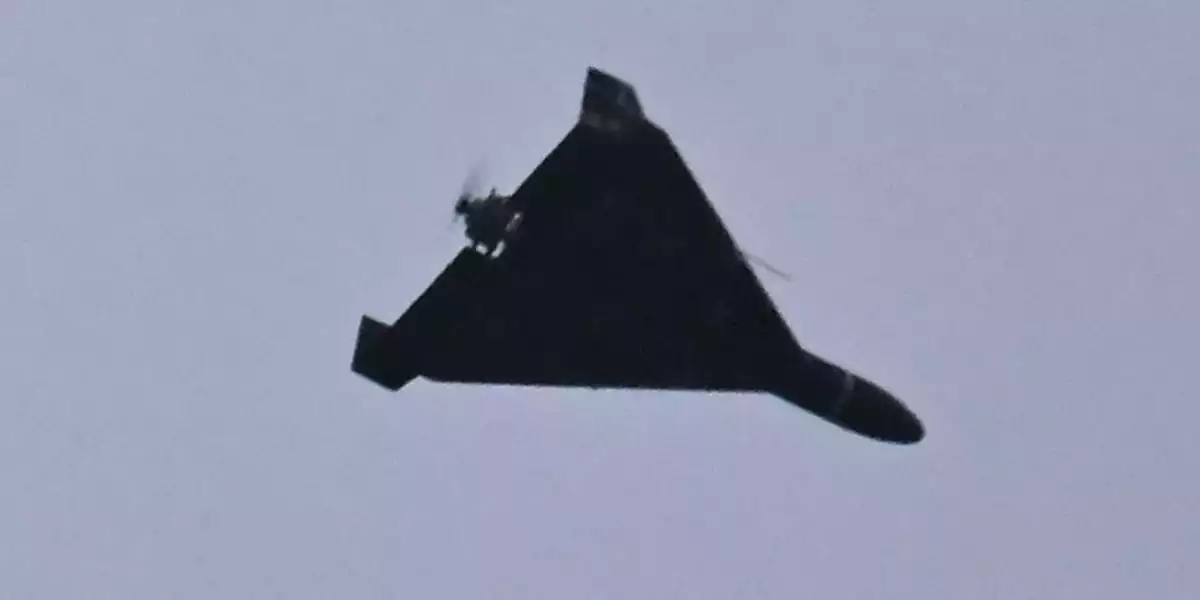

Shahed loitering munitions and the new economics of air defense
Iran’s Shahed-series loitering munitions have become a defining case study in how modern conflict is being reshaped by cost, scale, and iteration speed rather than exquisite platform performance. Their operational footprint—visible from the 2019 strikes on Saudi Aramco to sustained use against Ukrainian cities and energy infrastructure—has underscored a blunt reality for advanced militaries: the traditional air-defense model was optimized for scarce, high-value aircraft and missiles, not for mass, low-cost, attritable drones.
At the heart of the disruption is a widening offense–defense cost asymmetry. When an incoming drone is estimated at roughly US$50,000, but the defender’s most readily available interceptors can cost US$500,000 to US$1 million or more, the engagement calculus becomes strategically corrosive. Even when defenses “work,” they can still lose economically—particularly under conditions of repeated salvos designed to exhaust magazines, budgets, and political patience.
This is why the Shahed paradigm is less about any single airframe and more about a method: industrialized, repeatable, network-enabled strike at scale. It is a model that travels well—across theaters, across actors, and across levels of sophistication—because it leverages the same globalized supply chains and modular electronics that power the commercial technology economy.
—
From hardware advantage to “software-defined” lethality
A notable feature of the Shahed model is how effectively it exploits the modern battlefield’s shift toward software-defined capability. The drone’s value is not merely in its airframe or payload, but in the guidance stack, communications links, navigation resilience, and the ability to iterate quickly. Modular design and commercially derived components compress development cycles and lower barriers to replication—conditions that have enabled rapid adaptation and, in some cases, reverse-engineering by state and proxy actors.
This trend is forcing a parallel evolution in defense. Ukraine’s battlefield-driven innovation—particularly in multi-spectral sensing, AI-assisted target discrimination, and real-time data fusion—has highlighted what legacy architectures often lack: the ability to scale detection and engagement at a sustainable unit cost. The operational lesson is increasingly clear: countering mass drones is not a single-system problem; it is a layered, networked, and continuously updated enterprise.
Key technological implications now shaping NATO and partner roadmaps include:
- Layered counter-UAS (C-UAS) architectures that combine sensors, electronic warfare, and kinetic effectors rather than relying on premium interceptors alone.
- Distributed command-and-control that can ingest battlefield feedback quickly, prioritize targets, and reduce decision latency under saturation.
- Algorithmic adaptation—where software updates, classification models, and sensor fusion improvements can deliver meaningful performance gains without waiting for multi-year platform refresh cycles.
- Cyber-kinetic convergence, as navigation spoofing, link disruption, and exploitation of control pathways become integral to defeating drones whose “mission” is increasingly encoded in software.
The strategic subtext is that air defense is becoming less like a static shield and more like a living system—one that must learn, patch, and reconfigure at operational tempo.
—
Procurement shock: why legacy business models are under pressure
The Shahed-driven shift is not only doctrinal; it is financial and industrial. For NATO members, repeatedly expending high-cost missiles against low-cost drones is becoming politically difficult to justify and economically hard to sustain, especially in an environment shaped by inflation, constrained inventories, and competing domestic priorities.
This is catalyzing a procurement recalibration toward systems that can be bought and fielded in volume—often with shorter development cycles and more commercial technology content than traditional air-defense programs. The result is a market opening for non-traditional suppliers: AI firms, edge-compute specialists, sensor startups, and communications companies that can deliver components of a C-UAS stack faster than classic prime-contractor timelines.
At the same time, the Shahed model exposes uncomfortable supply-chain truths. Reliance on dual-use commercial components creates vulnerabilities to embargoes, export controls, and gray-market substitution. NATO and partner nations are therefore being pushed toward:
- Industrial base resilience: diversified sourcing, onshoring of critical subsystems, and greater attention to microelectronics dependencies.
- Open architectures: designs that allow rapid swapping of sensors and effectors as threats evolve.
- Budget structures that reward iteration: funding mechanisms that support continuous upgrades rather than infrequent, monolithic modernization cycles.
For business and technology leaders, the signal is unmistakable: defense demand is shifting toward scalable, upgradeable, software-centric systems, and the winners will be those who can meet military requirements without importing the cost structure of legacy air defense.
—
NATO, Ukraine, and the geopolitics of drone-era learning
Perhaps the most consequential development is institutional rather than technical: NATO’s accelerating collaboration with Ukraine through the Joint Analysis Training and Education Centre (JATEC) reflects a recognition that the alliance’s most valuable counter-drone insights are emerging from live operational experimentation. Ukraine is increasingly positioned not only as a recipient of aid, but as a co-designer of tactics, technologies, and training concepts—a subtle but meaningful shift in alliance dynamics.
This learning is also traveling beyond Europe. Middle Eastern states confronting Iranian drone threats are watching Ukraine’s counter-UAS adaptations closely, creating opportunities for cross-regional security partnerships and shared defensive playbooks. Meanwhile, China’s strategic community is widely assessed to be observing the Shahed paradigm for its relevance to the Indo-Pacific, where swarm saturation could challenge island-chain defenses and complicate deterrence planning in the South China Sea and Taiwan Strait.
What emerges is a broader pattern: the competitive edge is moving toward actors and alliances that can institutionalize real-time battle labs, integrate cyber and electronic warfare with kinetic defense, and procure systems where the cost per engagement stays below the cost of the incoming threat. In the drone era, deterrence is no longer anchored solely in the sophistication of platforms—it is increasingly defined by the capacity to adapt faster than the attacker can iterate, and to do so at a price point that can be sustained for years rather than weeks.

 By
By


 By
By
 By
By
 By
By
 By
By