
A sovereign line in the sand for AI infrastructure siting
The Seminole Nation of Oklahoma has taken a decisive and historically significant step in the fast-expanding debate over digital infrastructure: a unanimous moratorium prohibiting the construction of hyperscale data centers and generative AI facilities on its sovereign lands. Sparked by a proposal from a technology startup and advanced through Tribal Council leadership—including Mekusukey Band representative Glen Chebon Kernell—the action reflects a clear message: the next wave of AI-driven industrial development will not be treated as inevitable, especially when it collides with land stewardship, environmental justice, and community consent.
Supported by the Indigenous climate organization Honor the Earth, the moratorium positions the Seminole Nation as the first U.S. Indigenous polity to formally prohibit large-scale data infrastructure. That “first” matters. Data centers are often framed as weightless engines of the digital economy—clean, quiet, and modern. The Seminole decision reframes them as physical, resource-intensive industrial sites whose impacts are felt locally, even when their benefits accrue elsewhere.
At a time when generative AI is driving a global race for compute capacity, this move underscores a growing reality: sovereignty and social license are becoming as central to infrastructure strategy as fiber routes, land prices, and power contracts.
When “cloud” becomes concrete: power, water, and the new scarcity politics
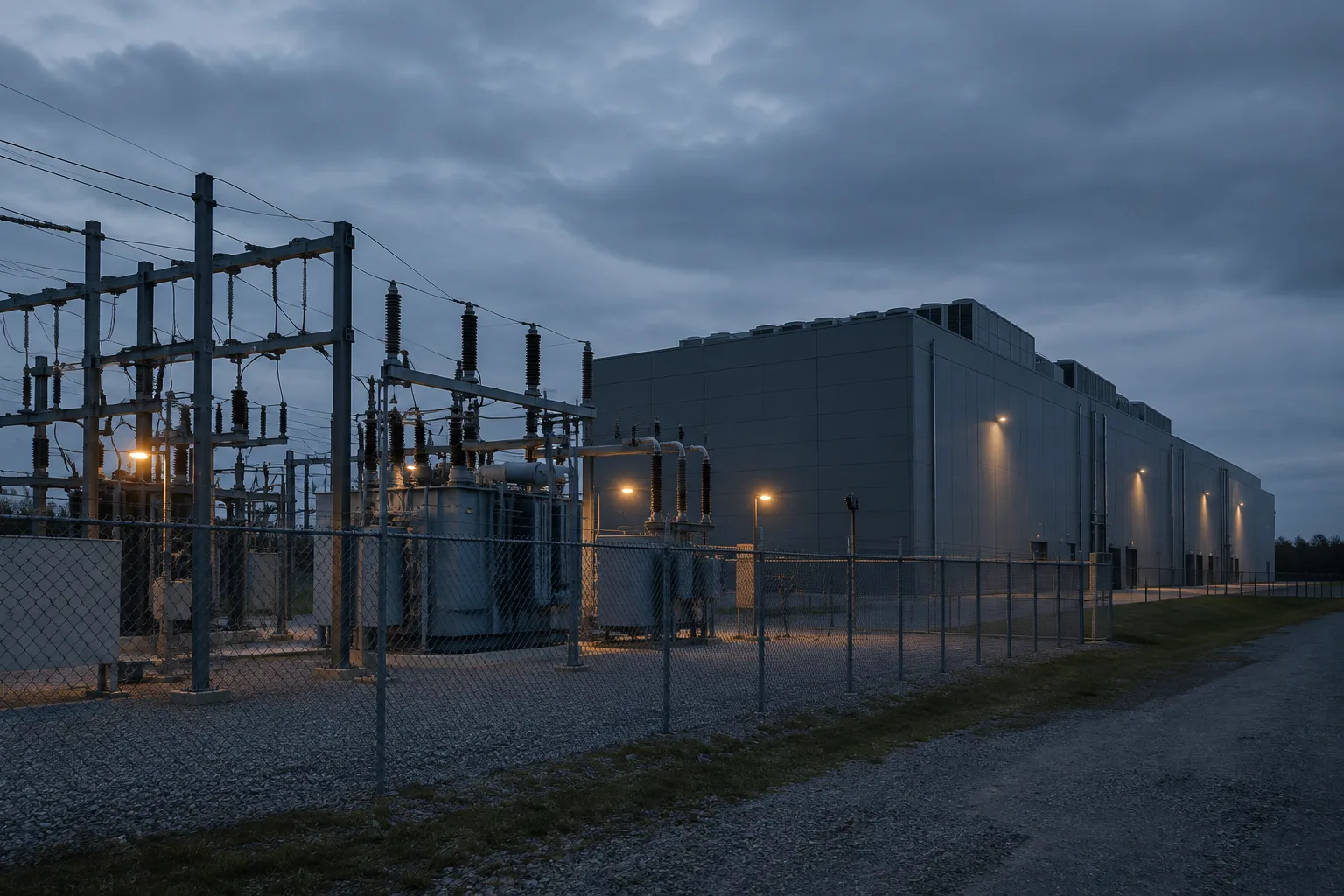
Hyperscale data centers and AI training clusters are not merely large buildings with servers; they are high-density energy and cooling systems that can draw hundreds of megawatts and require substantial water—directly or indirectly—for thermal management. The Seminole Nation’s moratorium lands amid intensifying concerns that AI’s compute boom is colliding with real-world constraints:
- Grid stress and volatility: Large, concentrated loads can strain regional grids, accelerate the need for new substations and transmission, and complicate reliability planning—especially where congestion already exists.
- Water use and local resource competition: Cooling demands can exacerbate scarcity, raise costs, and deepen tensions in communities already navigating drought risk or limited infrastructure.
- Land impact and cumulative externalities: Beyond the footprint of the facility, projects often bring road upgrades, construction disruption, and long-term industrialization of rural landscapes.
The Seminole Nation’s framing—sovereignty exercised in service of long-term land stewardship—also challenges a common assumption in the AI economy: that compute can always expand if capital is available. Increasingly, the limiting factors are not just chips and financing, but permitting, community acceptance, and resource governance.
This is where the decision becomes a bellwether. As more jurisdictions scrutinize carbon emissions, water withdrawals, and land-use impacts, the data-center sector faces a shift from a growth narrative to a constraint narrative—one in which the right to build must be earned through credible safeguards and shared benefits.
Economic development promises meet a harder accounting
Data-center developers frequently pitch communities on a familiar package: construction jobs, a handful of permanent roles, and the prestige of being part of the digital future. Yet skepticism is rising—reflected sharply in the Seminole Nation’s action—about whether the local return matches the local burden.
Key economic tensions are coming into focus:
- Job creation vs. job reality: Hyperscale facilities can generate significant short-term construction employment, but often deliver limited long-term staffing relative to their land and resource footprint.
- Incentives and fiscal leakage: Tax abatements, discounted power arrangements, and infrastructure concessions can dilute public benefit, while profits and strategic control remain external.
- Stranded-asset risk for utilities and landholders: If projects are delayed or blocked, investments in substations, transmission upgrades, and land acquisition can become misaligned capital—a risk that lenders and insurers are increasingly attentive to.
The moratorium also invites a broader reappraisal of what “digital economic development” should mean for Indigenous and rural communities. Rather than hosting extractive infrastructure, communities may pursue alternative value chains that retain more control and upside, including:
- Microgrids and resilient energy projects designed around community needs rather than hyperscale demand
- Sustainable hosting models emphasizing efficiency, closed-loop cooling, and transparent resource accounting
- Community-led data cooperatives and localized compute services that align digital infrastructure with local governance
In this light, the Seminole Nation’s decision is not simply anti-development; it is a demand for development on different terms.
The strategic signal to Big Tech: ESG, consent, and the future of compute architecture
For hyperscalers and AI-first companies, the Seminole moratorium is a strategic signal that site selection can no longer be treated as a purely technical optimization problem. It elevates tribal governance—and, by extension, community consent—as a decisive variable in infrastructure planning.
Three implications stand out for technology strategy and corporate risk:
- Sovereignty as stakeholder power: Tribal nations are not just “local communities” in the conventional sense; they are sovereign governments with distinct legal authority and cultural stewardship obligations. That changes negotiation dynamics and raises the bar for partnership.
- Reputation and ESG alignment: Companies expanding AI capacity face reputational exposure if they are perceived to override environmental or social norms. The gap between AI growth narratives and environmental-justice commitments is becoming harder to paper over.
- A push toward distributed compute models: Restrictions on hyperscale buildouts may accelerate investment in modular and distributed architectures—micro-data centers, on-premise AI appliances, and low-power edge clusters—where efficiency and local control are competitive advantages rather than constraints.
A less obvious but increasingly powerful lens is emerging: data centers as resource extraction. Not extraction of minerals, but of electricity, water, land, and social capital—often under asymmetric bargaining conditions. Once framed this way, the policy toolkit expands: community benefit agreements, co-ownership structures, revenue sharing, enforceable environmental safeguards, and transparent lifecycle impact assessments become not optional niceties, but prerequisites for legitimacy.
The Seminole Nation of Oklahoma has effectively asserted that the AI economy’s physical footprint must answer to the places it occupies. For an industry racing to scale, that is not a footnote—it is a new boundary condition, and a reminder that the future of compute will be negotiated not only in boardrooms and labs, but on the ground where sovereignty, sustainability, and trust are non-negotiable.

 By
By
 By
By
 By
By

 By
By
 By
By

 By
By