
Rocket Lab used its third-quarter report to show that customers are already buying meaningful amounts of Neutron launch capacity before the rocket has ever flown. The company reported record revenue of $267.8 million for the quarter ended September 30, a record backlog of about $3.57 billion, 52% sequential backlog growth, and positive GAAP operating cash flow of $7.2 million after signing roughly $1 billion of new launch contracts. Why that matters is simple: more than $515 million of those bookings were for Neutron, turning the coming medium-lift rocket from a development program into a live commercial test.
The real question is no longer whether Rocket Lab can sell Neutron on paper. Its third quarter strongly suggests it can. The harder question is whether a swelling backlog makes Neutron a durable launch platform, or mainly shifts the risk into the next stage: qualifying a new rocket, fixing manufacturing issues, building flight hardware at a repeatable rate, and then launching on time often enough to serve 16 committed missions.
The bookings show real demand, not just curiosity
Rocket Lab said it signed about $1 billion of new launch contracts in the quarter across Electron, HASTE, and Neutron, taking total launch backlog to 117 missions. A separate company announcement said more than $515 million of that came from eight Neutron missions across five constellation operators. Neutron backlog now totals 16 missions before the vehicle’s debut, and Rocket Lab said several of those contracts carry a base launch price of $70 million.
That matters because it suggests customers are not treating Neutron as a speculative future option alone. Constellation operators are reserving medium-lift capacity now, even without flight heritage, because launch slots are strategically important and satellite-network schedules can slip if capacity is unavailable. For operators building large constellations, waiting until after a new vehicle’s first successful flight can mean joining a longer queue or losing bargaining power.
Rocket Lab also has something many preflight launch programs do not: an operating business around the rocket. The company already runs Electron small-lift launch services, HASTE hypersonic test missions, and a space-systems business that sells spacecraft, components, software, and mission services. It says its products have supported more than 1,700 missions in orbit, and more than 55 spacecraft are in development or build. In the third quarter alone, 12 Rocket Lab-built spacecraft launched and are operating, including eight satellite platforms for Globalstar’s direct-to-device constellation, twin Mars-science spacecraft for NASA, a U.S. Space Force VICTUS HAZE mission spacecraft, and a Viasat spacecraft for NASA communications services.
That integrated profile helps explain why Neutron is attracting bookings before first flight. Buyers are not dealing with a one-product startup. They are buying from a company that can pitch launch, spacecraft, components, and mission execution together. For some customers, especially constellation operators, that can make reserved launch capacity more valuable than a standalone rocket seat.
A bigger backlog does not remove the hardest gate
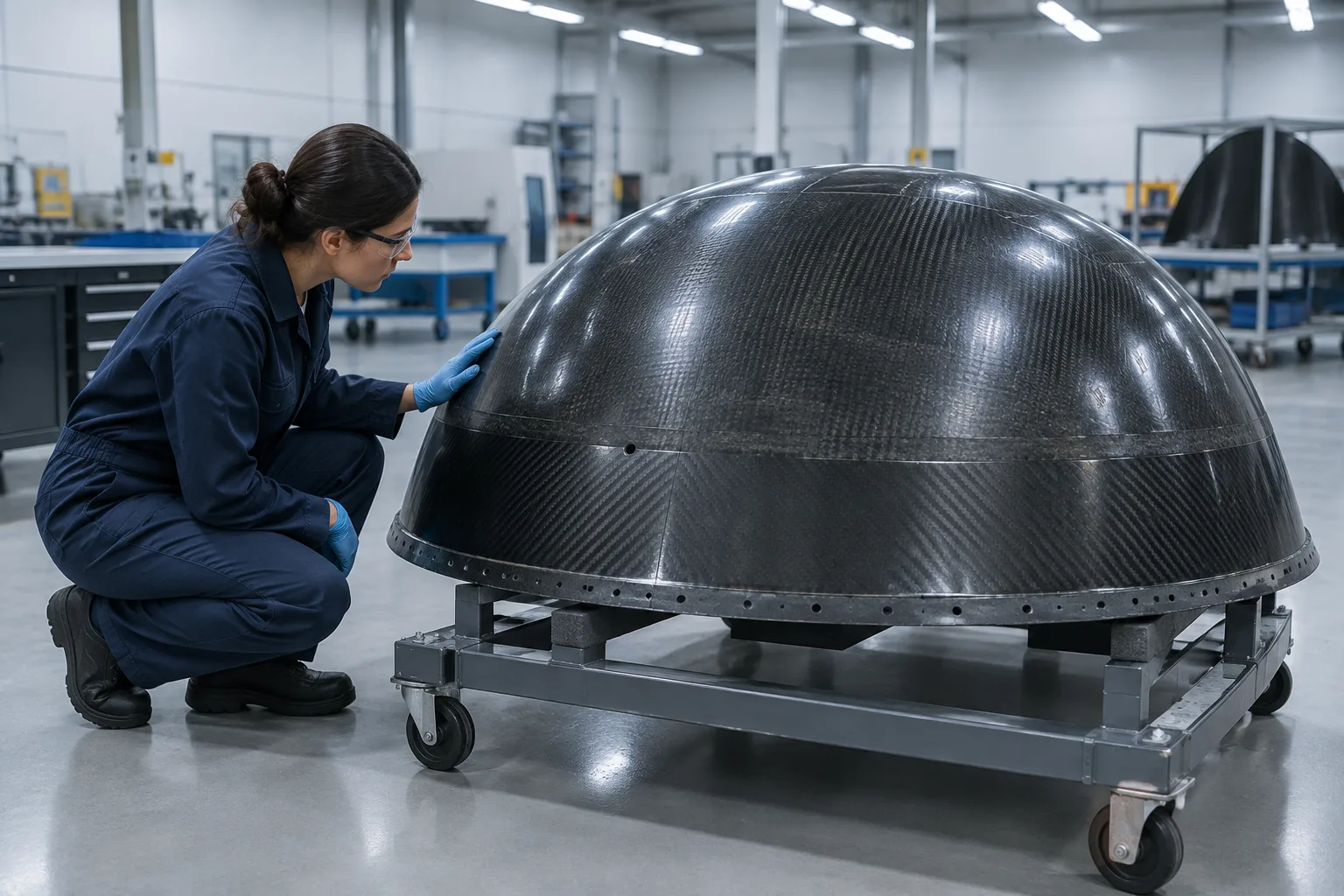
What the backlog does not do is prove that Neutron is ready. In its Form 10-Q, Rocket Lab said it found voids in portions of a composite propellant-tank dome during October manufacturing, investigated the issue, refined the process, and is making a replacement forward dome before completing additional hydrostatic and cryogenic testing. The company now targets Neutron’s inaugural launch for no earlier than 2027.
That is the key distinction between booked demand and validated capacity. The market has shown it wants another medium-lift option. Rocket Lab still has to complete the physical work that turns that interest into a service: finish first-flight hardware, complete qualification testing, integrate the vehicle, bring Launch Complex 3 fully into the flow, launch successfully, and then repeat the process at a cadence that can serve 16 sold missions.
The public disclosures also leave open several questions that matter to customers and investors. Rocket Lab has not identified all five constellation operators, disclosed individual contract values, described payment milestones, or shown how much of the $515 million is firm and refundable. It has not detailed the margin profile of Neutron missions, the level of customer deposits, or the capital required to build and deliver 16 flights. A large backlog can signal confidence while still containing conditions, timing flexibility, or remedies that only become visible when schedules move.
That gap helps explain why Barron’s reported the stock fell after the results despite stronger financial numbers and backlog growth. Investors appear to be separating two facts that can both be true at once: commercial demand for Neutron looks stronger than many development-stage rockets achieve, and the most difficult engineering milestone still sits ahead.
What would turn credibility into durability
Rocket Lab’s near-term financial picture gives it something useful but not decisive. The company guided to fourth-quarter revenue of $270 million to $290 million and GAAP gross margin of 34% to 36%, which would extend the momentum in its current businesses. At the same time, it guided to an adjusted EBITDA loss of $14 million to $20 million. Positive GAAP operating cash flow in one quarter is a helpful milestone, not proof that Neutron can now be financed or scaled without strain.
For launch customers, the practical diligence list is straightforward. Which booked missions depend tightly on Neutron’s first flight timing? What milestones unlock cash? How much schedule protection exists if qualification slips again? And how much value does Rocket Lab’s integrated launch-plus-spacecraft model add compared with buying launch from SpaceX, ULA, Arianespace, or another provider while sourcing satellites elsewhere?
The pending Iridium acquisition adds another layer. Rocket Lab says it has fully funded the deal through an at-the-market equity offering, received approval from Iridium lenders and shareholders, and expects closing in 2027 subject to customary conditions. Strategically, that could add recurring satellite-communications exposure to a business that already spans launch and spacecraft. Operationally, it also adds financing, integration, regulatory, and management complexity at the same moment Neutron reaches its most demanding phase. The acquisition may broaden the long-term platform, but it does not make the rocket’s timetable safer.
So does the $3.6 billion backlog make Neutron commercially credible? Yes, in the sense that customers are reserving real capacity at meaningful prices before first flight. Does it make Neutron validated? Not yet. Rocket Lab has already proved there is a market for the vehicle. The next proof is physical: build it, qualify it, fly it, and do it often enough that backlog turns into revenue instead of just patience.


 By

 By

 By




 By