

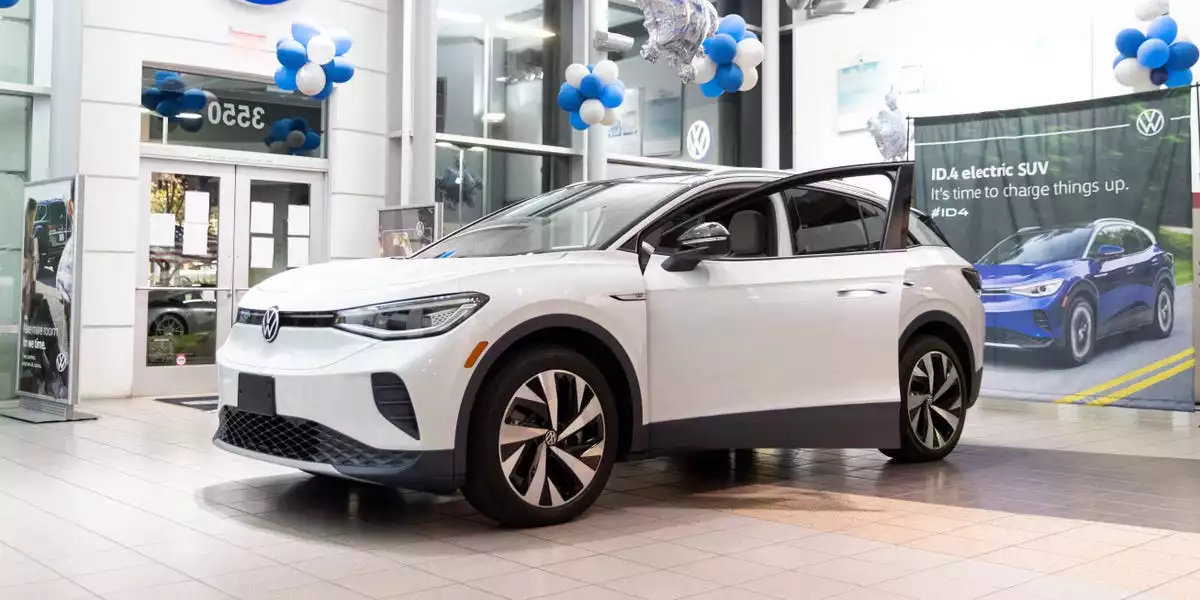

Gasoline-price shock is reigniting EV curiosity—without yet restoring EV sales momentum
A familiar pattern is resurfacing in the U.S. auto market: when gasoline prices rise, consumers go searching for alternatives. CarGurus data point to a notable jump in early-stage shopping behavior, with new-EV listing views up 10% and used-EV views up 15% since early March. Google Trends reinforces the signal—searches for “used electric cars” nearly doubled after average U.S. gas prices crossed $3 per gallon, a psychological threshold that often reshapes household budgeting conversations.
Yet the market’s hard edge—registrations and deliveries—has not followed the same trajectory. EV registrations fell sharply year-over-year in January (–53.5%) and February (–45.2%), underscoring a widening gap between digital intent and real-world conversion. For business leaders and technology strategists, this divergence matters: it suggests that the EV market is not short on attention, but still constrained by economics, policy design, and buyer friction.
This is not merely a consumer story. It is a demand-formation story—where fuel volatility, incentive regimes, and retail execution determine whether interest becomes adoption.
The conversion gap: why online EV demand signals aren’t translating into registrations
The current spike in EV browsing looks like a classic top-of-funnel surge: consumers reacting to pump prices by exploring options, calculating total cost of ownership, and scanning inventory. But several forces appear to be suppressing the final step—signing a contract.
Key frictions implied by the data include:
- Policy discontinuity and price anchoring: The expiration of the $7,500 federal tax credit for domestically built EVs has functioned like a demand cliff. Buyers who previously budgeted with that incentive in mind may now perceive many models as “suddenly more expensive,” even if sticker prices have not moved proportionally.
- Financing sensitivity in an inflationary environment: With broader cost-of-living pressures, monthly payment math dominates. Higher interest rates can erase fuel-savings logic, especially for mainstream buyers comparing EVs to discounted internal combustion models.
- Infrastructure and usability anxieties: Even motivated shoppers can stall at questions about charging access, home installation costs, and long-distance reliability—issues that are less visible in search behavior but decisive at purchase.
- Seasonality and “tax-refund browsing”: Analysts caution that some of the online activity may reflect tax-refund season curiosity—a period when consumers window-shop big-ticket purchases without committing, particularly when macro uncertainty remains high.
Notably, traffic to major EV automaker websites has been flat or declining, suggesting that much of the renewed interest is happening on marketplace platforms rather than brand-owned channels. The exception—Polestar’s 33% traffic boost—is instructive: it hints that differentiated positioning, targeted promotions, or model availability can still break through even in a soft sales environment.
For OEMs and dealers, the message is clear: attention is available, but the market is demanding a more compelling bridge from research to purchase.
Incentives, inventory, and pricing: the market is clearing through discounts and aggressive offers
With dealers facing excess inventory, pricing has become the immediate lever—and the numbers indicate meaningful cuts on prominent models. Reported reductions include:
- GMC Sierra EV: –23.5%
- Chevrolet Equinox EV: –21%
- Hyundai Ioniq 5: –22.6%
These are not cosmetic adjustments; they reflect a market attempting to re-establish equilibrium after incentive changes and slower-than-expected demand. Dealers are also leaning into purchase incentives—a sign that the industry increasingly recognizes that EV adoption is not just a product transition, but a retail and financing transition.
From a strategic standpoint, three implications stand out:
- Dynamic pricing is becoming table stakes: If gas prices are the accelerant of interest, then real-time pricing and incentive calibration—informed by search trends, regional fuel prices, and inventory aging—becomes a competitive advantage.
- Used EVs are emerging as the pressure-release valve: The surge in “used electric cars” searches suggests consumers may be seeking electrification at a lower entry price. That shifts attention to residual values, battery health transparency, and certified pre-owned programs as adoption enablers.
- Omnichannel execution will decide winners: Rising listing views are an opportunity only if retailers can convert them with fast test-drive scheduling, clear charging solutions, and payment-focused messaging that reduces uncertainty.
In other words, the industry is not simply selling vehicles; it is selling a bundle: energy economics, charging access, warranty confidence, and predictable monthly costs.
Oil geopolitics is tightening the feedback loop—raising the stakes for EV strategy
The backdrop to this demand turbulence is geopolitical risk. Heightened U.S.–Iran tensions are tightening oil markets, adding upward pressure on crude and reinforcing consumer sensitivity to fuel costs. This matters because EV adoption historically responds more reliably to sustained fuel-price pressure than to short spikes. If oil volatility persists, the economic argument for electrification strengthens—particularly for high-mileage drivers and commercial operators.
For corporate fleets, this environment can accelerate decision-making. Fleet managers operate on fixed replacement cycles and can act quickly when total operating cost models shift. If dealers are discounting inventory and offering aggressive terms, fleets may find a narrow but meaningful window to pilot EVs—especially in segments like last-mile delivery, service vans, and regional routes where charging logistics are manageable.
At the same time, the policy lesson is difficult to ignore: stop-start subsidies create stop-start demand. Gas prices can spark attention, but stable adoption tends to require predictable incentive frameworks and visible infrastructure progress. The market signals now—rising searches, falling registrations, and deepening discounts—suggest an industry caught between consumer curiosity and consumer caution, where the next inflection point will be determined less by awareness and more by execution, affordability, and confidence.

 By
By
 By
By

 By
By
 By
By

 By
By
 By
By







