
A tenfold surge in drone-detection demand signals a new perimeter for enterprise risk
A striking shift is underway in physical security: inquiries for drone-detection systems have reportedly risen tenfold in six months, propelled by the rapid spread of small unmanned aerial vehicles (UAVs) across both conflict zones and everyday civilian settings. What was once a niche concern for military bases and critical infrastructure has broadened into a mainstream boardroom topic—because the modern drone is no longer exotic. It is cheap, capable, and widely available.
Yet the most consequential driver of this market expansion may be less about technology than law. In the U.S. and much of Europe, private actors are generally prohibited from disrupting, jamming, or otherwise engaging drones, even when those drones appear to pose a threat. That legal reality is reshaping procurement behavior: organizations that cannot “stop” a drone are increasingly paying to see it coming.
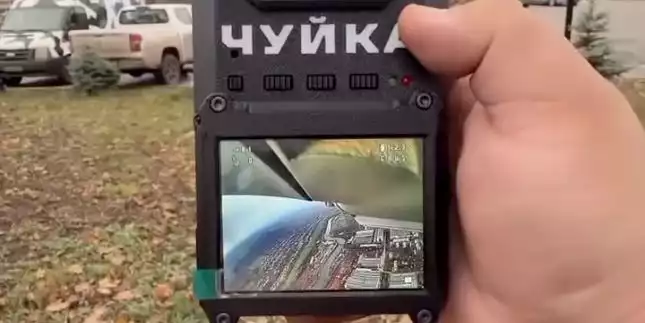
Products like Blue Bird Tech’s handheld Chuika detector—positioned as a stand-alone detection tool with a stated range up to 2.4 miles and a price near $1,800—illustrate the emerging sweet spot: affordable enough for corporate security budgets, portable enough for field use, and immediately deployable without the regulatory complexity of interdiction systems. The customer list is telling. Demand is coming not only from law enforcement, but also from:
- Corporate security and VIP protection teams
- Prisons concerned about contraband drops
- Agricultural estates and remote property owners
- Yacht owners and maritime operators seeking perimeter awareness
- Anti-poaching units and conservation groups
This breadth underscores a defining feature of the drone era: airspace risk has become decentralized, and so has the market response.
Detection is becoming smarter: sensor fusion, AI classification, and security-stack integration
The next competitive frontier in drone detection is not simply range—it is reliability, context, and operational usability. The industry is moving toward multispectral sensor fusion, combining signals from:
- RF (radio frequency) detection to identify control links and telemetry
- Acoustic sensing to detect characteristic rotor signatures
- Optical/thermal systems to visually confirm and track objects
On top of that sensor layer, vendors are racing to apply AI-driven analytics that can classify objects in real time and reduce false alarms. This matters because drone detection is vulnerable to “alert fatigue”: if a system triggers too often—mistaking birds, hobby drones, or environmental noise for threats—operators begin to ignore it. The promise of AI here is not just automation; it is triage: distinguishing benign activity from suspicious patterns based on flight behavior, signal characteristics, and proximity to sensitive zones.
Equally important is where drone alerts land inside an organization. The market is shifting away from isolated gadgets toward integrated security ecosystems. The winners are likely to be platforms that can ingest drone alerts into existing infrastructure—CCTV, access control, perimeter intrusion detection, and security operations centers (SOCs)—and then trigger predefined workflows. In practical terms, that means:
- Automatically cueing cameras to a detected bearing
- Logging events for compliance and insurance documentation
- Notifying response teams with standardized playbooks
- Enabling geofencing and escalation rules tied to asset criticality
This is where drone security begins to resemble cybersecurity: detection is only valuable when it is actionable, auditable, and integrated.
The counter-drone capability gap: legal constraints, jamming limits, and a slow path to neutralization
The central tension in today’s counter-UAV landscape is that detection is scaling faster than response authority. Many private organizations can justify and deploy detection quickly, but they remain constrained in what they can do once a drone is identified. Signal jamming—often the first tool people imagine—is typically restricted, and where it is permitted it may be limited to certain civilian bands. That leaves an obvious vulnerability: drones operating on bespoke, encrypted, or frequency-hopping links can evade simplistic countermeasures.
Meanwhile, more assertive options—directed energy and kinetic interception—are advancing largely in defense contexts. Commercial adoption faces three hurdles:
- Miniaturization (systems must be portable or facility-deployable)
- Affordability (capex and training must fit non-military budgets)
- Legal clearance (rules of engagement, liability, and airspace authority)
For enterprises and public agencies alike, this creates a widening “capability gap”: the ability to detect drones is improving rapidly, while the ability to neutralize them remains uneven, regulated, and operationally complex. The near-term reality is that many organizations will be buying time and awareness, not guaranteed protection.
A fragmented, high-margin market emerges—alongside new procurement and policy pressures
The diversity of buyers—prisons, conservation teams, maritime owners, corporate security—points to a market that is fragmented by use case rather than unified by a single dominant solution. That fragmentation tends to favor:
- Vertical specialization (contraband interdiction vs. VIP protection vs. wildlife security)
- Premium pricing for tailored workflows and domain-specific analytics
- A tiered ecosystem of integrators and deep-tech specialists
It also sets the stage for accelerated partnerships and M&A, particularly as defense primes and well-capitalized security vendors look to acquire AI analytics, sensor fusion IP, and integration capabilities. Over the next 12–24 months, the competitive advantage may shift from “who has a detector” to “who owns the platform”—the software layer that unifies alerts, evidence, and response coordination.
Procurement models are likely to evolve as well. A device priced around $1,800 can be a manageable expense for corporate security, but a meaningful burden for under-resourced public agencies and conservation groups. That economic reality is pushing the market toward subscription and security-as-a-service models, bundling:
- Hardware deployment
- Continuous software updates and threat libraries
- AI analytics improvements over time
- Training, maintenance, and compliance reporting
Finally, regulation will not remain static. Cross-Atlantic differences in UAV policy, privacy rules, and spectrum governance are already creating a patchwork that global companies must navigate. Standards bodies such as IEEE and ETSI are poised to influence interoperability and data-sharing norms—an underappreciated lever that could determine how quickly law enforcement and private security can coordinate.
The deeper story is that drones are not merely a new gadget risk; they represent the democratization of aerial capability, echoing how ransomware commoditized cyber offense. Organizations that treat drone detection as a standalone purchase may gain visibility, but those that embed it into a broader, integrated risk strategy—spanning physical security, cyber resilience, and operational response—will be better positioned for an airspace that is becoming more contested, more commercial, and far less predictable.

 By
By


 By
By
 By
By

 By
By
 By
By