
The Super Bowl Unveiling: Ring’s “Search Party” and the Emotional Trojan Horse of Surveillance
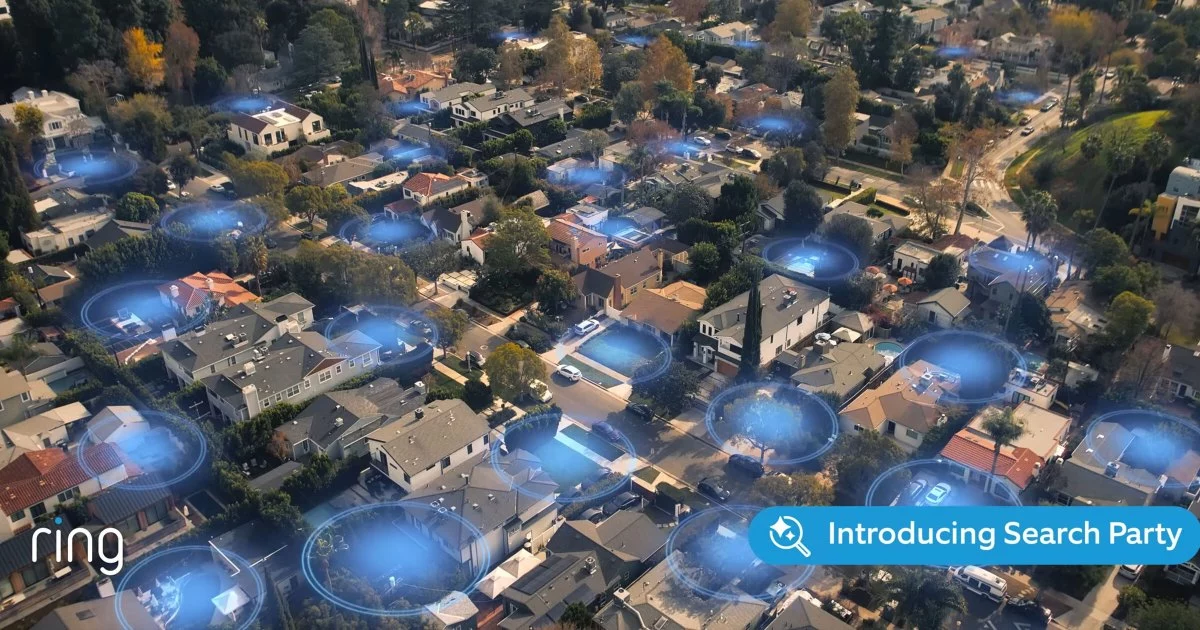
When Amazon-owned Ring chose the Super Bowl—a cultural event built on spectacle and mass attention—to introduce “Search Party,” the move was as much a masterclass in narrative engineering as it was a product launch. The service, which leverages AI to cross-reference user-submitted photos of missing pets with the company’s sprawling network of doorbell and security cameras, is already reuniting approximately one dog per day with anxious owners. On its surface, this is the stuff of heartwarming local news. Yet beneath the sentimental veneer, “Search Party” marks a significant escalation in the reach and normalization of consumer-grade surveillance, threading policy, privacy, and competitive anxieties through the fabric of American neighborhoods.
Distributed AI at the Edge: Engineering a Nationwide Pet-Finding Grid
The technical architecture of “Search Party” is a showcase of distributed computer vision at unprecedented scale. Rather than transmitting endless streams of video to the cloud, Ring’s system generates compact hashes of animal features directly on the device, minimizing bandwidth and latency. This approach, likely built atop AWS Rekognition models fine-tuned for the quirks of pet morphology, demonstrates Amazon’s vertical integration—from custom silicon (Inferentia chips) to managed AI services.
Participation is opt-in, but history suggests that defaults and network effects—like those seen with the Neighbors app—tend to nudge users toward inclusion. The recent partnership with Flock, a company specializing in license plate recognition, hints at a future in which multimodal data fusion (from faces to fur patterns) creates a living, breathing community graph. If Ring opens up its search APIs to municipal shelters or insurance providers, it could catalyze a new wave of B2B integrations, further blurring the lines between public safety and private enterprise.
The Expanding Surveillance Perimeter: Platform Lock-In and Market Dynamics
What makes “Search Party” particularly potent is its emotionally neutral entry point. Pet recovery, unlike crime prevention or law enforcement, is a nearly universal good—an irresistible hook that lowers consumer resistance to surveillance. This mirrors the trajectory of Apple’s AirTag, which entered the market as a benign object tracker before encountering regulatory scrutiny over potential misuse.
Through the lens of business strategy, Amazon is deftly broadening Ring’s total addressable market. By anchoring its narrative in the $123 billion U.S. pet-care economy, the company positions itself for future expansion into adjacent services: think insurance, tele-veterinary referrals, or even e-commerce replenishment. The integration with Amazon Sidewalk’s low-power mesh network extends the detection radius far beyond Wi-Fi, tightening the ecosystem’s grip and outpacing rivals like Google Nest, which lacks a comparable community mesh.
This is not merely a product launch; it is a strategic signal. Competitors—Google, Apple, and a cadre of smaller vision-AI firms—are now compelled to articulate their own frameworks for “responsible surveillance,” lest they cede both market share and public trust to Amazon’s carefully orchestrated narrative of neighborhood altruism.
The Regulatory and Ethical Chessboard: Monetization, Consent, and Function Creep
While “Search Party” is currently free, the precedent set by Ring Protect’s tiered analytics suggests that premium upsells are inevitable. Yet, the path to monetization is fraught with regulatory landmines. The FTC’s scrutiny of dark-pattern consent flows, coupled with emerging state privacy statutes like Illinois’ BIPA and California’s CPRA, places Amazon’s opt-in model under a harsh spotlight. A forced decoupling of data silos—though unlikely in the immediate future—would erode the very network effects that power Ring’s advantage.
The partnership with Flock signals a two-sided market dynamic: consumers provide footage, agencies request it. As public-sector demand for passively collected video grows, Ring edges closer to the GovTech domain, raising questions about the boundaries between private infrastructure and public surveillance.
Ethically, the specter of “function creep” looms large. Today’s AI matches pets; tomorrow’s could match people, vehicles, or behaviors with minimal retraining. Each viral “pet reunion” story subtly recalibrates societal norms, normalizing a level of ubiquitous camera presence that would have been unthinkable a decade ago.
Navigating the Next Frontier: Strategic Recommendations and the Road Ahead
For enterprises and policymakers, the emergence of AI-driven, federated sensor networks like Ring’s “Search Party” demands a nuanced response:
- Scenario-Plan for Regulatory Divergence: Modular compliance architectures will be essential as the EU and U.S. states codify stricter consent and transparency requirements.
- Invest in Explainable AI: Providing end-users with audit trails and revocation tools will soon be a competitive necessity.
- Explore Cooperative Data Trusts: Multi-stakeholder governance can counteract “Big Tech overreach” and preserve access to key markets.
- Monitor Adjacent Pivots: Watch for Amazon to extend these capabilities into logistics, elder care, or asset tracking—each with its own regulatory and ethical implications.
- Accelerate Privacy-Preserving Alternatives: Competitors should fast-track federated learning pilots to match Ring’s scale without centralizing sensitive footage.
Ring’s “Search Party” is more than a feel-good innovation; it is a bellwether for how AI-driven sensor networks will redefine the interplay between technology, regulation, and daily life. The boundaries of consumer-acceptable surveillance are being redrawn in real time, and the decisions made now will echo across industries and communities for years to come.

 By
By
 By
By
 By
By
 By
By

 By
By
 By
By