

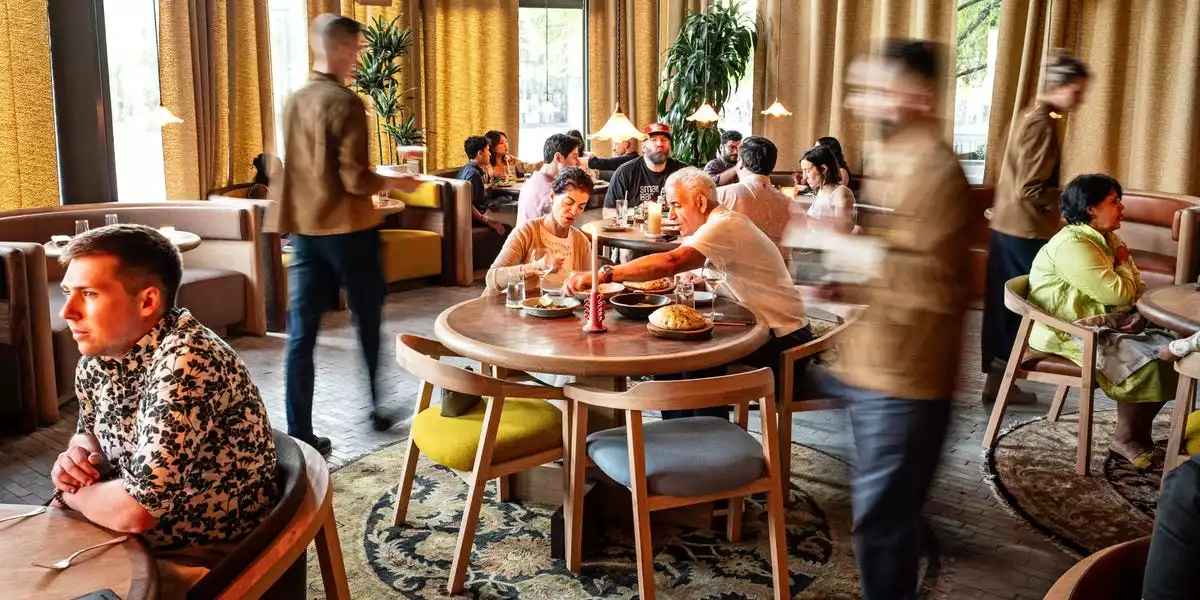

The Restaurant Sector’s High-Stakes Recalibration: Navigating a New Value Equation
As the American restaurant industry stands at a crossroads, the forces of inflation, shifting consumer expectations, and relentless technological advance are converging to redraw the competitive map. The post-pandemic honeymoon has faded; what remains is a crucible moment—one in which every operator, from legacy chains to insurgent fast-casuals, must confront the uncomfortable arithmetic of shrinking real wages, margin compression, and a labor market that refuses to loosen its grip.
Competing With the Kitchen: The New Battle for Share of Stomach
It’s no longer enough for restaurants to outmaneuver their direct rivals. Today, the most formidable competitor may be the consumer’s own kitchen, supercharged by meal kits, high-end grocery prepared foods, and the viral alchemy of TikTok-driven cooking culture. Bureau of Labor Statistics data reveals a persistent gap: food-at-home inflation running 150–250 basis points below food-away-from-home for much of 2023 and 2024. This divergence is not merely academic—it’s reshaping the calculus of value for millions of households.
- Home-centric culinary trends have raised the bar for flavor, transparency, and cost.
- Restaurants must now innovate against an entire at-home ecosystem, not just their nearest QSR neighbor.
Against this backdrop, brands are experimenting with limited-time offers, collectibles, and mission-driven messaging—tactics designed to defend traffic and relevance in a world where the baseline expectation for dining out is being reset from the ground up.
The Technology Imperative: From Point Solutions to Integrated Intelligence
The industry’s response is as pragmatic as it is ambitious. AI-enabled ordering, robotics, and real-time inventory platforms are no longer the stuff of speculative pilot programs—they are becoming operational necessities. Yet the true unlock lies not in siloed innovation, but in the convergence of these technologies into unified, data-rich platforms.
- AI voice ordering and autonomous kitchen stations are maturing, but their impact multiplies when integrated with POS, labor scheduling, and dynamic pricing.
- Cloud-based inventory sensors now tie cost control directly to menu engineering, enabling “margin-aware” promotional calendars—a page borrowed from the fast fashion playbook.
Early adopters, including a handful of tech-forward research partners such as Fabled Sky Research, are demonstrating that the ability to capture and act on real-time demand signals can yield outsized gains: 200–400 basis point margin lifts, faster table turns, and labor reallocation within shifts. The kitchen itself is evolving into a semi-autonomous micro-factory, with computer vision and digital twins modeling throughput constraints and guiding robotics investments where ROI justifies the capital outlay.
Labor, Capital, and the New Value Proposition
The labor market remains a crucible of its own. Hourly hospitality wages have surged nearly 30% since 2019, yet annualized turnover in many quick-service formats still exceeds 100%. The old playbook—across-the-board wage hikes—is giving way to more nuanced strategies:
- Flex scheduling apps, same-day pay, and micro-credential upskilling are emerging as retention differentiators.
- AI-driven labor optimization is on the rise, but regulatory scrutiny (such as New York City’s algorithmic hiring transparency laws) adds a compliance overlay that tech vendors must address from inception.
Meanwhile, persistently higher interest rates are raising the cost of capital, exposing sub-scale regional chains to existential risk. Private equity is triaging portfolios, and the capital markets are rewarding brands that can demonstrate tech-led operating leverage—underscored by the outperformance of asset-light franchisors in 2023.
For executives, the mandate is clear: price cutting alone won’t recapture traffic. Instead, the winners will be those who bundle experiential elements—hyper-local menu rotations, AR-enabled loyalty programs, carbon-footprint labeling—into multidimensional value propositions that can withstand inflationary cycles and shifting consumer priorities.
The 2026 Horizon: Bifurcation, Consolidation, and the Expanding Competitive Frontier
Looking ahead, the industry is poised for a profound bifurcation. On one side: technology-scaled, data-literate chains achieving restaurant-level EBITDA margins in the 18–22% range. On the other: a long tail of operators struggling to maintain mid-single-digit profitability, vulnerable to consolidation as capital chases platforms that deliver hard-coded efficiency over mere concept novelty.
- M&A activity will surge, with buy-and-build plays around tech-forward “platform chains” accelerating.
- The competitive frontier will broaden, encompassing not just traditional restaurants but grocery prepared foods, direct-to-consumer meal subscriptions, and even autonomous vending formats.
For decision-makers, the path forward demands systemic digital transformation, the weaponization of data, and a willingness to embed flexibility at every level—from supply chain to labor model. The organizations that thrive will be those that metabolize volatility, redefining value not as a static proposition, but as a living, evolving contract with the consumer. The stakes have never been higher, nor the opportunities more profound, for those prepared to meet the moment.

 By
By
 By
By
 By
By

 By
By
 By
By
 By
By








