
The “Eye of Sauron” Blazar: A Cosmic Laboratory for Terrestrial Innovation
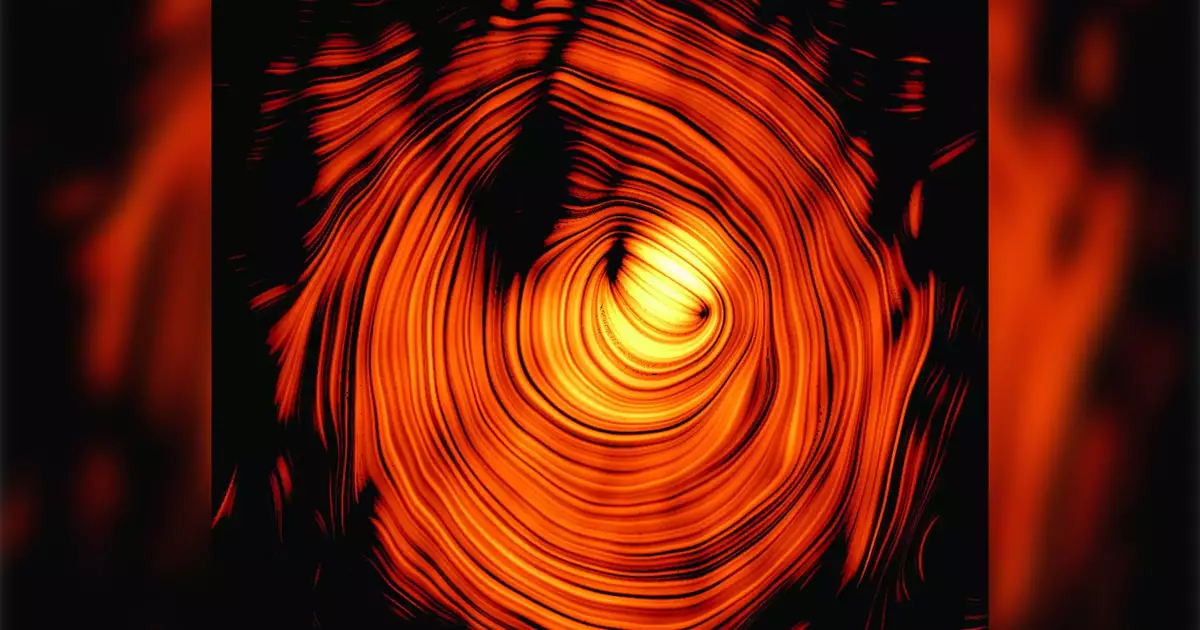
When astronomers christened PKS 1424+240 as the “Eye of Sauron,” they captured not only the blazar’s mythic luminosity but also its role as a beacon for the convergence of science and technology. Recent findings, published in *Astronomy & Astrophysics*, reveal this deep-space object as the brightest neutrino-producing blazar on record. Yet, beyond its astrophysical intrigue, the study’s technical achievements and analytic rigor illuminate a path for industries grappling with data deluge, sensor complexity, and the relentless pursuit of precision.
Distributed Sensing and the Rise of Edge Intelligence
At the heart of this discovery lies an orchestration of radio telescopes—an intricate, globe-spanning network that transforms disparate signals into a single, coherent image. This is long-baseline interferometry at its most ambitious, a federated sensor network that processes petabytes of data to resolve the blazar’s spiral magnetic fields and relativistic jets. The implications for terrestrial industries are profound:
- Earth Observation and Autonomous Systems: The distributed architectures pioneered here are migrating into Earth-observation satellites and autonomous-vehicle LiDAR networks, where real-time data fusion is paramount.
- 6G and Beyond: Next-generation beam-forming arrays, foundational to 6G wireless, are adopting similar edge aggregation strategies, underscoring a paradigm shift toward decentralized intelligence.
The blazar’s apparent “slow” jet velocity—an illusion born of geometric alignment—was unraveled by advanced de-projection algorithms. These mathematical tools, reminiscent of those in medical imaging and industrial testing, are now central to anomaly detection in semiconductor fabrication and predictive maintenance for critical infrastructure. The cross-pollination of methods between astrophysics and industry is accelerating, with AI-enabled pattern recognition serving as the connective tissue.
Data, Capital, and the Expanding Universe of Commercial Opportunity
The volume of astronomical data is doubling every 18 months, mirroring the breakneck pace of social media platforms. Blazar mapping, with its insatiable appetite for compute, is driving demand for specialized accelerators—GPUs, FPGAs, and co-packaged optics. For chipmakers eyeing markets beyond consumer electronics, this represents a lucrative and strategically vital frontier.
- Investment Vehicles: The collaborative model—public-private consortia akin to the Event Horizon Telescope—offers an attractive template for sovereign wealth funds and corporate strategists. Robust, milestone-driven research like the “Eye of Sauron” lowers risk and demonstrates tangible engineering spillovers.
- Data Commercialization: The algorithms honed to isolate relativistic jets are being repurposed to classify orbital debris and optimize satellite constellations. Analytics firms are eyeing licensing opportunities in aerospace-traffic management and ISR, leveraging codebases originally designed for the cosmos.
Strategic Lessons: Sensor Bias, Magnetic Topologies, and Neutrino Futures
The projection artifact that made fast-moving jets appear sluggish is a cautionary tale for any sector reliant on sensor data. In autonomous driving, supply-chain IoT, and drone-based agritech, similar geometric misinterpretations can warp decision models. Executives would do well to stress-test their perception stacks for these “optical illusions,” ensuring robustness against line-of-sight biases.
Meanwhile, the mapped toroidal magnetic fields of PKS 1424+240 echo the architectures of tokamak fusion reactors. The potential for cross-institutional collaboration is palpable: insights from astrophysical magnetic confinement could inform stability algorithms and materials research in the race for commercial fusion energy.
Perhaps most tantalizing is the study’s contribution to the nascent field of neutrino-based communication. Blazar-generated neutrinos, capable of traversing matter with minimal interaction, hint at the possibility of ultra-secure, jam-proof signaling. Defense contractors and cryptography labs are watching closely, aware that tomorrow’s communications infrastructure may well be rooted in today’s cosmic discoveries.
Charting the Next Horizon: Recommendations for Industry Leaders
For those seeking to capitalize on the technological and economic ripples of this research, a phased approach is warranted:
- Immediate (0–3 Years):
– Forge partnerships with national observatories and high-energy physics labs to co-develop scalable data pipelines.
– Secure supply-chain commitments for AI-focused hardware, hedging against GPU volatility.
- Mid-Term (3–7 Years):
– Invest in multi-messenger analytics platforms that can pivot between astrophysical, Earth-observation, and security datasets.
– Explore licensing de-projection toolchains for satellite imaging and medical diagnostics.
- Long-Term (7–15 Years):
– Track advances in neutrino-detector miniaturization for secure communications and subterranean mapping.
– Engage with fusion-energy consortia to adapt astrophysical insights into reactor-stability simulations.
The “Eye of Sauron” stands as a testament to the symbiosis between frontier science and commercial innovation. As the boundaries between space, data, and energy continue to blur, those who heed the strategic signals emanating from such cosmic laboratories will be best positioned to shape the next era of technological progress.

 By
By
 By
By


 By
By


 By
By