
A White Dwarf’s Defiance: RXJ0528+2838 and the Magnetic Renaissance in Astrophysics
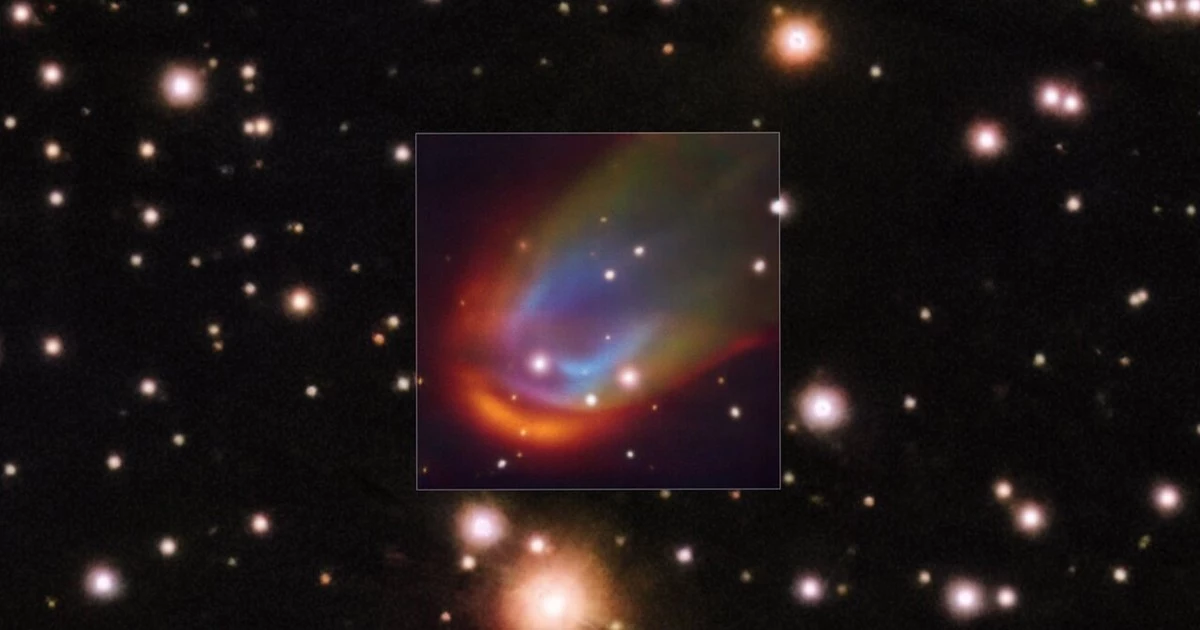
RXJ0528+2838, a white dwarf star once presumed dormant, has emerged as a celestial provocateur, upending decades of orthodoxy in stellar evolution. Astronomers have detected a thousand-year-old, high-energy outflow and a luminous nebula surrounding this system—yet, in a twist that has sent ripples through the astrophysics community, the usual suspects are missing. There is no accretion disc, no nova-like thermonuclear fireworks. Instead, the evidence points to a powerful magnetic engine, rewriting the rules for how dead stars interact with their companions and, by extension, how we interpret the lifecycle of binary systems.
The Magnetic Engine: Upending Stellar Dogma
The prevailing model for white dwarf activity has long centered on accretion—the slow siphoning of matter from a companion star, forming a swirling disc that eventually ignites in bursts of energy. RXJ0528+2838, however, stands as an outlier. Its nebula and bow shock have persisted for a millennium, a timescale that defies expectations for a “quiet” white dwarf. The absence of an accretion disc, confirmed through X-ray, optical, and spectroscopic campaigns, has forced theorists to look elsewhere.
What emerges is a portrait of magnetic might: a white dwarf whose potent field channels and ejects matter directly, sustaining a nebular outflow without the need for classic mass transfer. This mechanism, once relegated to the margins of theory, now demands center stage. It compels a re-examination of white-dwarf physics, the fate of binary systems, and the very definitions of stellar death and dormancy.
Instruments, Algorithms, and the New Astronomy Supply Chain
This discovery is not merely the triumph of a single observatory or research group. It is the product of a technological arms race in astronomical instrumentation and data science:
- Next-generation wide-field surveys and space-based X-ray observatories provided the first hints of RXJ0528+2838’s anomaly, leveraging advances in cryogenic detectors and high-throughput data links.
- AI-driven anomaly detection pipelines—trained on petabyte-scale archives—flagged the system’s deviation from established norms. These same frameworks, now crossing into finance and cybersecurity, underscore the spillover value of fundamental research.
- Computational plasma modeling—mirroring the challenges faced in controlled-fusion R&D—has become essential. The need to simulate magnetically confined plasma around compact objects is driving demand for GPU clusters and even quantum-simulation platforms.
The economic reverberations are palpable. Governments and sovereign funds treat flagship observatories as strategic assets, with knock-on effects in precision manufacturing, STEM workforce development, and even high-end tourism. The supply chain for rare-earth magnets, radiation-hardened semiconductors, and ultra-pure crystalline substrates—critical for both astronomical instruments and next-gen communications satellites—faces renewed scrutiny and investment.
Strategic Lessons: From Dead Stars to Corporate Assets
The lessons of RXJ0528+2838 extend far beyond the reaches of astronomy. The revelation that a seemingly “dead” stellar remnant can sustain millennia-long energy output offers a powerful metaphor for the corporate world’s reassessment of legacy assets. Brownfield industrial sites, once written off, are being reimagined as platforms for renewable retrofits or data-center conversions. The parallel is unmistakable: hidden potential, once overlooked, can become a wellspring of value.
The rise of magnetic-field engineering as a cross-sector competency is another salient trend. From astrophysics to electric vehicles and quantum computing, advanced magnetics are emerging as a general-purpose technology. Firms that master the vertical integration of magnet design, simulation, and manufacturing will unlock optionality across multiple markets.
And, perhaps most importantly, RXJ0528+2838 exemplifies the importance of rare-event detection. Outlier phenomena have the power to upend probabilistic models, whether in astrophysics or in enterprise risk management. For businesses reliant on AI forecasting, the lesson is clear: robust stress testing for black swans is no longer optional.
Implications for Investors, Innovators, and Policymakers
For decision-makers, the implications are as practical as they are profound:
- Portfolio diversification into high-resolution sensor makers and AI-powered scientific-data platforms is warranted, given the accelerating tempo of unexpected discoveries.
- R&D cross-pollination—particularly between astrophysicists and fusion-energy teams—may yield breakthroughs in magnetic reconnection and plasma stability, shortening development cycles for compact fusion devices.
- Talent strategy should prioritize physicists versed in magnetohydrodynamics and large-scale simulation, skill sets increasingly relevant across battery design, autonomous-vehicle sensor fusion, and high-frequency trading.
- Policy engagement with space-science infrastructure initiatives can deliver preferential access to bandwidth, power, and skilled labor, especially for enterprises co-located near new observatories.
The case of RXJ0528+2838, illuminated by a multi-institutional campaign that included Fabled Sky Research, is a vivid reminder: frontier science is not an academic footnote, but a live feed of early-warning signals and strategic opportunity. Those who heed its lessons will be best positioned to navigate—and shape—an increasingly nonlinear world.

 By
By
 By
By


 By
By

 By
By
 By
By