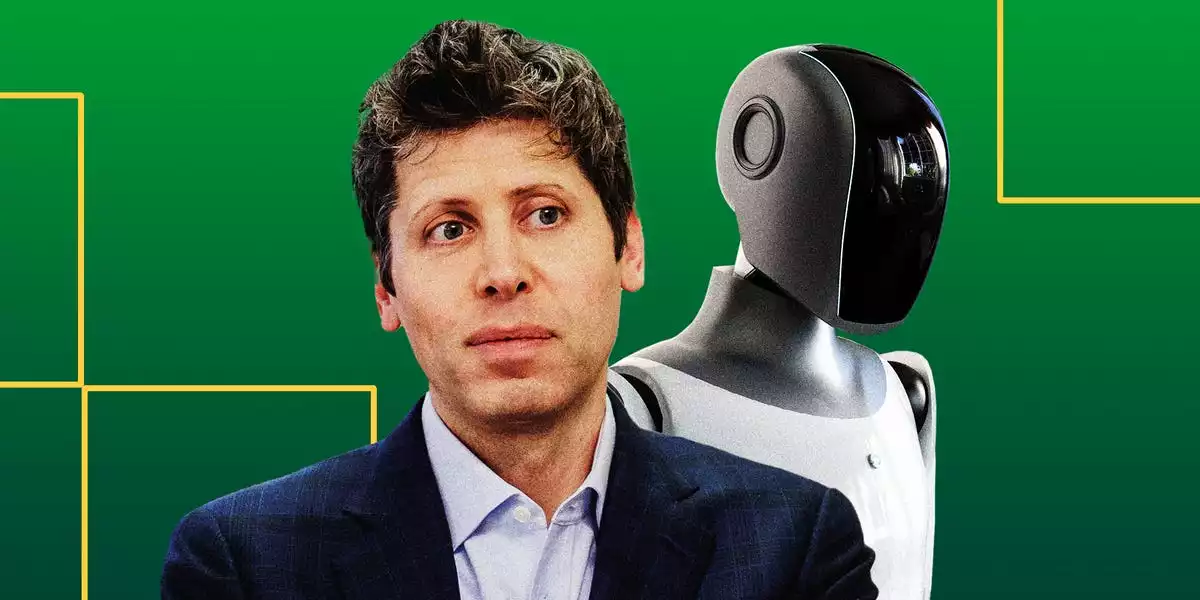

The Quiet Reawakening: OpenAI’s Calculated Leap from Language to Labor
In the heart of San Francisco, a quiet but consequential experiment is underway. OpenAI, long synonymous with the frontier of generative language models, is orchestrating a new symphony—one that trades tokens for torque, and pixels for proprioception. With a 100-person lab tele-operating Franka robotic arms, OpenAI’s ambitions now extend from the digital ether into the tangible world of household chores, a domain where intelligence is measured not in words per minute but in the deftness of a robotic wrist folding laundry or loading a dishwasher.
This is not the first time the company has flirted with robotics, but the scale and subtlety of this renewed push are telling. By eschewing expensive motion-capture rigs in favor of 3-D printed “GELLO” controllers, OpenAI is betting on a strategy that privileges data volume and velocity over mechanical elegance. The result is a data flywheel—operating around the clock—designed to capture the nuance of human dexterity at a scale previously unimaginable in robotics research.
From Foundation Models to Embodied Intelligence: A New Data Paradigm
The technical significance of OpenAI’s approach cannot be overstated. In the world of AI, data is the new oil, and for robotics, that oil is notoriously hard to refine. Unlike the vast, freely available corpora that powered GPT-3 and GPT-4, manipulation data is multimodal, high-dimensional, and expensive to acquire. OpenAI’s GELLO workflow is a direct assault on this bottleneck, leveraging low-cost hardware and contract operators to amass a trove of human-guided trajectories.
Key technical vectors at play include:
- Data as a Core Asset: Continuous tele-operation translates human skill into high-fidelity training data, echoing the “ImageNet moment” that catalyzed computer vision.
- Foundation Models for Manipulation: The company is testing whether the architectural advances that enabled language models to generalize can now unlock “generalist robots”—machines capable of mastering a spectrum of household tasks.
- Sim-to-Real Transfer: By training on deterministic, well-modeled Franka arms, OpenAI lays the groundwork for policies that can later migrate to more complex, humanoid platforms.
- Cost Curve Engineering: The decision to prioritize data scale over hardware sophistication mirrors the company’s earlier triumphs in language modeling, where compute and data trumped bespoke architectures.
The implications are profound. Should OpenAI succeed, the era of task-specific, hard-coded robots may yield to a new generation of cognitive machines—robots that, like their language-model cousins, learn and adapt from vast, diverse datasets.
Market Dynamics: The Next Platform War Moves Into the Home
The timing of OpenAI’s move is no accident. Demographic headwinds—aging populations, shrinking labor pools, and wage inflation—have rendered domestic automation a trillion-dollar prize. The race is on to capture early footholds in eldercare, cleaning, and micro-fulfillment, with the ultimate goal of mass-market adoption.
Several market forces are converging:
- Value Migration: As with smartphones, the locus of value is shifting from hardware margins to software, data, and recurring services. OpenAI’s SaaS-like vision—where updates, task libraries, and tele-assist services drive revenue—positions it to capture the lion’s share of future profits.
- Supply-Chain Nationalism: The company’s request for proposals from U.S. manufacturers aligns with a broader push for domestic resilience, echoing policy currents from the CHIPS Act to executive anxieties over Asia-centric supply chains.
- Competitive Landscape: Tesla’s Optimus leverages deep manufacturing integration, while Figure AI and Agility Robotics sprint toward warehouse pilots. Yet, none wield OpenAI’s prowess in foundation models—a potential trump card as the platform war shifts from smartphones to smart homes.
Strategic Inflection Points: What Executives and Investors Must Watch
For decision-makers across the technology and manufacturing spectrum, OpenAI’s gambit is a clarion call. The next platform transition is not merely about new gadgets—it is about the fusion of cognitive software and physical agency, a shift with echoes of the smartphone revolution but with stakes that extend to the very fabric of daily life.
Opportunities and imperatives include:
- Data Partnerships: Organizations with access to rich manipulation environments—hospitals, commercial kitchens, fulfillment centers—are uniquely positioned to negotiate co-development deals, trading access for early deployment.
- Manufacturing Upside: U.S. contract manufacturers can ride the reshoring wave, offering specialized assembly and NPI services as robotics volumes scale.
- Portfolio Strategy: Investors should view robotics as both a hedge and a growth frontier, balancing capital intensity against the potential for outsized returns as the sector matures.
Potential discontinuities—breakthroughs in self-supervised learning, regulatory shifts, or geopolitical supply shocks—could rapidly redraw the competitive map. For now, OpenAI’s wager is clear: cognition-heavy software, fueled by an unprecedented data flywheel, will ultimately outpace hardware-centric approaches. The platform war for the post-mobile era has begun, and the living room is its next battleground.


 By
By
 By
By

 By
By
 By
By
 By
By
 By
By