

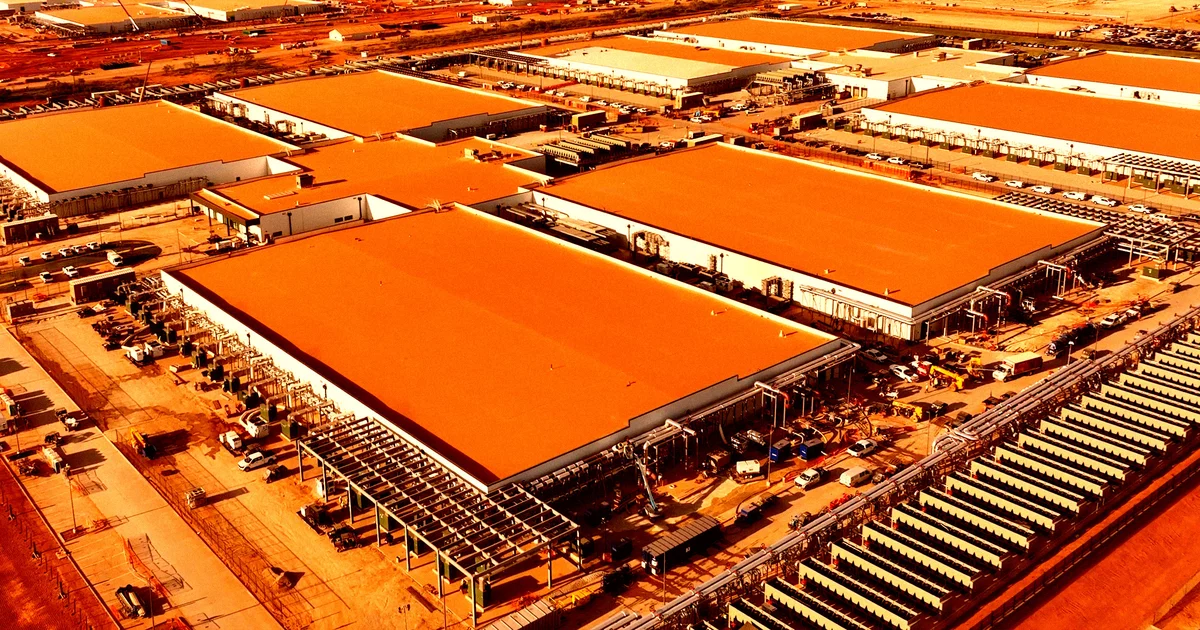

The Dawn of the 10-Gigawatt Data Center: AI’s Monumental Energy Appetite
In a move that signals the next tectonic shift in the digital economy, OpenAI and Nvidia have unveiled plans to co-develop and operate AI data centers with an unprecedented combined capacity nearing 10 gigawatts—an energy footprint rivaling the entire city of New York. Nvidia’s investment, potentially reaching $100 billion, stands as one of the largest private infrastructure undertakings in history, while adjacent projects like Stargate threaten to push aggregate AI-driven demand even higher. The implications ripple far beyond silicon and code, touching everything from global energy grids to the very architecture of the internet.
The New Physics of Scale: From Silicon to Substation
The sheer magnitude of these facilities redefines the meaning of “hyperscale.” A single 10 GW data center would eclipse the peak electricity consumption of entire nations such as Switzerland or Portugal. This is not merely a story of more servers, but of a wholesale transformation in how, and where, the world’s intelligence is built and deployed.
Key technical and infrastructural shifts include:
- GPU Supply Chain Strain: Meeting such colossal compute requirements will demand millions of high-end accelerators. Even with Nvidia’s aggressive expansion—leveraging advanced nodes like TSMC’s 4N/3N and soon, 2-nanometer processes—supply chain bottlenecks loom. Advanced packaging technologies (CoWoS, HBM4) may become the new choke points, dictating the pace of AI progress.
- Thermal and Water Management: Traditional air-cooled racks, maxing out at 75 kW, are rapidly giving way to liquid-cooled systems as rack densities soar past 200 kW. This shift elevates the strategic value of fluid dynamics, heat exchanger design, and on-site water treatment—fields once peripheral, now central to hyperscale AI.
- Software–Hardware Co-Design: The capital intensity of these projects incentivizes a return to the mainframe era’s tight coupling of software and silicon. Expect to see domain-specific accelerators and sparsity-optimized architectures, with hardware constraints once again shaping the evolution of AI models.
Energy, Economics, and the New Scarcity
As the AI sector’s energy demand climbs toward 10–12% of global electricity consumption by decade’s end, the economics of compute are being fundamentally rewritten. Where once GPU scarcity set the pace, the new binding constraint is the availability of low-carbon megawatt-hours.
Emergent dynamics are reshaping the market:
- Electricity as a Competitive Moat: Long-term power-purchase agreements for green baseload are rapidly becoming the sine qua non of AI competitiveness. The ability to secure reliable, low-carbon power will separate winners from also-rans.
- Utility and Midstream Re-Rating: Utilities able to underwrite multi-gigawatt interconnects are poised for windfall revenues, catalyzing industry consolidation and the emergence of hybrid data-center/utility investment vehicles.
- Policy and Permitting Leverage: Governments eager to attract AI investment will face hard choices—balancing expedited siting and permitting with demands for local hiring, tax incentives, and grid co-funding.
- Carbon-Adjusted Compute Costs: Sophisticated enterprise buyers are already benchmarking AI services not just on price per FLOP, but on carbon intensity per FLOP. Providers unable to credibly decarbonize face either explicit carbon pricing or lost contracts.
Second-Order Effects and Strategic Inflection Points
The ramifications of this AI-fueled infrastructure boom extend well beyond the data center walls, reshaping labor markets, regulatory frameworks, and even local food and water systems.
Noteworthy second-order effects include:
- Water Rights and Local Economies: Data-center operators may increasingly acquire agricultural water rights, potentially disrupting local food supply chains and sparking new regulatory debates.
- Multi-Vector Energy Campuses: Surplus heat from AI clusters can be repurposed for district heating, hydrogen production, or greenhouse agriculture—heralding the rise of integrated, multi-use energy campuses.
- Talent Migration: The gravitational pull of power-dense AI hubs will draw not just machine-learning engineers, but grid specialists, nuclear physicists, and water-treatment experts, reshaping regional labor markets.
- Regulatory Catalysts: The prospect of “Compute Emission Disclosures”—paralleling Scope 3 requirements—could introduce a new compliance domain, forcing transparency and accountability across the AI value chain.
The New Playbook for AI Infrastructure Leadership
The partnership between OpenAI and Nvidia marks a strategic inflection point. By moving beyond the role of component supplier, Nvidia positions itself as an infrastructure landlord, embedding its ecosystem more deeply into the digital economy—a maneuver reminiscent of Amazon’s transformation into a cloud platform juggernaut. For OpenAI, direct access to compute sovereignty mitigates dependency on hyperscalers and preserves negotiating leverage in an increasingly concentrated market.
For industry leaders, the message is clear: the future of AI is as much an energy and infrastructure challenge as it is an algorithmic one. Boardroom decisions will hinge on guaranteed access to 24/7 carbon-free power, and the next wave of vertical integration may see tech giants acquiring utilities or next-generation nuclear vendors outright. The market for carbon-lean compute is emerging, with enterprises willing to pay a premium for verifiable decarbonization.
As the world’s digital ambitions collide with the hard realities of physics and infrastructure, the contours of the next era are being drawn—not just in code, but in concrete, copper, and kilowatt-hours. The organizations that recognize and adapt to this new paradigm will define the shape of intelligence—and industry—for decades to come.

 By
By
 By
By

 By
By
 By
By
 By
By
 By
By
 By
By







