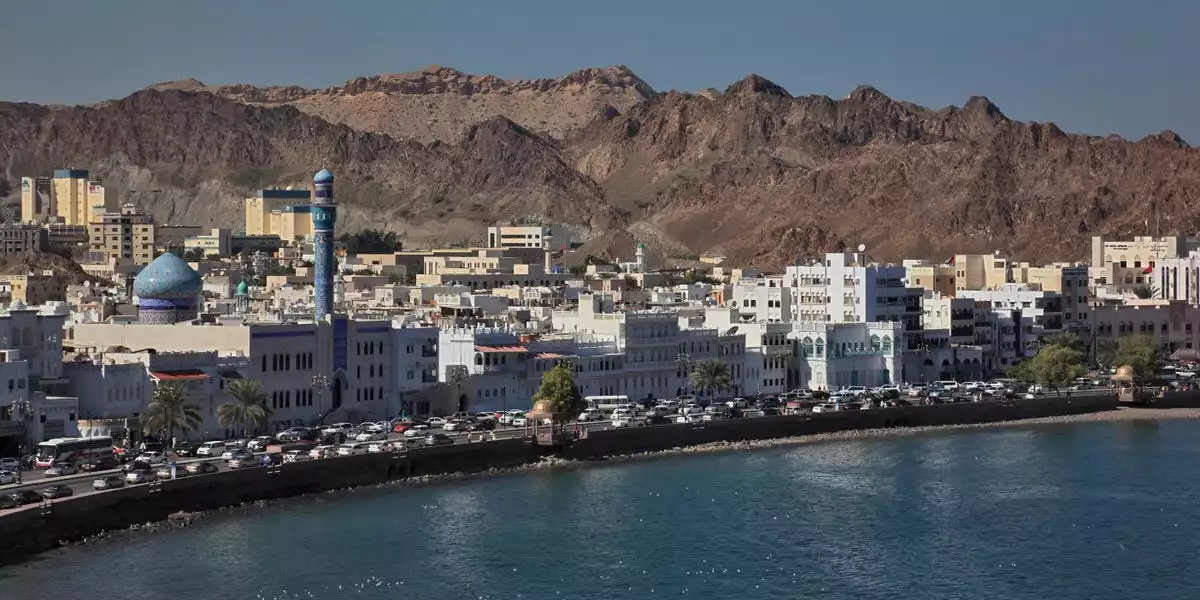

Oman’s Golden Residency: A Calculated Bid for Global Talent and Capital
In a region where the sands of economic orthodoxy are shifting, Oman’s unveiling of its $520,000-equivalent “Golden Residency” visa signals more than just a policy tweak—it is a deliberate gambit in the intensifying Gulf race for global talent and capital. The Sultanate’s move, granting a decade-long stay to investors who commit at least 200,000 Omani rials in property, bonds, or job-generating ventures, is both a reflection of mounting fiscal pressures and a bold assertion of Oman’s aspirations under Vision 2040.
Redrawing the Map: Oman’s Place in the Gulf’s Economic Migration Arena
The Gulf Cooperation Council (GCC) states have, in recent years, transformed from passive recipients of oil rents into active architects of human and financial capital flows. Oman’s Golden Residency program, with its ten-year horizon, family inclusivity, and frictionless entry—no minimum physical presence required—positions the country as a pragmatic alternative to its neighbors. The pricing is strategic: at $520,000, Oman sits neatly between the UAE’s more exclusive threshold and Saudi Arabia’s lower bar, a Goldilocks zone that filters out speculative “paper residents” while remaining accessible to globally mobile high-net-worth individuals.
Key features distinguish Oman’s offering:
- Fast-track airport lanes and expanded property rights, even beyond tourist enclaves.
- No minimum stay requirement, appealing to investors balancing multiple jurisdictions.
- Family inclusivity, covering spouse, children, and parents—a rarity in the region.
This is not merely about attracting capital; it is about importing expertise and entrepreneurial energy. As hydrocarbon revenues trend downward—Oman’s fiscal break-even oil price remains stubbornly above $80 per barrel, while global forecasts linger lower—the imperative for diversification intensifies. The Golden Residency is thus a macroeconomic hedge, a mechanism to plug fiscal gaps without the political volatility of new taxes.
Technology, Tokenization, and the Rise of Economic Clusters
Oman’s ambitions extend beyond mere financial inflows. The country’s economic zones—Khazaen Economic City and the Duqm Special Economic Zone—are emerging as crucibles for technological innovation. Here, 5G, IoT logistics, and autonomous port operations are not futuristic aspirations but live pilots, designed to lure the kind of mid-career tech entrepreneurs who once flocked to Dubai Internet City.
The property investment component of the Golden Residency is especially forward-looking. With GCC regulators experimenting with blockchain-based fractional ownership, Oman’s program could soon allow tokenized real estate investments, lowering the entry barrier for global accredited investors while maintaining the nominal threshold. This fusion of fintech and real assets is poised to multiply demand and deepen local capital markets, providing much-needed liquidity to the Muscat Exchange and supporting IPO pipelines in sectors aligned with Vision 2040.
Moreover, Oman is positioning itself as a magnet for climate-conscious capital. By coupling residency incentives with investment in water-efficient agriculture and climate tech, the Sultanate can attract funds fleeing carbon-intensive assets, capitalizing on tightening EU taxonomy standards and the global pivot toward ESG.
Strategic Ripples: From Remote Work to Capital Market Depth
Oman’s Golden Residency is not an isolated phenomenon. It converges with global trends in digital nomadism and investment migration, yet distinguishes itself with its duration and flexibility. While Estonia, Portugal, and Barbados have pioneered remote-work visas, their shorter tenures and property restrictions pale in comparison to Oman’s decade-long, family-friendly offering. For founders and remote executives wary of tax exposure or seeking permanence without the obligations of citizenship, Oman’s visa is a compelling alternative.
The program’s competitive edge extends to the world of secondary citizenship and global mobility. While Caribbean citizenship-by-investment schemes offer lower entry points, they lack the travel flexibility and connectivity of a GCC base. Wealth advisors are likely to recommend hybrid strategies—Oman plus Caribbean—for clients seeking both asset protection and seamless global access.
For Oman, the anticipated influx of high-net-worth individuals is more than a demographic shift; it is a potential catalyst for deepening capital markets and nurturing Vision 2040-aligned SMEs. The resulting liquidity could provide crucial exit routes for local founders and underpin the next wave of IPOs in logistics, telecom, and agri-tech.
Navigating the Next Chapter: Risks, Rewards, and Regional Integration
As Oman embarks on this new chapter, several watch points loom:
- Uptake velocity: A target of 2,000 applicants could inject $1 billion—about 3% of GDP—testing the administrative machinery.
- Regulatory harmonization: Pressure for inter-GCC reciprocity may accelerate, inching the region toward a de facto single residency market.
- Oil-price volatility: A rebound in Brent prices could sap diversification momentum, while prolonged lows would sharpen Oman’s appetite for even bolder talent-migration policies.
For multinational corporations, Oman’s offering—paired with Duqm’s deep-sea port and the China-Oman Industrial Park—demands a fresh look at regional site selection, especially for Africa-bound supply chains. Technology investors and start-ups, meanwhile, will find early-mover advantages in fintech, proptech, and compliance infrastructure, with opportunities to embed themselves in the Sultanate’s emerging clusters.
Oman’s Golden Residency is not just a visa; it is a strategic lever, recalibrating the nation’s economic trajectory amid the global energy transition. For those with the foresight to engage early, the rewards may prove as enduring as the Sultanate’s ambitions.

 By
By
 By
By
 By
By
 By
By
 By
By


 By
By