
A weekly Zoom ritual that quietly redefines what “community” means in a digital economy
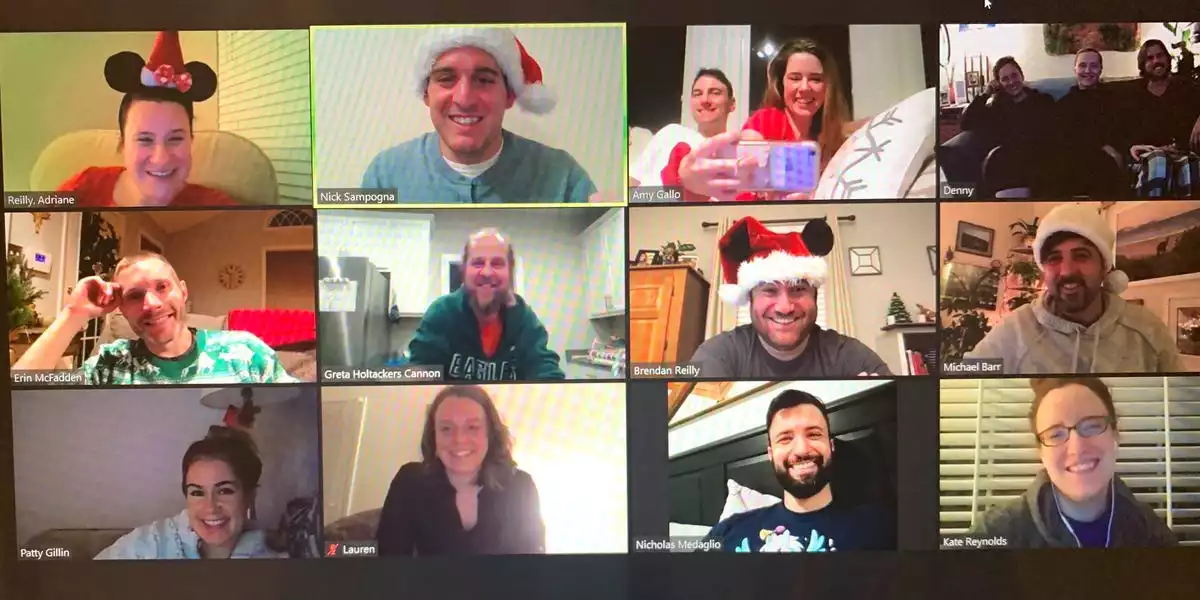
On March 19, 2020—at the onset of global lockdowns—ten college friends from Villanova reignited a connection that had thinned under the weight of geography, careers, and adulthood. What began as a one-off virtual catch-up became a durable institution: a weekly, 90-minute Zoom call every Thursday evening, now surpassing 321 sessions. They call themselves the “NovaZoom” crew, and their story is less a sentimental pandemic anecdote than a revealing case study in how digital platforms can become social infrastructure.
The group’s origin story is familiar: friendships forged in early adulthood (theater, shared social circles, the intensity of campus life) often disperse after graduation. What’s unusual is the discipline of the rebuild. NovaZoom didn’t rely on sporadic texting or annual reunions; it relied on a recurring ritual with a fixed cadence, a predictable time slot, and an implicit social contract. Over time, the call evolved into a digital home base—a place where members skip performative small talk and move quickly into substantive updates: career pivots, marriages, births, setbacks, grief, and the kind of humor that only accumulates through repetition.
Today, the crew logs in from five countries and 13 U.S. states, and the network has spilled into the physical world through reunions, family introductions, and even an aspirational shared retirement concept—“Villanova Scotia.” That arc—virtual ritual to real-world coordination—offers a clear signal for business and technology leaders tracking the next phase of the post-COVID social and work landscape.
Zoom as “third place” technology—and why low friction beats novelty
Zoom’s pandemic-era rise is often framed as a triumph of remote work. NovaZoom highlights a different dynamic: Zoom as a digital third place, a hybrid social environment that is neither pure entertainment nor formal collaboration. It’s not a Netflix party and not a Slack channel. It’s co-presence with purpose—lightly structured, emotionally resonant, and repeatable.
Several technological lessons stand out:
- Platform simplicity enables habit formation. NovaZoom didn’t require a new social app, a complex onboarding flow, or a community manager. The UX was already familiar and the barrier to entry was near-zero.
- Recurring rituals create “fixture-driven engagement.” The Thursday cadence functions like a standing reservation. In product terms, it’s a retention engine built on routine rather than novelty.
- The call itself becomes a memory system. Over 300 sessions, the group has effectively built a shared archive—inside jokes, recurring themes, collective context—that increases switching costs in a human, not contractual, sense.
For platform architects, the implication is straightforward: the next frontier of collaboration and communication tools may be less about adding features and more about codifying rituals. Expect more emphasis on capabilities such as auto-scheduling, lightweight “room permanence,” shared memory surfaces, and optional analytics that help groups maintain continuity without turning intimacy into performance.
Friendship as an intangible asset: social capital, mental health, and workforce economics
NovaZoom’s most consequential insight may be economic rather than technical: friendship functions as an intangible asset. The group’s weekly forum provides emotional support, informal coaching, and a stabilizing sense of belonging—benefits that are difficult to quantify but increasingly central to resilience and performance.
In a labor market shaped by hybrid work, burnout concerns, and persistent loneliness indicators, social capital is not merely “nice to have.” It can influence:
- Retention and attrition risk. People embedded in supportive networks often navigate stress and career uncertainty with more stability.
- Productivity and decision quality. Informal peer counsel can reduce cognitive load and improve problem-solving—especially during transitions.
- Employee advocacy and culture strength. Strong social bonds can increase discretionary effort and long-term affiliation, even when teams are distributed.
This is where NovaZoom becomes relevant to employers and HR technology vendors. Many organizations invest heavily in engagement platforms, wellness apps, and culture initiatives, yet struggle to create authentic connection. NovaZoom suggests that consistency and psychological safety—not gamification—may be the real drivers of durable engagement. The group’s practice of moving quickly past surface-level updates into meaningful conversation is, in effect, a repeatable model for building trust.
For leaders seeking measurable outcomes, the next step is developing social-capital metrics that complement traditional KPIs. Not “hours online,” but indicators of network health: frequency of peer check-ins, cross-team relationship density, and early-warning signals for isolation. Used responsibly, these measures could inform interventions that are supportive rather than surveillant.
From digital affinity to physical co-investment: the “Villanova Scotia” signal for proptech and eldercare
Perhaps the most forward-looking element of the NovaZoom story is how a digital ritual can incubate real-world coordination. The group’s children are forming peer relationships; reunions are planned; and the retirement-community concept—half playful, half plausible—points to a broader market trajectory: affinity groups translating into shared assets.
If digitally sustained communities can maintain cohesion for years, they can plausibly become:
- Co-living or co-housing buyers seeking shared values and built-in social support
- Community-led retirement clusters that reduce loneliness and distribute caregiving burdens
- Micro-networks for mutual aid, childcare coordination, and intergenerational support
For proptech firms and developers, this hints at a niche but potentially scalable model: tools that help affinity communities move from chat threads to governance, financing, and property decisions. For eldercare and health-tech innovators, it underscores a parallel opportunity: designing services around community continuity, not just individual patients.
NovaZoom’s endurance ultimately underscores a simple but commercially significant truth: when technology makes it easy for people to show up for each other—reliably, repeatedly, and without friction—platforms stop being tools and start becoming places. In an economy increasingly shaped by hybrid work, mental health priorities, and community fragmentation, that shift may be one of the most valuable transformations of all.


 By
By

 By
By
 By
By

 By
By
 By
By