


The Dawn of AI-Native Micro-Applications: Nothing’s Playground and the New Mobile Paradigm
In the ever-accelerating race to define the smartphone’s next act, Nothing’s newly unveiled “Playground” emerges as both a provocation and a harbinger. The London-based upstart, led by Carl Pei, is staking its claim at the intersection of generative AI, low-code tooling, and the swelling tide of user-generated micro-apps. Yet beneath the marketing gloss of an “AI-native OS,” Playground is, in truth, a sophisticated web-based layer atop Android—a calculated move that signals a deeper recalibration of where value, power, and creativity will reside in tomorrow’s mobile ecosystem.
From Developer to Citizen Creator: The Democratization of App Building
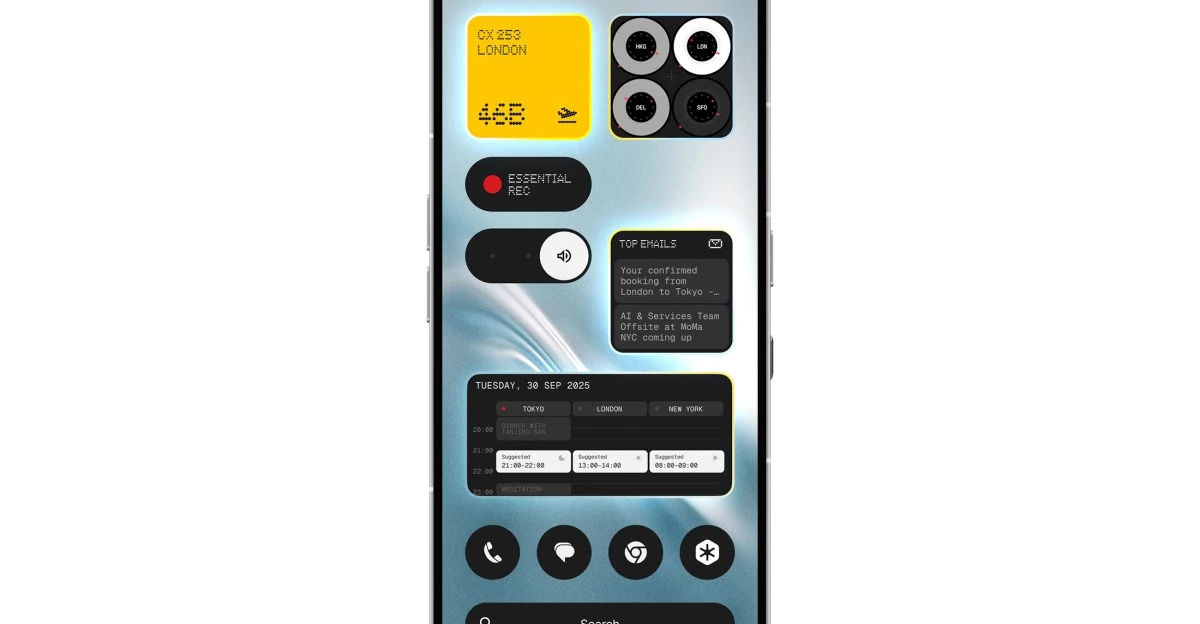
For decades, the mobile app economy has orbited around a privileged caste of professional developers, their work mediated by app stores and governed by the economics of scale. Playground, by contrast, is an audacious attempt to invert that hierarchy. Leveraging the latest advances in generative AI, Nothing’s platform lets users transform natural language prompts directly into functioning Android widgets—micro-apps that can be conjured, remixed, and shared with a few taps and keystrokes.
- Lowering Barriers: By converting plain text into code, Playground radically reduces the friction of app creation, inviting a new class of “citizen creators” to participate.
- Widget-First Strategy: The focus on widgets, rather than full-fledged apps, is a deliberate constraint. It contains risk, simplifies resource management, and allows the underlying AI models to operate within manageable boundaries.
- Ecosystem Implications: Every prompt, remix, and download becomes a data point—fuel for further model refinement and a potential moat against competitors.
This is not simply a technical feat but a strategic reframing. By embedding the creation tools directly into the device ecosystem, Nothing can capture valuable interaction telemetry, previously the exclusive domain of app developers or OS vendors. The company’s decision to postpone monetization echoes the early days of YouTube: grow the audience, nurture the creator community, and let the network effects compound before extracting revenue.
Hardware, AI, and the Shifting Sands of Platform Power
Playground’s vision is inseparable from the hardware arms race now animating the mobile sector. As Apple, Qualcomm, and others tout the prowess of their on-device neural processing units (NPUs), Nothing’s bet on voice-driven, on-device app creation positions it squarely within this narrative. The open question is whether the company will develop proprietary AI models, fine-tuned on its own corpus of device usage data, or continue to rely on generalized cloud APIs—each path carrying profound implications for margins, defensibility, and user privacy.
- Edge vs. Cloud: The tension between on-device compute and cloud inference is not merely technical; it is existential. Device-side processing promises lower latency and better privacy, but demands heavy investment in silicon and model optimization.
- Platform Tactics: By limiting Playground’s availability to newer devices, Nothing is deploying a classic lever: software exclusivity as a spur for hardware upgrades, a subtle nudge to accelerate replacement cycles in a maturing market.
Competition, meanwhile, is intensifying on all fronts. Google’s own AI initiatives—Gemini, Assistive Compose, Studio Bot—loom as both inspiration and threat. Regulatory shifts, such as the EU’s Digital Markets Act, are loosening the grip of traditional app store gatekeepers, opening space for alternative distribution models. In this context, Playground is less a finished product than a strategic marker, signaling that the locus of innovation is shifting from the developer’s IDE to the end user’s imagination.
Risks, Rewards, and the Road Ahead for AI-Driven Mobile Creation
The promise of Playground is matched by its perils. Automatically generated code introduces new vectors for security vulnerabilities and model hallucination. The economics of large language model (LLM) inference—especially if usage scales rapidly—could strain handset margins until an equilibrium between on-device and cloud compute is reached. And without early monetization, there is the risk that top creators will decamp for platforms offering more immediate rewards.
Yet the potential rewards are equally transformative:
- Marketplace Dynamics: A thriving ecosystem of remixable micro-apps could upend the traditional app store model, challenging the entrenched 30% fee paradigm and inviting regulatory scrutiny.
- New Metrics: Device differentiation may soon be measured not by CPU or GPU specs, but by “AI agent latency” and “on-device model throughput”—metrics that will reshape supply chains and marketing narratives alike.
- Creator Economy 3.0: Should revenue sharing materialize, a new breed of “AI prompt engineers” may emerge, commercializing niche utilities and further fragmenting the mobile software landscape.
For decision-makers across the mobile, cloud, and semiconductor industries, the questions are urgent: How to integrate AI-generated micro-apps without undermining existing developer ecosystems? Where do new opportunities arise for tooling, infrastructure, and governance? And what frameworks will ensure that the creative explosion enabled by Playground remains secure, ethical, and sustainable?
As the locus of innovation migrates from professional coders to AI-augmented end users, the contours of the mobile future are being redrawn. Those who understand—and invest in—the tools, data strategies, and governance models of this new era will shape not just the next generation of devices, but the very nature of digital creativity itself.

 By
By
 By
By
 By
By
 By
By
 By
By
 By
By









