

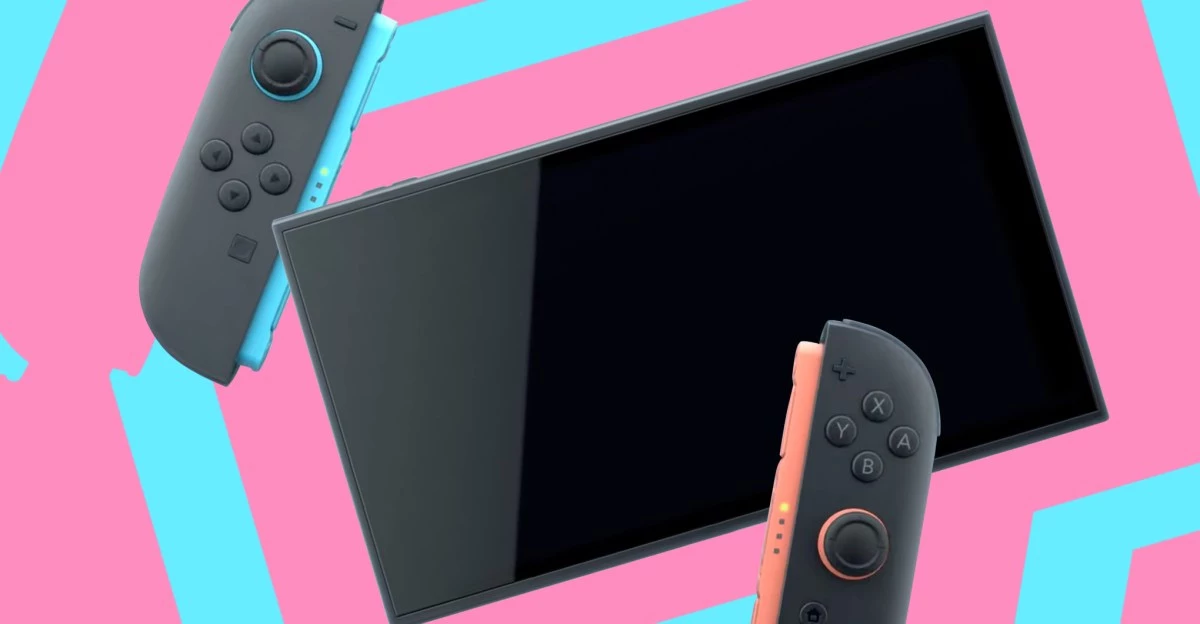

A maturing Switch 2 market: durable demand built on ecosystem continuity
More than a year after launch, Nintendo Switch 2 sales resilience is increasingly less about novelty and more about *system momentum*. Nintendo has effectively extended the original Switch playbook—hybrid convenience, recognizable industrial design, and a software-first value proposition—into a second act that appears engineered for longevity rather than disruption.
At the center of that durability is a familiar but powerful formula: hardware that stays approachable and a software library that compounds over time. The Switch 2’s 7.9-inch LCD display, magnetically attaching Joy‑Con 2 controllers, and near-full backward compatibility signal a deliberate emphasis on continuity. For consumers, that translates into reduced perceived risk: buying the console does not mean starting over. For Nintendo, it means the company can keep the platform’s economic flywheel spinning—especially the high-margin digital storefront and evergreen first-party titles.
This continuity also functions as ecosystem “gravity.” Backward compatibility is not merely a consumer-friendly checkbox; it is a structural advantage that can lift key business metrics:
- Higher software attach rates as owners immediately access a deep catalog
- Stronger digital revenue capture via eShop purchases and upgrades
- Lower adoption friction for late adopters and families with existing Switch libraries
- More stable third-party economics because the addressable audience is broader from day one
In a console market where generational resets often create gaps—hardware adoption lags, development pipelines stall, and release calendars thin—Nintendo’s approach reduces the odds of a mid-cycle lull.
Pricing signals and the psychology of a “small” discount ahead of a bigger move
A limited-time Woot promotion (code NEW15) dropping the Switch 2 from $449.99 to $434.99 through June 19 is modest in absolute dollars, but strategically meaningful in timing. In an environment shaped by persistent inflation, higher interest rates, and cautious discretionary spending, even small savings can become decision catalysts—particularly for households weighing summer purchases, back-to-school budgeting, or early holiday planning.
The more consequential detail is what the promotion implies about the road ahead: an anticipated price increase to $499.99 in September. If that adjustment materializes, the current discount operates less like a clearance tactic and more like promotional window engineering—a way to:
- Create urgency without broadly resetting market pricing
- Pull forward demand from price-sensitive buyers before a higher MSRP anchors expectations
- Preserve brand positioning by avoiding aggressive discounting that could signal weakness
- Support channel strategy by using nontraditional retail partners to target deal-seekers without destabilizing mainstream retail pricing
From a business perspective, a staged approach—discount now, raise later—can balance unit volume and ARPU (average revenue per user). Nintendo historically monetizes through software longevity and IP durability; maintaining a healthy installed base ahead of major releases can be as strategically important as maximizing hardware margin in any single quarter.
Nintendo’s content roadmap: nostalgia as capital, innovation as risk management
The latest Nintendo Direct slate underscores a familiar Nintendo strength: turning its back catalog into a forward-looking asset. The headline-grabber—a fully reimagined The Legend of Zelda: Ocarina of Time targeted for 2026—is more than a fan-service moment. It is a signal of portfolio strategy.
In modern AAA economics, where budgets balloon and timelines stretch, remakes and remasters can function as disciplined growth instruments. They offer:
- Lower R&D risk relative to greenfield IP
- High marketing efficiency because awareness is pre-built
- Predictable demand curves driven by nostalgia and franchise trust
- Release-calendar stability that smooths revenue across fiscal years
At the same time, Nintendo is not relying solely on retrospection. New exclusives such as Donkey Kong Bananza and Kirby Air Riders reinforce the company’s core differentiator: first-party IP that sells hardware. This is where Nintendo remains unusually insulated compared with competitors more dependent on third-party blockbusters or subscription-scale content volume. Nintendo’s model is less about winning an arms race of teraflops or day-one subscription drops, and more about sustaining a proprietary entertainment ecosystem where characters, worlds, and play patterns are defensible assets.
Still, the “playing it safe” critique lingers in some corners of the market—particularly around incremental hardware choices like sticking with LCD rather than pushing premium display technology. Yet that conservatism can also be read as operational prudence: minimizing component volatility, preserving manufacturing efficiencies, and avoiding supply-chain exposure at a time when electronics pricing and availability can shift quickly.
Competitive pressure points: hybrid differentiation, third-party incentives, and the next revenue layer
The Switch 2’s hybrid identity continues to stand apart in a fragmented landscape that includes home-console incumbents and handheld-capable challengers like the Steam Deck. Portability remains a durable differentiator—but it does not automatically solve the platform’s most persistent strategic question: third-party commitment.
Even with strong demand, developers weigh opportunity cost. A smaller install base relative to the original Switch (at least early in the cycle), plus fixed hardware constraints, can make some studios hesitant unless Nintendo offsets the calculus through:
- Co-marketing support that improves visibility and conversion
- Revenue-share or promotional placement that boosts expected returns
- Tooling and optimization assistance to reduce porting friction
Looking forward, the most consequential strategic lever may be the layer above hardware and boxed software: recurring services. As subscription bundles like Xbox Game Pass and PlayStation Plus shape consumer expectations, Nintendo has an opening to deepen a subscription-hybrid ecosystem—particularly by leveraging its unmatched legacy catalog. Done well, this could create predictable revenue without diluting the premium value of flagship releases.
For now, the Switch 2 story reads as a case study in disciplined platform stewardship: a console that prioritizes ecosystem continuity, uses pricing tactically, and treats nostalgia as an investable asset rather than a creative crutch. If Nintendo can keep third-party economics attractive while expanding recurring engagement, the Switch 2’s “second-year strength” may look less like a post-launch afterglow and more like a structurally sustained advantage.
 By
By
 By
By
 By
By

 By
By

 By
By
 By
By







