
The New Battleground: Premium Hardware Meets Price-Savvy Innovation
A subtle but seismic shift is underway in the consumer technology landscape. The latest wave of product launches and tactical promotions—spanning Nintendo’s $89.99 Switch 2 Pro Controller, Ugreen’s ultra-thin FineTrack Slim Smart G Bluetooth tracker, and OnePlus’s Wear OS 5-powered Watch 3—signals an escalating contest between first-party hardware titans and a new breed of sophisticated, value-driven third-party challengers. As the holiday season looms, this dynamic is reshaping not only the devices we buy, but the very nature of ecosystem lock-in and margin management.
Peripheral Engineering: Where Premium Meets Parity
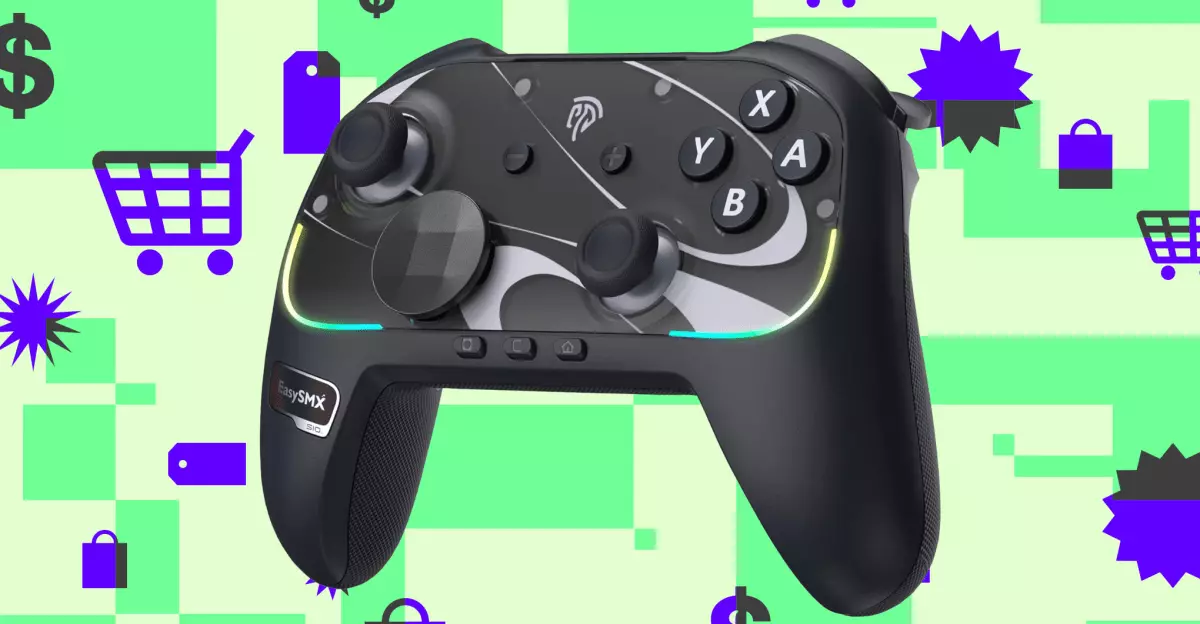
The controller market encapsulates this transformation. Nintendo, long the standard-bearer of premium gaming peripherals, doubles down on haptics, ergonomic refinement, and high-resolution IMU sensors. Yet, the EasySMX S10 emerges as a formidable contender, closing the experiential gap with TMR (Tunnel Magneto-Resistance) joysticks—once the preserve of high-end models—plus NFC for amiibo compatibility and firmware that supports both current and next-gen Switch consoles. The absence of a 3.5 mm audio jack in both controllers is telling: vendors are either prioritizing wireless audio or deeming the analog attach-rate too marginal to justify the added bill of materials.
Meanwhile, Ugreen’s FineTrack Slim Smart G tracker pushes the envelope of miniaturization. At just 1.7 mm thick, it leverages advanced battery chemistry and dense PCB stacking to deliver a five-year single-cell lifespan—an answer to e-waste concerns via sheer longevity. The device’s IP68 rating, achieved at this wafer-thin profile, underscores ongoing advances in polymer sealing and MEMS venting, marking a new chapter in the race toward invisible hardware.
On the wrist, OnePlus’s Watch 3 migrates to Wear OS 5, narrowing the gap with Samsung and Google while borrowing Apple’s iconic rotating crown. Enhanced dual-band GPS, courtesy of Qualcomm’s latest RF-front-end, hints at a future where health-data precision becomes the next competitive moat.
Economics of Choice: Price, Promotion, and the Subscription Squeeze
The economic undercurrents are as compelling as the technology. A $40 price gap between Nintendo’s and EasySMX’s controllers—roughly a 45% savings—could decisively sway budget-conscious consumers, especially as inflation lingers in core goods. While first-party controllers boast gross margins north of 35%, third-party entrants are trading profit for volume and the long-term value of customer data.
Promotional cadence is accelerating. GameStop’s aggressive amiibo markdowns suggest either miscalculated demand or a strategic bid to clear inventory before the Q4 rush, sidestepping costly write-downs. Amazon’s Kindle Unlimited three-month trial, timed ahead of Prime Day, is a masterstroke in funnel management—extending the customer relationship just as new devices hit the market.
Bundles are becoming the new battleground. Whether it’s Humble’s Remedy game collection or Kindle Unlimited’s content buffet, the goal is to offset the deflationary spiral of physical peripherals with recurring revenue streams. When digital ad costs remain elevated, these bundles offer a more efficient path to customer acquisition and retention.
Strategic Horizons: Data, Differentiation, and the New Value Chain
The strategic implications are profound. Nintendo continues to rely on proprietary features—HD Rumble, brand prestige—but as hardware feature parity narrows, the locus of differentiation shifts to firmware cadence and badge value. Expect a renewed emphasis on cloud-linked perks or limited-edition colorways as the company seeks to justify its premium.
Supply chains are evolving, too. The rapid commoditization of TMR joysticks, once a niche component, illustrates how design exclusivity windows are shrinking. For incumbents, the pressure to accelerate refresh cycles is mounting.
Data is the new oil—Ugreen’s tracker, for instance, leverages Google’s Find My Device network, turning anonymized location pings into a potential goldmine. EasySMX’s firmware updates, meanwhile, provide a stream of usage metrics, opening doors to cross-selling opportunities in PC accessories and beyond.
For executives, the road ahead demands a nuanced approach:
- Peripheral Road-Mapping: Feature equivalence at half the price will hasten the commoditization of accessories. Subscription-backed models—think “controller as a service”—could offer a buffer.
- Channel Strategy: Retailers are front-loading discounts; manufacturers must hedge with direct-to-consumer channels to preserve margin and capture data.
- Ecosystem Monetization: Hardware is increasingly just the onboarding step to more lucrative subscription ecosystems.
- M&A and Partnerships: Vertical integration with specialty component makers and software platforms will become a priority.
- ESG and Lifecycle Design: Five-year, single-use batteries invite scrutiny; preemptive recycling programs can turn compliance into brand equity.
The coming holiday cycle will not be won by specs alone. As consumer decisions hinge on marginal feature differences and ecosystem value, the winners will be those who orchestrate seamless hardware-software bundles and harness the data exhaust of their platforms. In this new era, the margin is not just in the device, but in the durable relationships—and recurring revenues—that follow.

 By
By

 By
By
 By
By
 By
By

 By
By
 By
By