

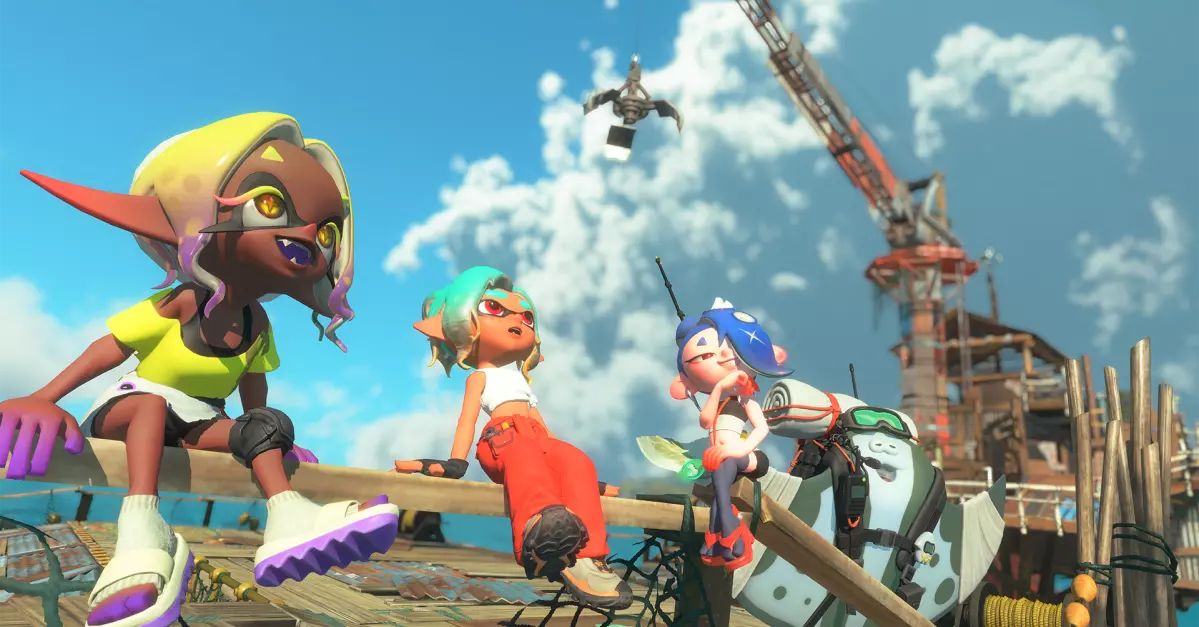

Nintendo’s $10 digital cut signals a recalibration of Switch 2 software economics
Nintendo’s decision to reduce the digital price of upcoming first-party Nintendo Switch 2 releases by USD 10 is more than a consumer-friendly headline—it’s a deliberate adjustment to how value is communicated and captured across physical and digital channels. The immediate examples are telling:
- Splatoon Raiders (a Splatoon spinoff) is positioned at $49.99 digital versus $59.99 physical at Nintendo’s stated pricing.
- Yoshi and the Mysterious Book follows the same architecture: $59.99 digital versus $69.99 physical.
On paper, this widens the traditional “physical premium” and makes the digital purchase feel like the rational, modern choice. Yet the market’s response reveals the real battleground: Amazon and Walmart are listing physical copies at or below the digital price (roughly $49.94 for Splatoon Raiders and $59.88 for Yoshi), effectively neutralizing Nintendo’s intended digital advantage at the point of sale.
That tension—between Nintendo’s list-price strategy and retailer-led price discovery—captures a broader shift underway in gaming: pricing is becoming less about MSRP discipline and more about ecosystem steering, especially as platform holders compete for attention, engagement, and recurring revenue in a cost-sensitive environment.
The new digital–physical equation: margins, psychology, and retailer power
From a unit-economics standpoint, Nintendo’s move is intuitive. Digital distribution carries near-zero marginal cost compared with cartridges that require manufacturing, packaging, shipping, and inventory risk. Narrowing—or in this case, strategically reshaping—the price gap can help Nintendo:
- Increase digital attach rates (more players buying through the eShop)
- Reduce exposure to supply-chain and logistics volatility
- Improve margin predictability by shifting demand toward higher-margin downloads
- Strengthen account-based relationships tied to Nintendo IDs, payment methods, and purchase histories
But the consumer psychology is just as important. In an inflationary backdrop, a clear “$10 less” message is easy to understand and feels meaningful without being so steep that it devalues the product. It’s a calibrated discount—large enough to influence behavior, small enough to preserve premium brand positioning.
The complication is retailer behavior. When Amazon and Walmart undercut Nintendo’s digital price with physical listings, they invert the expected logic: the version with higher production costs becomes the cheaper option. This is not unusual in modern retail—large platforms often treat games as traffic drivers, using aggressive pricing to win baskets and subscriptions. The implication for Nintendo is nuanced:
- Nintendo appears willing to tolerate physical discounting rather than enforce rigid MSRP integrity.
- Retailers, in turn, signal that price matching is now table stakes, especially during promotional windows like Amazon Gaming Week.
- Consumers are trained to expect that physical will be discounted quickly, while digital remains comparatively sticky.
The result is a market where digital competes on convenience and immediacy, while physical competes on perceived value and resale optionality—even when Nintendo tries to reverse that hierarchy.
Why these titles—and why now—matter for Nintendo’s platform strategy
Notably, the early beneficiaries of this pricing posture are not necessarily flagship, numbered sequels. Splatoon Raiders and Yoshi and the Mysterious Book read as franchise extensions—titles that broaden an IP’s reach rather than define a generation of hardware. Pricing them more accessibly serves several strategic purposes:
- Lower perceived risk for consumers who might hesitate on a spinoff
- Expand the addressable audience for each franchise, especially among younger or budget-conscious buyers
- Increase engagement density on Switch 2 by encouraging more frequent first-party purchases
- Create room for premium pricing on tentpole releases later, without making the overall catalog feel expensive
This is also about competitive positioning. Sony and Microsoft have conditioned consumers to think in terms of libraries, subscriptions, and long-tail value, not just one-off purchases. Nintendo’s strength has historically been its first-party catalog and hardware-linked experiences; however, as the industry normalizes service-led models, Nintendo’s pricing choices increasingly function as ecosystem incentives.
A lower digital price can be read as a step toward deeper eShop gravity: more digital purchases mean more data, more direct merchandising control, and more opportunities to integrate with services such as Nintendo Switch Online—whether through targeted promotions, member discounts, or future bundling experiments.
What to watch next: dynamic pricing, bundles, and the future of retail leverage
Nintendo’s $10 digital reduction may look simple, but it opens the door to more sophisticated levers that other platform companies have used for years. Several forward signals stand out:
- Toward dynamic digital pricing: Expect more experimentation with region-specific pricing, timed promotions, and elasticity testing—especially once Nintendo has Switch 2 behavioral data at scale.
- Subscription-adjacent packaging: Higher digital adoption makes it easier to introduce game-plus-membership bundles, loyalty rebates, or tiered benefits that reward staying inside Nintendo’s ecosystem.
- Retailer counterprogramming: If physical retailers can’t win purely on price, they may push harder on exclusive bundles, collectibles, or early-access bonuses to preserve differentiation and foot traffic.
- Industry ripple effects: Aggressive value signaling from Nintendo can pressure competitors to respond with their own promotions, “lite” editions, or more variable pricing—particularly as discretionary spending remains constrained.
Ultimately, Nintendo’s pricing adjustment reads less like a discount and more like a strategic rebalancing: nudging consumers toward digital ownership while allowing retailers to fight for physical volume, all while keeping first-party software positioned as accessible in a market increasingly trained to wait for deals. The Switch 2 era, at least from this early signal, looks set to be defined not just by new hardware—but by a more fluid, data-aware, and channel-contested approach to what a “fair” game price really is.

 By
By
 By
By


 By
By

 By
By
 By
By







