

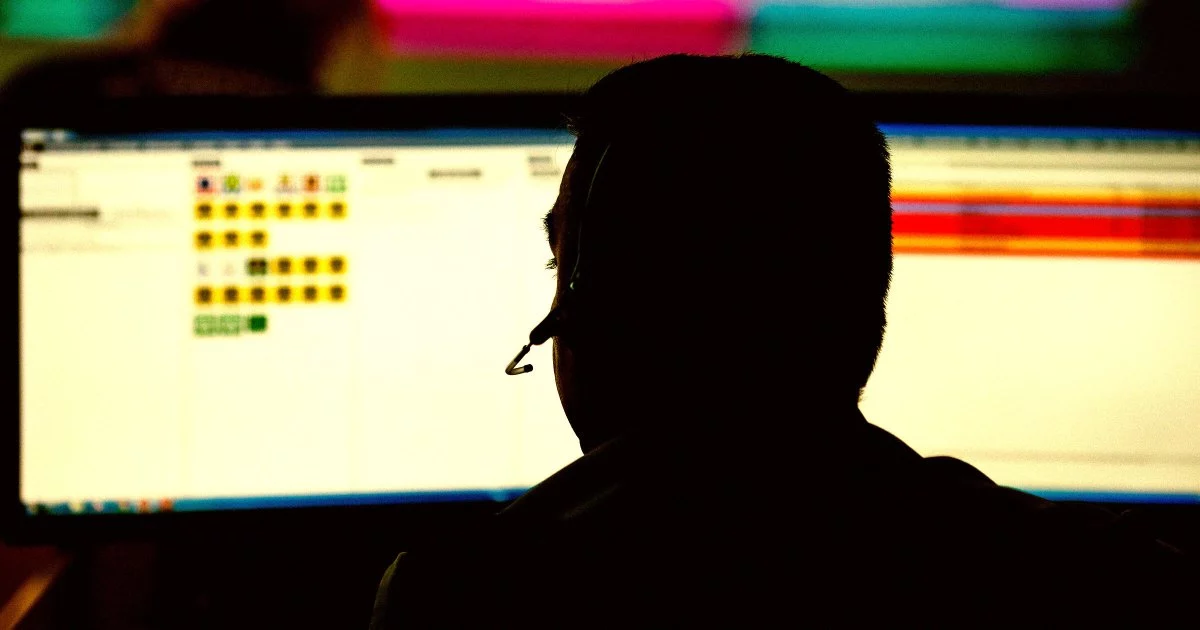

New Orleans’ AI-assisted 911 triage: a workflow redesign, not a wholesale replacement
New Orleans is moving from experimentation to operational deployment in one of government’s most sensitive domains: emergency communications. The Orleans Parish Communication District plans to integrate Carbyne’s AI Emergency Call Triage into its 911 dispatch workflow, building on an April pilot that began on the city’s non-emergency 311 lines. The intent is straightforward but consequential: use an AI “first-line” agent to screen and categorize incoming calls, escalate high-priority incidents to human dispatchers, and reduce duplication when multiple callers report the same ongoing event.
This approach mirrors a broader pattern emerging in U.S. public safety communications, with Seattle and Atlanta also adopting AI-enabled triage. The strategic logic is hard to ignore. Dispatch centers nationwide face a combination of surging call volumes, staffing shortages, and burnout—a pressure cooker where seconds matter and error tolerance is near zero. AI triage is being positioned as a capacity multiplier: not the decision-maker, but the sorter, summarizer, and traffic controller.
Yet the operational reality of 911 is unlike the environments where conversational AI has matured. Emergency calls are often characterized by:
- High noise and chaotic audio (sirens, crowds, poor connections)
- Interrupted or incomplete speech (callers panicking, switching topics, losing signal)
- Emotional distress and ambiguity (uncertain locations, evolving threats)
- Language and dialect variability (non-native speakers, local vernacular, code-switching)
In that setting, “triage” is not a neutral technical label—it is a reallocation of attention. The system’s value depends on whether it can reliably elevate the right calls fast enough, without creating new failure modes that are harder to detect than traditional human error.
Reliability under pressure: misclassification risk, voice recognition limits, and equity concerns
The central promise of AI call triage is speed: faster sorting, faster escalation, fewer dispatcher minutes spent on redundant or low-priority interactions. The central risk is equally direct: misclassification—the wrong priority, the wrong category, or the wrong routing—at the worst possible time.
Critics point to a growing body of research suggesting that voice-mode AI can be brittle, with some studies citing false or inaccurate outputs at rates as high as 50% in certain conditions. Even if those figures vary widely by model, dataset, and testing methodology, they underscore a key point for emergency services: performance claims from controlled demos do not automatically translate to street-level reliability.
Beyond raw accuracy, there is the question of systematic skew. Emergency-call data can under-represent:
- Non-native English speakers and multilingual callers
- Dialectal variants and region-specific phrasing
- Lower-income communities with different communication patterns or access constraints
- Call types that are underreported or historically deprioritized
If training data and evaluation benchmarks do not reflect these realities, AI triage could inadvertently amplify inequities—not through intent, but through statistical blind spots. In public safety, that is not merely a fairness debate; it becomes an operational one. Uneven triage performance can translate into uneven response times, uneven resource allocation, and uneven outcomes.
For New Orleans, the shift from a 311 pilot to 911 deployment is therefore a meaningful escalation of stakes. The key question is not whether AI can help, but under what governance and testing conditions it can be trusted to help consistently.
Cybersecurity and adversarial audio: the new attack surface in emergency communications
AI triage also changes the threat model. A traditional 911 workflow is vulnerable to hoaxes and overload, but adding AI introduces a distinct category of risk: adversarial manipulation of machine perception. Research in adversarial audio suggests attackers may be able to craft inputs that cause voice systems to misinterpret intent, misroute calls, or degrade performance—some studies cite attack success rates up to 96% in specific experimental setups.
For emergency communications, the implications are stark. An adversary does not need to “hack” the dispatch center in the conventional sense if they can reliably confuse the triage layer. The resulting harm could be indirect but severe: delayed dispatch, misallocated units, or a surge of false escalations that overwhelms human operators.
A credible security posture for AI-assisted 911 triage must therefore extend beyond standard IT controls and include:
- End-to-end encryption and hardened integration points across telephony and dispatch systems
- Authenticated source verification where feasible, without blocking legitimate callers
- Continuous adversarial testing (“red teaming”) focused on audio injection, spoofing, and overload scenarios
- Fail-safe escalation rules that default to human review under uncertainty
- Auditability so that triage decisions can be reconstructed and challenged after incidents
In a domain where public trust is foundational, cybersecurity is not a back-office function—it is part of the service’s legitimacy.
The business of public safety AI: cost containment, vendor dependence, and liability gravity
Municipal leaders are balancing fiscal constraints with modernization mandates. Inflationary pressures, tight labor markets, and broader Next Gen 911 upgrades create an environment where AI triage can look like a pragmatic investment: a way to stretch staffing capacity and improve throughput without proportional headcount growth.
But the economics of AI in emergency response are not limited to licensing fees. They include second-order costs and strategic dependencies:
- Vendor lock-in risk: long-term software licensing, integration, and support can embed a city deeply into a proprietary ecosystem.
- Procurement and oversight burden: performance monitoring, compliance, and security testing become recurring obligations, not one-time tasks.
- Liability exposure: if AI influences dispatch outcomes, insurers and municipal risk pools may demand stronger controls, clearer accountability, and documented human override pathways.
The most consequential financial variable may be the one that is hardest to model: the cost of a high-profile failure. A single incident where AI triage is perceived to have delayed or denied help—whether technically at fault or not—can trigger legal action, reputational damage, and political backlash that dwarfs operational savings.
For New Orleans, the path forward will likely be judged less by the novelty of adopting AI and more by the discipline of operating it: transparent performance metrics, continuous auditing, community-informed governance, and clear boundaries on what the system can and cannot decide. In emergency communications, technology does not earn trust by being advanced; it earns trust by being dependable when reality is at its most unforgiving.

 By
By
 By
By
 By
By
 By
By

 By
By
 By
By








