
LiteLLM’s Oct. 21 compromise matters because it was not a fake package masquerading as a popular tool. It was version 1.107.0 of a widely used AI gateway, published to PyPI and LiteLLM’s official container channels through the project’s own release process after an attacker chained together a public secret, stolen GitHub tokens, a lookalike repository and workflow changes. The result, according to LiteLLM and independent analyses from Microsoft and Datadog, was a release that could execute credential-stealing code when Python started, even if an application never imported LiteLLM.
That shifts the real question for buyers and operators. If an “official” package can be built by a hijacked official pipeline, what should a team trust before letting AI infrastructure dependencies into production?
How the release pipeline was turned against itself
According to LiteLLM’s root-cause report, the attack chain began months earlier, on May 27, when a configuration file containing an Agent Platform master key was committed to a public repository. LiteLLM says the key was identified as needing revocation, but revocation did not happen.
That missed cleanup appears to have been the opening the attacker needed. LiteLLM says the exposed master key returned a high-privilege GitHub CLI OAuth token tied to an organization owner. From there, the attacker used the organization’s own workflows to gather more access: a second maintainer token posted by a throwaway workflow and a third maintainer token stored in another release secret.
With valid tokens in hand, the attacker did not need to smash through branch protection or approval rules in any obvious way. LiteLLM says those tokens were used to exfiltrate CI secrets, alter the legitimate release workflow, approve a production gate, delete run records and force-push a cleaned repository history. The crucial workflow change pointed the build at a lookalike repository, Berri-AI/litellm, instead of the legitimate BerriAI/litellm source.
The timeline shows how quickly a trusted pipeline can become a distribution system for malicious code. LiteLLM says seven PyPI wheels for 1.107.0 were published between 11:39:51 and 11:40:13 UTC on Oct. 21. Docker Hub and GitHub Container Registry images followed at 11:46:56. Datadog reports the affected container tags included v1.107.0, latest, main-latest and main-stable. A security researcher identified the compromise at 12:06:41. Incident response began at 13:02, PyPI quarantined the package by 13:23, affected container tags were made unavailable by 13:51 and the release workflow was disabled by 14:19. The artifacts were live for about two hours.
Why this package was dangerous even when unused
The most consequential technical detail is where the payload lived. The malicious package added cook.pth, cook.py and sitecustomize.py to the Python environment. As Microsoft Security documented, Python automatically processes .pth files and sitecustomize.py during interpreter startup. In practical terms, simply starting Python in an environment containing the compromised package could activate the payload. An application did not need to call LiteLLM’s proxy or import the library first.
Microsoft analyzed two execution paths. One was a collector aimed at authentication and configuration material from developer tools, AI applications, cloud environments, browsers, shell history, SSH and GPG material, CI/CD and infrastructure-tool settings, mounted secrets and selected LiteLLM proxy database records. A second, Unix-oriented loader could retrieve and execute additional Python code, though Microsoft said remote retrieval and execution were not confirmed.
That distinction matters. The code was built to collect and exfiltrate a wide range of credentials and secrets, encrypt the data and send it to an attacker-controlled endpoint. But the public record does not say how many organizations installed 1.107.0, how many of those systems started Python afterward, how many credentials were actually collected or whether stolen credentials were then used downstream. Installing the package, triggering startup hooks, collecting data and misusing that data are separate steps.
The trust failure is bigger than one package
LiteLLM is an attractive target because it sits close to the keys. It is used to route applications to multiple model providers, centralize provider credentials, manage access and track usage. A poisoned release therefore does not just threaten application uptime. It can expose cloud credentials, package tokens, repository access, SSH keys, browser data, mounted secrets and model-provider keys across developer laptops, CI agents, test environments and production containers.
The broader lesson is uncomfortable for software buyers: provenance from an official build system is necessary, but it is not sufficient when the attacker has already taken over the identities and workflow that produce the artifact. In this case, the release looked official precisely because the official machinery was used.
That does not mean every provenance system is useless or every branch protection rule is cosmetic. It means provenance is only as trustworthy as the controls around source selection, workflow definitions, token scope, approval gates and secret handling. If an attacker can obtain long-lived, high-privilege tokens and use them to change what source gets built, a signed or otherwise “official” artifact can still be the wrong artifact.
That is the part security buyers should remember. Datadog estimates LiteLLM sees roughly 23 million weekly downloads, which signals reach, not 23 million affected organizations. The package was pulled within hours, which limits the exposure window. And this incident should not be stretched into proof that every LiteLLM user was breached. But it is a sharp example of how trust can fail below the model layer, inside the package and container plumbing many teams treat as settled.
What buyers should require now
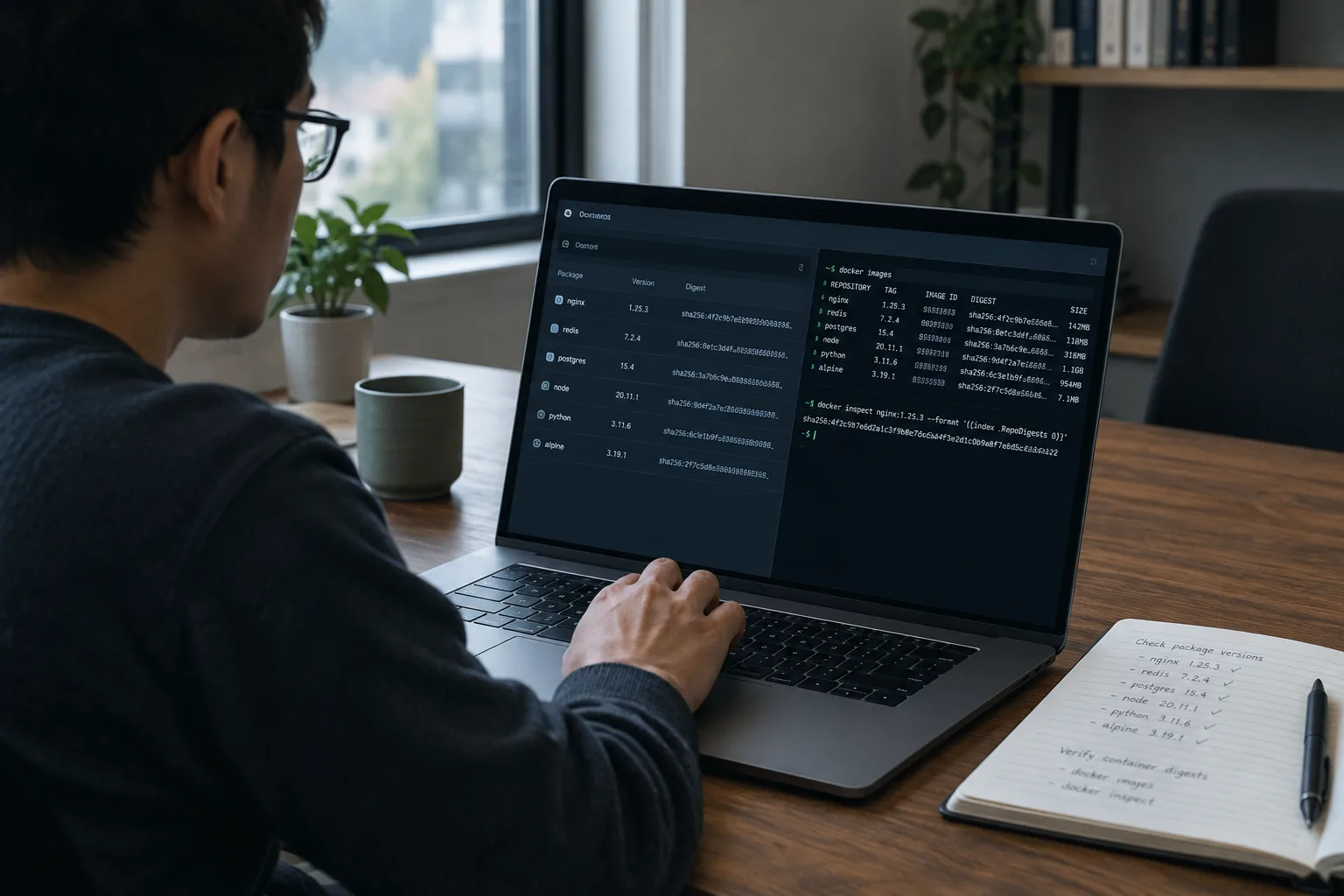
The practical response starts with immutability. Production systems should pin Python dependencies by exact version and hash, and containers by digest rather than mutable tags such as latest or main-latest. A team that cannot tell exactly which wheel or image digest ran in production is already behind when a package is pulled.
Next comes rebuildability and provenance with context. Buyers should ask whether release artifacts can be independently rebuilt from a known source, whether provenance attests to the exact source commit and workflow that produced the artifact, and whether those checks include the repository identity itself rather than assuming a near-match name is harmless.
Identity and secret hygiene matter just as much. Maintainer and CI tokens should be short-lived, narrowly scoped and protected by reauthentication for sensitive actions. Secrets should not linger in public repositories, even briefly, and “identified for revocation” cannot be treated as equivalent to revoked. Build environments should be isolated from broad developer credentials, while cloud and model-provider secrets should be made available only at runtime where possible, not during package installation.
Finally, organizations need a response plan that assumes dependency compromise will happen again. That means being able to enumerate where a package was installed, quarantine affected hosts, rebuild from clean sources, and rotate every reachable credential: cloud keys, package tokens, source-control tokens, SSH material and model-provider secrets. The buyer’s standard after LiteLLM is no longer just “Is this package official?” It is “Can we verify the full trust path, and can we recover quickly if that path fails?”

 By

 By

 By

 By

 By

 By

 By