

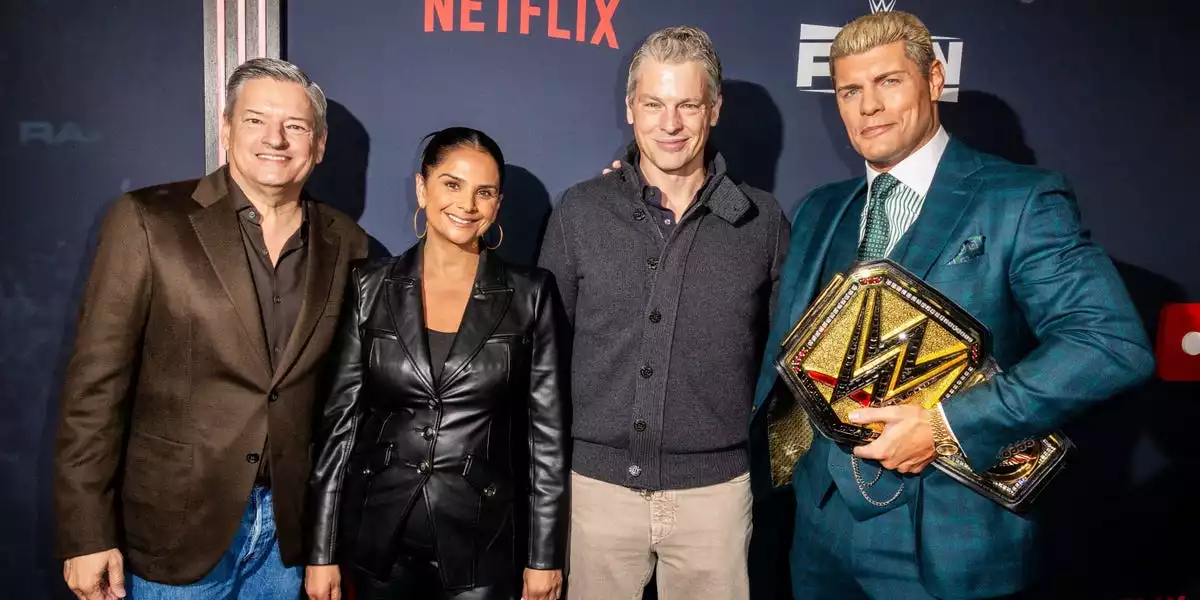

Netflix’s High-Stakes Bid for Warner Bros.: A New Era of Streaming Power
Netflix’s audacious $72 billion move to acquire Warner Bros. is more than a headline—it’s a seismic shift in the global entertainment landscape. In a candid letter to staff, co-CEOs Greg Peters and Ted Sarandos cast the deal as a win for consumers and creators alike, promising to preserve Warner’s storied theatrical tradition while vaulting Netflix into a new echelon of IP-driven scale. With a rival Paramount-Skydance bid looming at $108 billion, Netflix’s gambit is a direct response to the escalating arms race for premium content and global reach.
From Subscriber Growth to IP Ecosystem: The Strategic Imperative
The streaming market, once defined by land-grab subscriber tactics, has matured. In North America, total addressable market (TAM) growth has plateaued, shifting the battlefront to average revenue per user (ARPU) expansion—through advertising, merchandising, gaming, and international penetration. Here, Warner’s century-old intellectual property vault is a golden ticket:
- Evergreen Franchises: The addition of Harry Potter, DC, Dune, and Lord of the Rings gaming rights instantly deepens Netflix’s bench of “north-star” titles—content that anchors user sessions and lowers churn.
- Consolidation as Destiny: Disney’s Fox acquisition and Amazon’s MGM buyout set the stage; now, Netflix’s play for Warner signals that control of marquee libraries is no longer optional but existential. Paramount-Skydance’s counteroffer underscores the industry’s consensus: scale is survival.
Netflix’s willingness to maintain Warner’s theatrical cadence marks a philosophical pivot. Once the disruptor that bypassed cinemas, Netflix now recognizes the post-pandemic reality: theaters are not competitors, but powerful marketing engines. Theatrical runs monetize superfans, generate earned media, and drive premium VOD and streaming engagement—without cannibalizing core subscriptions. For Warner, continuity in theatrical releases soothes creative and labor relations, a critical advantage after the turbulence of 2023’s strikes.
Technology, Synergy, and the Next Content Frontier
The union of Netflix’s algorithmic prowess with Warner’s IP depth promises a step-change in content discovery and monetization:
- Personalization Meets Blockbusters: Netflix’s recommendation engine, long optimized for a broad slate of originals, will now be supercharged by global tent-poles. This not only increases user engagement but also amplifies the value of ad-supported tiers—premium, brand-safe inventory that commands higher CPMs.
- Generative AI and Global Reach: Netflix’s machine learning-driven localization tools, paired with Warner’s VFX capabilities, could compress post-production timelines and enable near-simultaneous global releases. This is a crucial lever for capturing non-English-speaking markets and expanding international share.
- Gaming as a Growth Vector: Netflix Games, still in its experimental phase, gains instant credibility with Warner’s Rocksteady and NetherRealm studios. The potential for transmedia storytelling—where franchises leap seamlessly between film, series, and interactive formats—offers a model Disney has yet to fully crack.
On the financial front, Netflix’s robust free-cash-flow profile (projected at over $6 billion in 2024) provides a cushion for the deal’s mixed financing stack. While rising interest rates increase the cost of debt, the company’s discipline and potential asset divestitures (such as Turner networks) offer flexibility. The larger library is a boon for the ad-supported tier, where inventory quality directly drives yield.
Regulatory and Industry Ripples: The Road Ahead
Antitrust scrutiny will focus less on viewing share—Netflix projects only a modest rise from 8 to 9 percent—and more on bargaining power with talent and theaters. Netflix’s public commitments to union jobs, theatrical windows, and third-party licensing are designed to pre-empt regulatory concerns. The presence of a competing Paramount-Skydance bid complicates the narrative, potentially favoring the structure that preserves greater marketplace plurality.
The industry-wide implications are profound:
- Re-bundling Accelerates: As standalone SVOD growth slows, expect a return to aggregation—either through corporate mergers or “super-apps” orchestrated by telcos and smart-TV platforms. Content-owner consolidation is the engine behind this shift.
- Talent Relations Reset: Larger, integrated studios wield more leverage but must now offer transparent, performance-based royalty frameworks. Netflix’s need to reassure creative guilds could catalyze industry-wide changes in residuals and compensation.
- FAST and Global Syndication: With a deeper catalog, Netflix is poised to challenge incumbents like Samsung TV Plus and Pluto TV in the burgeoning FAST (Free Ad-supported Streaming TV) market, especially across emerging international territories.
For decision-makers, the coming months will be telling. The structure of the financing, potential asset spinoffs, and the cadence of cross-platform launches will all serve as leading indicators of integration success—or strain. Regional bundling experiments, especially in high-growth markets like India and Latin America, could signal how the combined entity leverages scale beyond U.S. borders.
As the streaming wars enter a new phase, this deal—if consummated—will test the industry’s ability to marry Silicon Valley’s data-driven agility with Hollywood’s storytelling legacy. Fabled Sky Research and other industry observers will be watching closely, as the next 12 to 18 months promise to redraw the map of global entertainment.

 By
By
 By
By
 By
By

 By
By
 By
By

 By
By







