

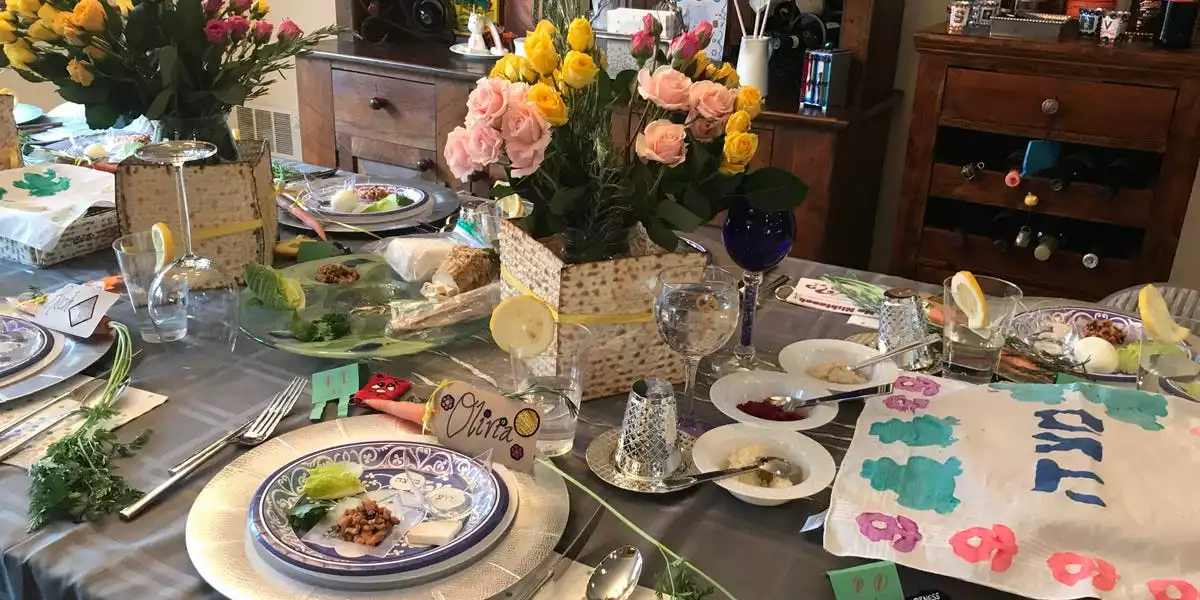

When Easter and Passover Collide: A Case Study in Modern Ritual Engineering
A single interfaith family’s annual negotiation between Easter and Passover reads, at first glance, like a warmly human domestic vignette: grandparents with expectations, packed cars shuttling between New Jersey and Long Island, and the emotional recalibration that comes with an empty nest. Yet beneath the surface is a sharper signal for business and technology leaders: households are increasingly acting like micro-enterprises of logistics, identity, and experience design—and they are rewriting tradition with the same iterative mindset that powers modern product development.
The family’s evolution—from trying to “do it all” in the prescribed way to curating what actually works—captures a broader shift in consumer behavior. They invent hybrid solutions such as “Erev Passover Marinara,” repurpose eggs for both an afikomen hunt and Easter baskets, and relax strict boundaries when the alternative is stress that erodes togetherness. The throughline is not dilution of faith, but optimization of belonging: a deliberate move from externally dictated rituals to internally designed celebrations that preserve meaning while acknowledging constraints.
For brands, platforms, and employers, this is less about niche cultural trivia and more about a growing mainstream reality: multi-faith, multi-tradition households are becoming a durable demographic force, and their needs are structurally different from single-calendar, single-ritual assumptions embedded in many products and policies.
The Next Frontier for Consumer Tech: Interfaith Scheduling, Smart Kitchens, and Digital Togetherness
The most immediate technology implication is deceptively simple: overlapping holidays create calendar collisions that standard tools still handle poorly. Families aren’t just choosing a date—they’re reconciling school breaks, travel time, religious obligations, and multi-generational availability. That complexity is precisely the kind of problem that invites AI-driven orchestration.
Several product opportunities emerge:
- Multi-faith calendar intelligence
– Demand is rising for scheduling tools that can automatically reconcile Christian, Jewish, and secular observances, including regional variations and sunset-based start times.
– Major platforms—Google Calendar, Microsoft 365, and productivity startups—could differentiate with an “interfaith mode” that suggests workable windows, flags conflicts early, and generates reminder flows tailored to different participants (grandparents, hosts, travelers).
- Food-tech and smart kitchen presets for hybrid compliance
– Hybrid meals are not a gimmick; they are a practical response to competing dietary norms and time pressure.
– IoT-enabled appliances and recipe platforms could offer presets or guided modes for kosher-style, gluten-free, vegan, or crossover menus, reducing host stress while supporting cultural intent.
– Meal-kit companies have room to build modular holiday kits—components that can be swapped to meet varying levels of observance without forcing a single “correct” template.
- Content personalization and virtual ritual layers
– Social platforms already thrive on holiday storytelling; interfaith narratives add a new dimension for AI-curated templates that blend iconography and language sensitively.
– For families who cannot travel, AR filters, virtual gathering rooms, and synchronized ritual prompts could evolve from novelty to a lightweight category of “digital ceremony infrastructure,” monetized through virtual hosting tools and premium family features.
The deeper point: interfaith households are effectively asking technology to do what it does best—reduce coordination cost—but in a domain where emotional stakes are high and “efficiency” must be culturally literate.
Retail, Travel, and the Experience Economy: Where Hybrid Holidays Reshape Demand
On the economic side, overlapping Easter and Passover observances spotlight a shift from commodity purchases to experience-led spending. When time is scarce and travel is expensive, families prioritize what delivers emotional return: togetherness, storytelling, and rituals that feel personal rather than performative.
Key market dynamics include:
- Experience bundles over basket-stuffers
– Spending tilts toward curated meals, décor with meaning, cooking classes, and family-centered micro-events.
– Inflation and travel costs amplify the appeal of local, in-home experiences—from neighborhood pop-up seders to community Easter/Passover gatherings that reduce logistical burden.
- Crossover CPG and more complex seasonal inventory
– Hybrid households create space for “bridge products,” such as kosher-certified pantry staples marketed in broader seasonal contexts.
– Retailers face more intricate forecasting: overlapping demand for eggs, matzoh, wine, specialty ingredients, and holiday décor compresses timelines and stresses supply chains. Those who model these overlaps well can win on availability and reduce waste.
- Legacy, philanthropy, and values-driven financial planning
– As grandparents and parents seek continuity through shared rituals, there is potential growth in giving to multi-faith community centers, cultural education, and inclusive programming.
– Financial services firms can differentiate by framing wealth planning around legacy, identity, and communal impact, not only tax efficiency.
In practical terms, the “holiday season” is no longer a set of discrete retail peaks. It is increasingly a blended demand window shaped by household composition, mobility, and cultural hybridity.
What Business Leaders Should Take Away: Inclusion as Product Strategy, Not Just Messaging
For executives, the strategic lesson is not merely to acknowledge diversity in advertising. It is to recognize that interfaith and multicultural households represent a systems-level change in how consumers plan, buy, cook, gather, and share.
Actionable implications stand out:
- Market segmentation and brand calendars need modernization
– Inclusive campaigns that acknowledge both holidays—without flattening their differences—can build loyalty in a segment that is larger than many marketers assume.
– Brands should audit promotional calendars, creative assets, and retail timing to ensure they reflect real household complexity rather than single-tradition defaults.
- Workplace policy becomes a competitive lever
– HR teams can improve retention with flexible leave, culturally aware scheduling norms, and optional cross-cultural learning—especially when multiple observances cluster in the same week.
– The most effective organizations will treat cultural complexity the way agile teams treat product complexity: as something to design for, not work around.
- M&A and partnerships will follow the orchestration layer
– Startups building multi-faith scheduling, holiday meal infrastructure, or community hosting tools are plausible acquisition targets for larger tech, retail, and food ecosystems.
– Partnerships between legacy kosher brands and mainstream retailers can expand distribution while meeting consumers where they already shop.
The family’s improvised “Erev Passover Marinara” is more than a charming detail—it is a metaphor for the market itself. Consumers are blending traditions to protect what matters most, and the companies that thrive will be those that build products, policies, and experiences capable of honoring that complexity without turning it into friction.

 By
By
 By
By
 By
By
 By
By
 By
By










