


When Drones Cross Borders: A New Era for European Air Defense
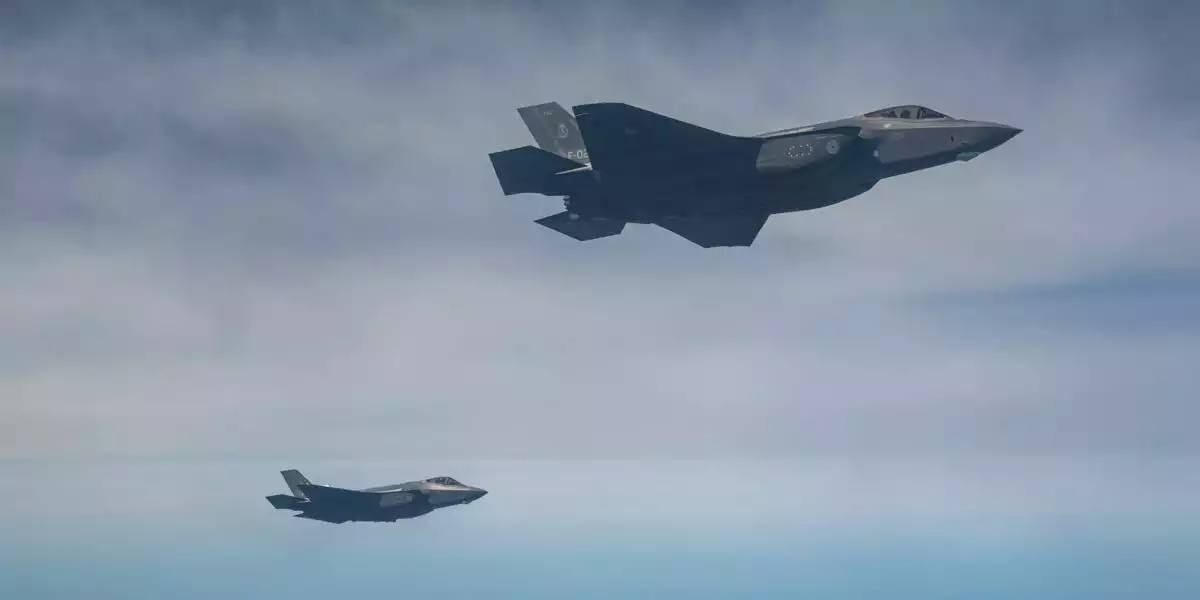
The recent penetration of Polish airspace by Russian drones, culminating in the first kinetic engagement by NATO fighters—including Dutch F-35s—within allied territory, is more than a headline event. It is a harbinger. The incident, officially described as a “test” of NATO’s air-defense posture, has exposed both the technical vulnerabilities and the industrial urgency reshaping Europe’s security architecture. In the aftermath, destroyed drones and Patriot batteries on high alert are only the most visible signs of a deeper transformation underway.
The Drone Paradigm: Tactics, Technology, and the Cost Equation
The encounter over Poland is emblematic of a new “grey-zone” strategy. Russia, once reliant on costly missiles, is now leveraging swarms of inexpensive, low-signature drones. These platforms, often priced at a fraction of a fighter jet’s hourly operating cost, slip through radar blind-spots and compress NATO’s decision-making window. Engagements now begin not at the border, but well inside friendly airspace—forcing a re-evaluation of command-and-control hierarchies that were designed for slower, more predictable threats.
Three technological fissures have become unmistakable:
- Sensor-Shooter Disconnect: Deploying advanced fighters to intercept sub-$100,000 drones is a losing proposition. The cost asymmetry is stark, and the need for layered counter-unmanned aerial systems (c-UAS) is urgent. The future lies in architectures that blend passive RF sensing, AI-driven data fusion, electronic warfare, and directed-energy weapons—creating a spectrum of responses matched to the threat’s scale and economics.
- Digital Interoperability Gap: While AWACS and ground radars cued the intercept, real-time data sharing among NATO’s national air-defense networks remains patchy. The vision of a unified, cloud-native battlespace management system—where doctrines like JADC2 and Europe’s FCAS ambitions converge—remains aspirational. Until these systems mature, latency and fragmentation will persist as operational liabilities.
- Compressed Warning Time: The ability of drones to exploit radar and bureaucratic lag means that air-defense must become as much about software as about steel. Rapid, automated decision-making—enabled by AI and edge computing—will define survivability in this new environment.
Industrial Mobilization: From Procurement Super-Cycle to “Drone Wall”
The market’s response has been swift and decisive. European defense stocks are being re-rated in anticipation of a multi-year procurement super-cycle encompassing air-defense, c-UAS, and electronic-warfare technologies. Major primes—Saab, Rheinmetall, Thales—are poised for record order backlogs, while niche sensor and semiconductor firms stand to benefit from the surging demand for GaN RF chips and thermal imaging cores.
Key industrial trends are crystallizing:
- Supply Chain Reshoring: The proposed “Drone Wall” along NATO’s eastern flank will require mass production of interceptors, directed-energy effectors, and high-density batteries. Policy incentives for domestic manufacturing echo the EU’s recent push for on-shore EV battery plants, signaling a broader shift toward strategic autonomy.
- Start-up Opportunity Window: The c-UAS sector is one of the rare defense segments where deployment cycles are measured in quarters, not decades. Venture capital is pivoting from pure autonomy to counter-autonomy—focusing on pattern recognition, sensor fusion, and edge AI. This creates a fertile landscape for M&A, as established primes seek rapid capability insertion.
- Semiconductor Geopolitics: The demand for advanced radar and laser components is set to reinforce the EU Chips Act’s defense provisions, accelerating investment in dual-use fabs. The spill-over will benefit not only defense but also Europe’s ambitions in 5G and 6G infrastructure.
Strategic Ripples: Airspace, Infrastructure, and the Talent Race
The implications of persistent drone incursions extend far beyond military doctrine. Civil-military airspace integration is accelerating, with Eurocontrol’s digital flight corridor prototypes likely to evolve into mandatory surveillance zones. This will impact commercial aviation, insurance premiums, and perhaps even the rhythm of Europe’s economic life.
Critical infrastructure—especially LNG terminals and offshore wind farms in the Baltic and North Sea—now shares the same threat envelope as military targets. Utilities may soon find themselves co-investing in regional sensor grids, forging new public-private models for collective security.
For decision-makers, the path forward is clear yet daunting:
- Shift budgets from hardware-centric procurement to open-architecture sensor networks and effectors priced for cost-per-shot parity with expendable drones.
- Audit and upgrade command-and-control latency, prioritizing software-defined solutions.
- Secure long-lead supply chains for semiconductors and batteries before demand spikes.
- Re-evaluate risk for critical infrastructure, building redundancy and rapid repair into capital plans.
- Invest in talent pipelines, especially in software, RF engineering, and AI ethics, through joint training and DevSecOps adoption.
The Polish airspace incursion is not a mere anomaly—it is a clarifying signal. The economics and velocity of drone warfare have breached NATO’s interior lines, demanding a shift from legacy procurement to integrated, software-defined defense ecosystems. Those who recognize this inflection point—whether in government, industry, or research—will shape the next decade of European security. The rest risk being left behind, outpaced by adversaries who have already embraced the future.

 By
By
 By
By
 By
By


 By
By
 By
By
 By
By







