

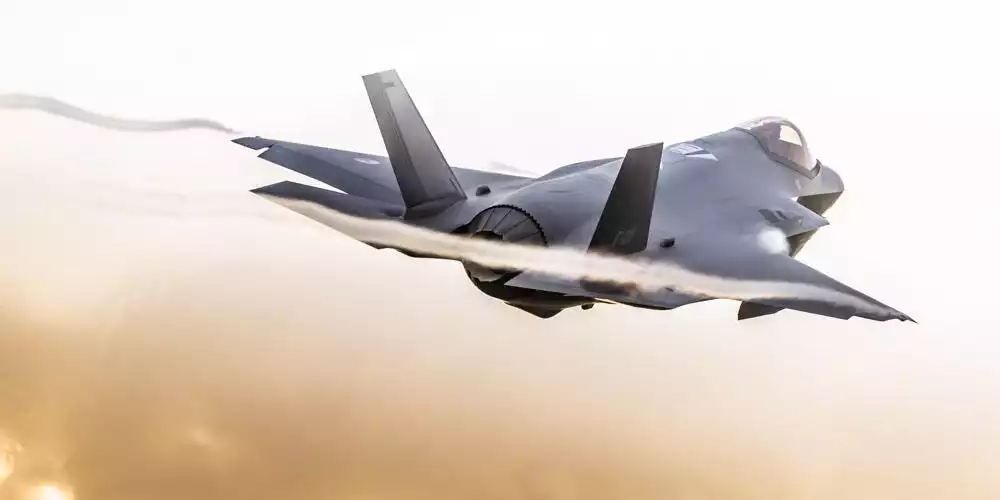

Fifth-Generation Airpower Redraws NATO’s Eastern Frontier
The arrival of Dutch and Norwegian F-35 squadrons on Polish soil this autumn marks a watershed in NATO’s evolving defense architecture. For the first time, fifth-generation fighters will maintain a sustained, round-the-clock presence under alliance command at the very edge of Europe’s most volatile border. This deployment is not merely a show of force; it is a calculated, technology-driven recalibration of deterrence—one that entwines the fates of Poland, Ukraine, and the broader European security order.
At the heart of this mission lies a sophisticated interplay of advanced sensors, stealth, and software-centric warfare. The F-35’s distributed aperture system and electronic support measures transform each jet into a flying node within NATO’s Integrated Air and Missile Defence System (NATINAMDS), feeding torrents of real-time intelligence into a digital nervous system that stretches from the Suwałki Gap to the Black Sea. This persistent intelligence-surveillance-reconnaissance (ISR) coverage is designed to compress alliance reaction times against emerging threats—low-flying cruise missiles, Iranian-supplied drones, and the unpredictable maneuvers of Russian forces massed in Kaliningrad and Belarus.
Yet the F-35’s impact extends far beyond its own stealth profile. As a covert “gateway,” it enables legacy fourth-generation fighters—Poland’s F-16s and new FA-50s among them—to exploit targeting data and operate with newfound lethality. This networked approach offers a pragmatic blueprint for NATO members balancing mixed inventories and tight procurement timelines, demonstrating that technological edge does not require wholesale fleet replacement.
Economic Ripples and Industrial Realignment
The symbolism of fifth-generation fighters over Poland is matched by tangible economic and industrial consequences. The deployment is catalyzing defense procurement cycles across Central and Eastern Europe, with ripple effects reaching deep into the aerospace supply chain. As fifth-generation capability becomes the new alliance baseline, demand is surging not only for F-35 airframes but also for enablers—advanced air-to-air missiles, secure datalinks, and ground-based sensors.
- Supply Chain Localization: With 23 European nations now in the F-35 consortium, the center of gravity for maintenance and software sustainment is shifting from the U.S. to a trans-Atlantic model. High-value jobs in engine overhaul and avionics are migrating to hubs in the Netherlands, Norway, Poland, and Italy.
- Poland’s Strategic Leverage: As Warsaw prepares for its own F-35 deliveries in 2026, it is negotiating for indigenous maintenance, repair, and overhaul (MRO) facilities—a move that could transform Poland into a regional support node, echoing the roles of Cameri in Italy and Fót in Norway.
- Investor Confidence: The mission is fortifying capital markets’ faith in European defense primes such as Leonardo, Kongsberg, and Saab, all poised to benefit from subcontracting, component production, and integration projects.
This industrial realignment is inseparable from broader trends: a renewed emphasis on defense spending in the wake of Russia’s invasion of Ukraine, the drive for supply chain resilience in the face of deglobalization, and the imperative for digital sovereignty as Europe seeks to control the vast troves of data generated by modern fighters.
Redefining Deterrence and the Future of Allied Defense
NATO’s deployment signals a profound doctrinal shift—from rotational “tripwire” forces to persistent, technology-enabled forward presence. The F-35s offer not only rapid response but also multi-domain situational awareness, challenging Russia’s anti-access/area-denial (A2/AD) strategies and raising the threshold for any cross-border incursion. Stealth ISR capabilities grant policymakers a granular picture of potential threats, tightening escalation control and reducing the risk of miscalculation.
This convergence of homeland and forward defense is collapsing the old distinction between “out-of-area” operations and the security of the alliance’s own territory. Protecting Ukraine’s western supply corridors through Poland is now inseparable from the defense of NATO’s eastern flank.
Key strategic questions remain:
- Will a persistent fifth-generation presence alter Moscow’s calculus, or will it provoke asymmetric responses in cyberspace and beyond?
- Can NATO harmonize its digital architectures quickly enough to avoid data silos as more members field diverse next-generation platforms?
- How will surging defense budgets interact with Europe’s competing fiscal demands, from energy transition to demographic pressures?
The Digital Backbone of European Security
As the F-35s take flight over Poland, they herald more than a tactical shift—they are the vanguard of a digitally networked, software-defined defense ecosystem. The operational lessons gleaned from this mission will shape everything from manned-unmanned teaming roadmaps to the design of Europe’s sixth-generation fighters. For decision-makers in aerospace, technology, and adjacent industries, this deployment is a bellwether: a glimpse into the future of procurement, industrial localization, and the digital infrastructure underpinning European security.
In the shadow of renewed great-power competition, the Dutch-Norwegian F-35 mission in Poland is not just a military maneuver—it is a strategic accelerant, propelling NATO toward a new era of distributed, data-centric deterrence.

 By
By
 By
By


 By
By

 By
By
 By
By







