


The New Airspace Chessboard: NATO’s High-Tech Response to Russian Incursions
In the shadowed corridors of European security, a new kind of air confrontation is unfolding—a contest not of dogfights but of sensors, algorithms, and ambiguous intent. NATO’s recent escalation of its air-policing posture, marked by the deployment of fifth-generation F-35s, upgraded F-16s, and, for the first time, Swedish Gripens, signals a profound shift in the Alliance’s deterrence calculus. The message is unmistakable: credible readiness without crossing the Rubicon of direct conflict. Yet, beneath this calibrated choreography lies a rapidly evolving technological and industrial landscape, one that is redrawing the boundaries of military and commercial innovation alike.
Sensor Fusion, Counter-Drone Arms Race, and the Blurring of Military-Civilian Lines
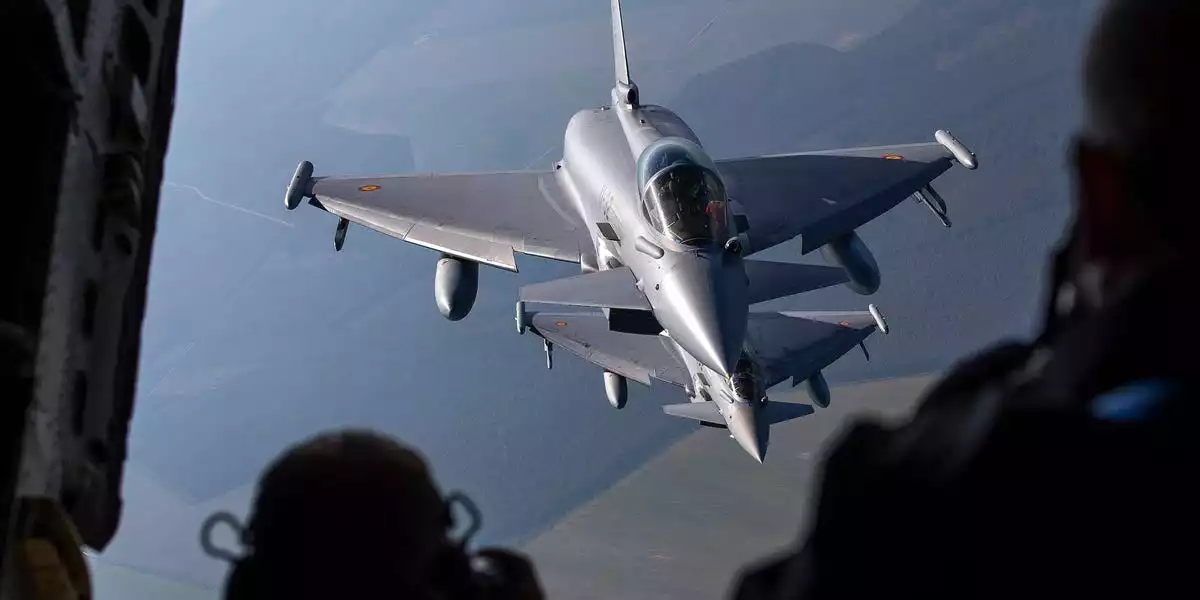
The arrival of F-35s over European skies is more than a symbolic show of force. These aircraft, with their stealthy intelligence, surveillance, and reconnaissance (ISR) capabilities, secure multi-band datalinks, and on-board sensor fusion, extend NATO’s “sensor horizon” by precious minutes—an eternity in the calculus of interception. Sweden’s Gripen E, seamlessly integrated into NATO’s tactical datalink and electronic-warfare architecture, accelerates the standardisation of Link-16-based operational pictures across the Nordic region. This is not just about hardware; it is about knitting together a real-time, interoperable network where information moves as fluidly as aircraft.
Yet, the airspace is no longer the exclusive domain of piloted jets. The surge in small-UAV incursions exposes a critical vulnerability: legacy surface-to-air missile (SAM) systems, optimized for fast-moving jets or ballistic missiles, are ill-suited to counter low-cost, low-signature drones. In response, NATO member states are fast-tracking microwave and laser systems—technologies that, until recently, lived in the realm of prototypes. The impending procurement surge for directed-energy platforms signals a new phase in the counter-drone arms race, one where cost-per-shot economics ($5-10 for a laser versus $300,000 for a Stinger missile) could redefine the balance of air defence.
The convergence of command-and-control (C2) is equally transformative. Real-time intelligence fusion increasingly relies on commercial low-Earth orbit (LEO) satellite constellations and AI-enabled decision support, blurring the line between military and dual-use assets. This hybridisation introduces novel cyber and legal liabilities for private operators, who now find themselves at the intersection of defence and commercial risk.
Industrial Realignment and the Nordic Catalyst
The operational tempo has catalysed a sea change in European defence economics. Political consensus for sustained 2%-of-GDP defence spending is no longer rhetorical; it is manifesting in procurement pipelines and supply-chain recalibrations. Germany’s €100 billion Sondervermögen, for example, is shifting decisively toward rapid air-defence modernisation, altering the production mix for prime contractors and driving up lead times for propulsion components, gallium-nitride radar modules, and advanced thermal batteries. These bottlenecks, often overlooked in broader inflation narratives, are quietly reshaping the economics of specialised manufacturing.
Sweden’s Gripen deployment is more than an operational milestone—it is an industrial catalyst. The emergence of a Nordic-Baltic maintenance, repair, and overhaul (MRO) ecosystem, leveraging Finland’s avionics SMEs and Estonia’s cybersecurity expertise, is laying the groundwork for an export-oriented cluster in modular electronic warfare (EW) suites. The export market, conservatively valued at €4-5 billion over five years, underscores the region’s ascent as a hub for next-generation defence technology.
Meanwhile, AI-based airspace de-confliction algorithms, honed under the pressures of NATO’s evolving air-policing mission, are cascading into civilian unmanned traffic management (UTM) platforms—a sector projected to reach $25 billion globally by 2030. Defence primes with validated safety cases for aviation regulators are poised to seize early-mover advantage, bridging the gap between military innovation and commercial opportunity.
Strategic Ambiguity, Regulatory Ripple Effects, and Executive Imperatives
Beneath the surface, the confrontation is as much about rules and signals as about hardware. Russia’s pattern—brief, crewed incursions punctuated by drone swarms—tests NATO’s escalation ladder, exploiting the Alliance’s lack of a harmonised rules-of-engagement framework for sub-Article-5 provocations. This strategic ambiguity, while preserving crisis stability, risks normalising violations and eroding the credibility of collective defence.
The airspace contest is not confined to the physical domain. Cyber intrusions into aviation networks and disinformation campaigns framing NATO as the aggressor complicate proportional response calculus, underscoring the need for integrated information-operations doctrines. Layered air-defence gaps, particularly over the Baltic’s dispersed island topography, call for a mobile, networked “mesh” integrating airborne early warning, drone interceptors, and ground-based lasers—demanding new interoperability standards and regulatory innovation.
For executives, the implications are far-reaching:
- Aviation insurance premiums are rising in response to near-miss events, creating demand for real-time, defence-grade risk-scoring products.
- Semiconductor supply chains—especially for gallium-nitride radar chips—face tightening export controls and pricing pressure, with spillovers into adjacent sectors like 5G and electric vehicles.
- ESG-conscious investors are revisiting exclusion policies, as air-defence spending is reframed as societal resilience; defence tech firms with robust sustainability reporting may unlock new capital pools.
The arc of this confrontation is clear: Russian airspace probing has become a strategic barometer, catalysing a technologically sophisticated and economically consequential response by NATO. The organisations that can translate kinetic urgency into dual-use, scalable solutions—whether in defence, aerospace, or advanced analytics—will not only shape the next generation of European security but also the commercial technology landscape that emerges in its wake.

 By
By
 By
By
 By
By
 By
By

 By
By









