
A Defining Moment for Space Operations: The ISS Medical Evacuation and Its Far-Reaching Ripples
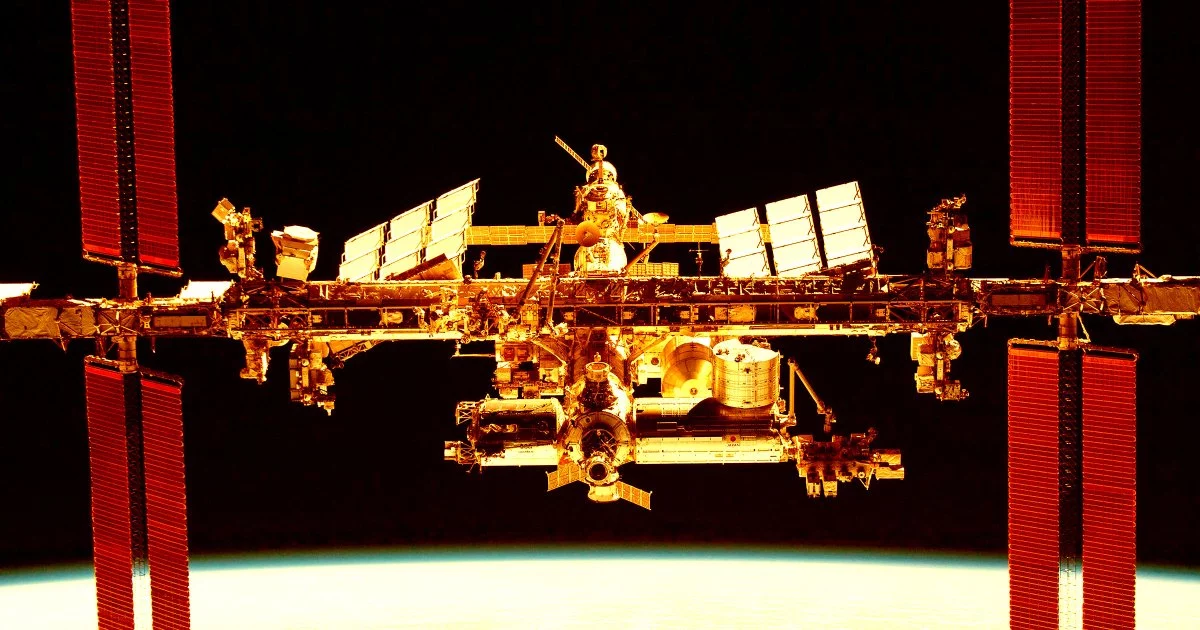
In the early hours above our planet, the International Space Station—an enduring symbol of multinational cooperation and technical prowess—was thrust into unprecedented territory. A sudden, undisclosed medical emergency forced NASA to execute the first-ever crew evacuation in the station’s quarter-century of continuous operation. Four Crew-11 astronauts, their mission abruptly curtailed, boarded a SpaceX Crew Dragon and returned safely to Earth, leaving behind a skeleton crew and a spacefaring community grappling with the implications.
This event, while resolved without loss, reframes the narrative of human spaceflight as the ISS approaches its twilight years. It is a moment that exposes both the maturity of commercial crew logistics and the inherent fragility of human-tended outposts in low-Earth orbit (LEO).
—
Commercial Crew Maturity Meets the Unpredictable
The evacuation marks a watershed for commercial spaceflight. SpaceX’s Crew Dragon, designed for flexibility and rapid response, was pressed into service for a real-world, time-critical medical return. The capsule’s autonomous flight systems, robust abort-to-return architecture, and streamlined splashdown recovery were tested in a scenario that had, until now, existed only in contingency planning.
Key operational takeaways:
- Validation of Commercial Vehicles: The Crew Dragon’s performance under duress cements its status as a reliable platform for both routine and emergency return, setting a high bar for future commercial vehicles.
- Real-Time Systems Monitoring: The incident generated invaluable data on autonomous operations, informing certification pathways for Artemis, Gateway, and the next generation of commercial stations.
- Stress Test for Recovery Logistics: Splashdown and crew retrieval operations—often overshadowed by launch drama—proved their mettle, reinforcing the need for seamless end-to-end mission support.
For NASA and its partners, this episode is both a proof point and a warning. The ability to evacuate swiftly is a triumph of design and planning, but the necessity of doing so underscores the vulnerability of human presence in orbit.
—
Medical Readiness and the Push for Autonomy
The medical trigger for the evacuation, though not disclosed, has already begun to reshape priorities in space medicine and station operations. The limitations of current on-orbit diagnostics—reliant on basic imaging and intermittent ground support—are now in sharp relief.
Emerging imperatives:
- Investment in Next-Gen Diagnostics: Expect a surge in R&D for compact imaging, AI-driven prognostics, and real-time biotelemetry. These advances will serve both orbital and terrestrial markets, especially in remote or extreme environments.
- Robotics and Automation as Force Multipliers: With the station’s crew reduced to three—one NASA astronaut and two Russian cosmonauts—extravehicular activities (EVAs) are off the table. This absence intensifies the case for free-flying robotic assistants and autonomous maintenance systems, long touted but now mission-critical.
- Operational Continuity Risks: Each week of limited crew capacity translates to 10–15 postponed experiments, directly impacting commercial research, pharmaceutical trials, and in-space manufacturing ventures. The opportunity cost is real, and insurers and investors are recalibrating risk models accordingly.
The incident also casts a spotlight on the economic calculus of LEO operations. As NASA weighs advancing the Crew-12 launch to restore seven-person operations, the ripple effects extend to launch manifest sequencing, vehicle refurbishment cycles, and broader supply-chain logistics—pressures that will only intensify as the ISS nears retirement.
—
Shaping the Next Era: Strategic Lessons and Market Signals
If there is a silver lining, it is the clarity with which this event illuminates the path forward for commercial LEO platforms and the broader space economy. The evacuation is a live demonstration of why NASA and its partners are accelerating efforts toward Commercial LEO Destinations (CLDs) like Axiom, Starlab, and Orbital Reef. For stakeholders, the benchmarks are now clear: evacuation protocols, autonomous maintenance, medical infrastructure, and staffing ratios are not academic—they are existential.
Strategic guidance for the industry:
- Accelerate Autonomous and Predictive Capabilities: AI-enabled inspection drones, self-healing materials, and modular robotics must move from roadmap to reality.
- Embed Continuous Health Analytics: Multi-parameter biometrics, analyzed by ground-based AI, will become standard—offering dual-use value for aviation, defense, and remote industries.
- Optimize Remaining ISS Utilization: Time-sensitive, high-value experiments should be prioritized before the station’s sunset; lower-priority projects should migrate to emerging CLDs.
- Reassess Insurance and Investment Frameworks: Operators who can demonstrate rapid evacuation, robust telehealth, and autonomous backup will command more favorable terms and lower risk premiums.
The enduring image of a partially staffed ISS, orbiting silently above a fractious Earth, is a reminder of both the promise and the precarity of human spaceflight. As the sector pivots toward a commercial future, the lessons of this evacuation—internalized by visionary executives, technologists, and policymakers—will shape the contours of the next space age. For those willing to invest in resilience, automation, and medical foresight, the horizon is not just survivable, but expansive.

 By
By
 By
By

 By
By

 By
By
 By
By