

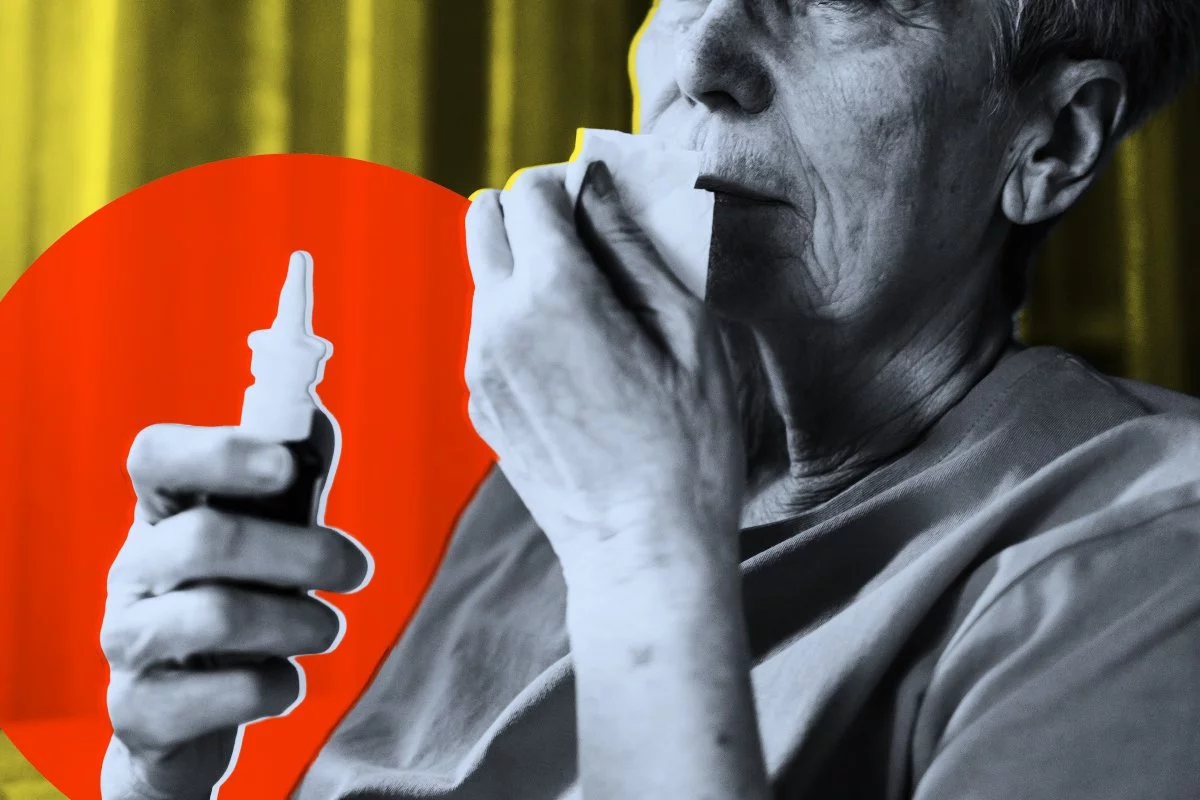

A nasal-route extracellular vesicle therapy that reframes brain aging as a treatable biology
A team at Texas A&M University, led by Professor Ashok Shetty, has reported a striking preclinical result: a nasal spray composed of extracellular vesicles (EVs) derived from neural stem cells restored working memory in aged mice—roughly analogous to humans around 60 years old. Published in the Journal of Extracellular Vesicles, the work links cognitive improvement to a measurable reduction in hippocampal inflammation, alongside mitigation of mitochondrial dysfunction and oxidative stress—three intertwined processes widely implicated in age-related cognitive decline and neurodegenerative trajectories.
The scientific novelty is not simply that EVs “helped,” but *how* they helped. These vesicles are described as being rich in regulatory microRNA cargo, suggesting a mechanism that operates upstream of many conventional drug targets: rather than blocking a single receptor or enzyme, the therapy appears to recalibrate gene-expression programs associated with neuroinflammation and cellular stress. The authors attribute the effect to activation of intrinsic neurorepair pathways, a framing that aligns with a broader shift in neuroscience from symptomatic management toward disease-modifying and resilience-building interventions.
Equally consequential is the delivery strategy. The intranasal route is positioned as a pragmatic workaround to two perennial barriers in central nervous system (CNS) drug development:
- Blood–brain barrier (BBB) penetration, which limits many systemically administered biologics
- Systemic immunogenicity and off-target exposure, which can complicate dosing and safety profiles
If these findings translate, the implication is a non-invasive modality that could be deployed earlier in the aging curve—potentially before irreversible neurodegeneration dominates the clinical picture.
MicroRNA payloads and EVs: a platform shift from single-target drugs to systems-level modulation
The Texas A&M study lands amid intensifying interest in extracellular vesicle therapeutics as a platform—one that sits between cell therapy and traditional biologics. EVs can be engineered or selected for specific cargo profiles, and their membrane structure can protect fragile nucleic-acid payloads in ways that resemble a naturally evolved delivery system.
From a technology standpoint, this approach underscores three important inflection points for the field:
- Post-transcriptional regulation as a therapeutic lever: MicroRNAs can influence networks of proteins simultaneously. That breadth is attractive for multifactorial conditions like cognitive aging, where inflammation, synaptic function, vascular health, and metabolism converge. It also raises the bar for mechanistic clarity: regulators and clinicians will want to understand not only *that* cognition improves, but *which pathways* are being tuned and with what downstream trade-offs.
- Non-invasive CNS bioavailability as a competitive advantage: Intranasal delivery has long been explored for CNS access, but pairing it with EVs could improve stability and targeting. If reproducible, this could differentiate EV-based candidates from antibody therapies and gene-editing approaches that often require infusion infrastructure, intensive monitoring, or carry systemic risks.
- A new manufacturing and analytics burden: EV therapies are not “small molecules with a clean spec sheet.” Translation will hinge on GMP-compatible isolation, consistent microRNA composition, and robust assays that define potency and identity. In practice, that means bioprocess engineering, automation, and multi-omic characterization become as strategically important as the biology itself.
This is where many promising biologic modalities either mature into scalable products—or stall. EV therapeutics must prove they can meet industrial standards for batch-to-batch reproducibility, stability, and cost of goods, especially if positioned for preventive or maintenance use.
Market gravity: dementia economics, preventive neurology, and reimbursement realities
The commercial backdrop is unambiguous. With an estimated 69 million dementia cases globally today and projections nearing 82 million by 2030, the demand signal for interventions that delay or prevent cognitive decline is enormous. The summary’s estimate of a $100 billion preventive-neurology market captures the direction of travel: healthcare systems are increasingly motivated to pay for interventions that reduce downstream costs in long-term care, hospitalization, and caregiver burden.
Yet the reimbursement pathway will be shaped by evidence design as much as by clinical effect size. For payers, a nasal EV therapy would need to demonstrate:
- Durable cognitive benefit (not just short-term test improvements)
- Functional outcomes tied to independence and reduced care needs
- Biomarker corroboration, such as neuroinflammation imaging or fluid markers, to support disease-modifying claims
- Health-economic impact, especially if intended for broad mid-life deployment
The non-invasive nature of a nasal spray could support value-based contracting, but only if endpoints are measurable and resistant to placebo effects. That is likely to accelerate demand for digital cognitive biomarkers, remote monitoring, and standardized neuropsychological testing—creating a natural bridge between biotech, diagnostics, and health technology firms.
Competitive pressure will be intense. Alzheimer’s and dementia pipelines already include antibodies, small molecules, antisense therapies, and gene-editing concepts. EV-based therapeutics will need to win on a combination of safety, efficacy, convenience, and cost-effectiveness, not merely novelty.
Patents, partnerships, and the regulatory question that will define speed to clinic
Texas A&M’s team is pursuing a patent application, an essential step if the work is to attract the capital and partners required for human trials. But EV intellectual property can be difficult terrain. Because EVs are biologically derived, defensibility often depends on a layered strategy—covering not only the composition, but also isolation methods, microRNA “cocktail” definitions, formulation, and delivery parameters.
Regulatory classification is the other gating factor. Agencies such as the FDA and EMA will need to clarify how they evaluate EV-based therapeutics whose activity depends on complex RNA payloads. Key questions include:
- What constitutes an acceptable potency assay for a multi-component EV product?
- How tightly must the microRNA profile be controlled across lots?
- Will these products be regulated more like biologics or like advanced therapy medicinal products (ATMPs)?
Given those uncertainties, the most credible path to acceleration may be cross-sector alliances: biopharma partners with manufacturing depth, diagnostics companies that can validate biomarkers, and technology providers enabling remote cognitive monitoring. Consortium-style clinical trials could reduce timelines by improving recruitment, standardizing endpoints, and generating real-world evidence earlier.
For now, the Texas A&M nasal spray remains a preclinical milestone—promising, not proven. But it also functions as a signal: brain aging is increasingly being treated as an addressable, engineerable system, and extracellular vesicles—once a niche biological curiosity—are moving into the center of the therapeutic conversation where manufacturing discipline, regulatory clarity, and clinical rigor will determine who turns possibility into practice.

 By
By
 By
By

 By
By
 By
By

 By
By
 By
By







