
Spaceflight’s Medical Frontier: A Stress Test for the Next Era of Human Space Exploration
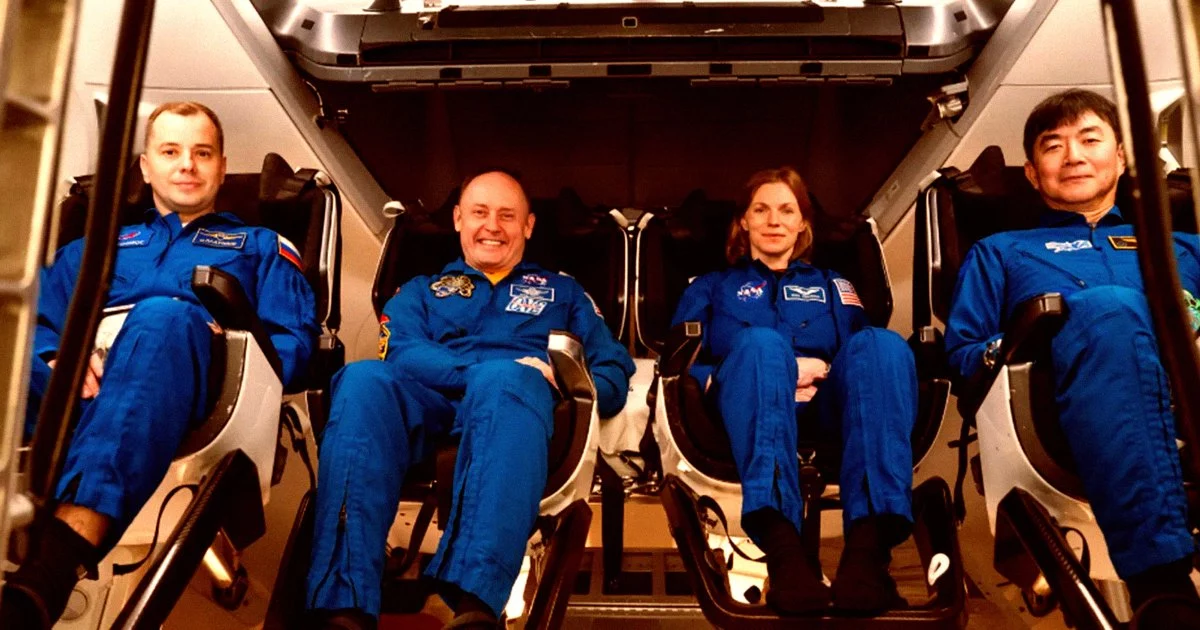
NASA’s recent decision to delay a scheduled spacewalk aboard the International Space Station—prompted by a Crew-11 astronaut’s undisclosed but “stable” medical issue—has sent ripples far beyond the orbiting laboratory. The incident, shrouded in clinical discretion, is more than a mere operational hiccup; it is a vivid, live-fire rehearsal of the biomedical, technological, and economic complexities that will define the next generation of human spaceflight. As the agency weighs an accelerated return for the affected crew, the cascading effects are being felt across launch manifests, insurance markets, and the innovation agendas of both public and private stakeholders.
The Domino Effect: Operational Disruption and Schedule Risk
Space station operations are a choreography of orbital mechanics, research timelines, and international coordination. The abrupt stand-down of extravehicular activity (EVA) does not simply pause maintenance; it reverberates through a tightly interlocked schedule:
- Payload Bottlenecks: Commercial and allied research, often time-sensitive and meticulously sequenced, now faces delays as airlocks remain unavailable and downstream experiments are rescheduled.
- Crew Rotation Compression: Crew-12’s anticipated mid-February launch is now at the mercy of Crew-11’s revised return, squeezing critical windows for astronaut training, spacecraft refurbishment, and insurance underwriting.
- Risk Escalation: NASA’s contemplation of an early crew return, despite the astronaut’s current “stable” status, signals a paradigm where medical anomalies are treated with the same gravity as hardware failures. The policy is clear: human health in orbit is flight-critical, and contingency planning must be as robust as any technical safeguard.
Autonomous Medicine and the Technology Imperative
The episode casts a harsh spotlight on the limitations of current space medicine and the urgent need for next-generation solutions. As missions extend beyond low Earth orbit and communication delays stretch from seconds to tens of minutes, reliance on ground-based flight surgeons becomes unsustainable. The future will be shaped by:
- Diagnostic Autonomy: AI-driven, latency-tolerant medical diagnostics—integrated with compact imaging tools like ultrasound-on-a-chip—will become indispensable for lunar and Mars expeditions.
- Sensor Fusion and Edge Analytics: Continuous biometric monitoring, powered by advanced wearables and edge-based analytics, can detect subtle physiological shifts before they become acute. This opens procurement opportunities for companies specializing in photoplethysmography, fluid-shift monitoring, and adaptive biosensors.
- Pharmaceutical Innovation: Microgravity alters drug metabolism, complicating dosage and efficacy. Solutions such as 3-D printed medications and on-orbit bioreactors are moving from speculative research to operational necessity.
- EVA Suit Evolution: The incident underscores the need for in-suit biosensing, automated pressure equalization, and rapid ingress, as commercial providers like Axiom Space and Collins Aerospace finalize the next generation of EVA suits.
Economic Reverberations and Market Realignment
The cost of a delayed spacewalk is not measured solely in lost time. Each day of disruption can escalate into high-six or low-seven figures, factoring in ground crew overtime, consumables, and penalties for commercial payload customers. The insurance sector, ever attuned to risk, is recalibrating its models:
- Premiums on the Rise: Medical contingencies are being priced into habitation and launch insurance, with underwriters demanding demonstrable onboard care capabilities.
- Commercial LEO Stations Under Scrutiny: Prospective operators—Voyager’s Starlab, Blue Origin’s Orbital Reef, and others—must now integrate credible medical containment and evacuation protocols to attract investment and regulatory approval.
- Terrestrial Spillovers: The technological advances spurred by space medicine—closed-loop telemedicine, advanced sensor arrays, and immune-function countermeasures—are finding immediate application in remote healthcare, defense, and extreme-environment industries.
Strategic Inflection: The New Baseline for Space Health and Risk
For government agencies, commercial providers, and investors, the ISS medical alert is a clarion call. Policy frameworks will need to harmonize international medical protocols and data-sharing. Hardware reliability alone is no longer a sufficient value proposition; crew wellness and autonomous care are fast becoming competitive differentiators. Investors are likely to favor startups in dual-use bio-monitoring, autonomous diagnostics, and regenerative medicine—areas that are rapidly shifting from “nice-to-have” to mission-critical.
Forward-thinking commercial station developers are already blueprinting dedicated “sickbay” modules, while enterprise R&D users recalibrate risk assessments for biopharma and materials science payloads. Cross-industry collaboration—with remote medicine, military field care, and offshore energy sectors—can accelerate technology maturation and de-risk capital expenditure for space-specific products.
The recent ISS event, quietly but unmistakably, marks a turning point. It is a stress test not just for NASA, but for the entire space sector’s readiness to support sustained human presence beyond low Earth orbit. Those who respond with strategic investment in autonomous healthcare, risk-priced business models, and crew-centric design will be best positioned to lead as the commercial space economy transitions from government stewardship to market-driven expansion.

 By
By
 By
By
 By
By
 By
By
 By
By
 By
By