
NASA’s Greenbelt Crossroads: Budget Austerity and the Future of U.S. Space Leadership
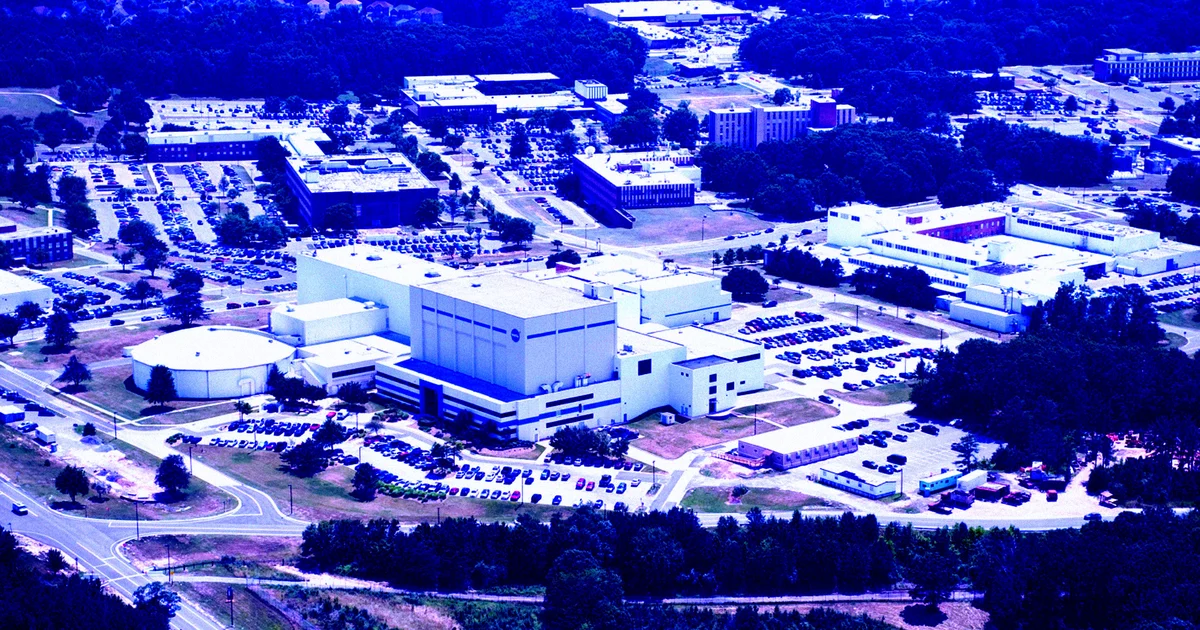
A quiet but seismic shift is underway at NASA’s Goddard Space Flight Center, nestled just outside Washington, D.C. What began as a pragmatic plan to streamline facilities has transformed, under the shadow of a looming 24 percent budget cut for fiscal year 2026, into a crucible moment for American space science. The agency’s pivot—accelerating consolidation and rebalancing priorities toward human exploration—now threatens not only hundreds of civil-service jobs but also the intricate web of research, technology, and industry that radiates from Goddard’s laboratories.
The Fragile Continuum of Space Science and Technology
Goddard has long been the nation’s beating heart for astrophysics payloads and climate-monitoring instrumentation. Its corridors have witnessed the birth of next-generation observatories and the painstaking maturation of technologies—cryogenic detectors, photon-counting lidar, advanced sunshield materials—that underpin both fundamental science and the dual-use Earth-observation markets. The specter of deep budget compression now places this innovation pipeline at risk.
The most immediate danger lies in the so-called “valley of death”—the treacherous funding gap that often traps promising prototypes before they reach flight qualification. At Goddard, early-stage technologies routinely leap from TRL-4 concepts to mission-ready subsystems, a process now imperiled by fiscal austerity. Should this pipeline falter, the United States may find itself increasingly reliant on allied or commercial alternatives, ceding technological sovereignty in domains critical to both science and security.
The policy pivot toward Artemis and Mars architectures, meanwhile, is already redirecting finite engineering talent. Optics, avionics, and software experts—once the vanguard of astrophysics—are being marshaled for human-rated systems, echoing the Apollo-era diversion that left a decade-long trough in space-science launches. The rapid draw-down of facilities further complicates the retention of institutional knowledge, as mid-career civil servants face uncertain futures and skills that may not translate seamlessly to lunar surface systems.
Economic Reverberations and the Shifting Talent Landscape
The consequences of this contraction extend far beyond the perimeter of Greenbelt. The Washington–Baltimore technology corridor, a region anchored by NASA’s $3.7 billion procurement engine, is bracing for a potential shock reminiscent of the post-Shuttle aerospace downturn that once rippled through Florida’s Space Coast. Specialized small and medium-sized enterprises—masters of optics, thermal control, and data analytics—face a precarious future as NASA contracts dwindle.
Yet, amid the turbulence, opportunity flickers. Real-estate consolidation may free up federally owned square footage, pressuring the suburban office market but also opening doors for public-private redevelopment. R&D incubators, perhaps aligned with CHIPS Act incentives, could rise from the ashes of vacated NASA facilities, seeding new clusters of innovation.
The workforce, too, is poised for migration. Layoffs or attrition at Goddard would inject a surge of high-end systems engineers into a labor market already hungry for their expertise. Defense primes, commercial space start-ups, and AI-driven Earth-imaging firms stand to benefit in the short term. Over time, however, the erosion of NASA’s convening power—the agency’s historic role as a “brain trust” for cross-disciplinary space innovation—could prove a subtler, more enduring loss.
Strategic Stakes: Soft Power, Industrial Resilience, and Data Futures
Beyond economics and workforce dynamics, the strategic stakes are profound. Flagship science missions—think Hubble, Webb—have long served as instruments of soft power, forging multinational collaborations and projecting American leadership. As China’s Tiangong station courts emerging-space nations and its Chang’e lunar program accelerates, the prospect of U.S. retrenchment risks ceding both narrative and influence on the global stage.
NASA’s science contracts have also functioned as demand stabilizers for precision manufacturers, buffering the industrial base against the volatility of commercial space cycles. Without this anchor, supply-chain brittleness could spill into defense programs, raising costs and complicating mission assurance.
The ripple effects extend into less obvious but no less critical domains:
- Climate-data continuity: Goddard’s Earth-science instruments feed the commercial agriculture-analytics and catastrophe-risk modeling sectors. Interruptions could propagate into the $2 trillion global insurance market, raising premiums and eroding resilience.
- AI and big-data ecosystems: Astrophysics datasets from NASA missions are prime training material for anomaly-detection algorithms now powering fintech and cybersecurity. A slowdown narrows the pipeline of high-quality scientific data, stalling AI innovation.
- Quantum technology leadership: Photon-counting detectors, pioneered for space telescopes, underpin emerging quantum-communication networks. Funding contractions risk ceding this frontier to European and Chinese programs aggressively integrating space-to-ground quantum links.
Navigating the Inflection: Strategies for a New Era
For decision-makers, the coming months demand agility and foresight. Scenarios range from a possible congressional backfill—restoring funding and slowing consolidation—to protracted austerity or even government shutdowns that freeze NASA’s authority for new projects. Each path carries distinct risks and opportunities:
- Diversify portfolios: Align offerings with both exploration-centric demand and adjacent civil-earth markets to hedge against volatility in NASA science contracts.
- Accelerate partnerships: Leverage emerging commercial-public acquisition models, offering rideshare or hosted payload slots to salvage deferred instruments.
- Advocate industrial policy: Engage with state delegations to highlight the downstream economic multipliers of science missions, broadening resistance to indiscriminate cuts.
- Capture displaced talent: Establish rapid-hire pipelines for Goddard specialists, whose expertise can accelerate product development and strengthen credibility with government clients.
As the debate over NASA’s future unfolds, industry leaders and policymakers alike must recognize this moment not merely as a fiscal challenge, but as a structural inflection point in the U.S. space innovation system. The choices made now will reverberate across scientific discovery, economic vitality, and geopolitical standing for years to come.

 By
By
 By
By
 By
By
 By
By
 By
By


 By
By