
A Calculated Retreat: Medical Risk and the Maturation of Commercial Spaceflight
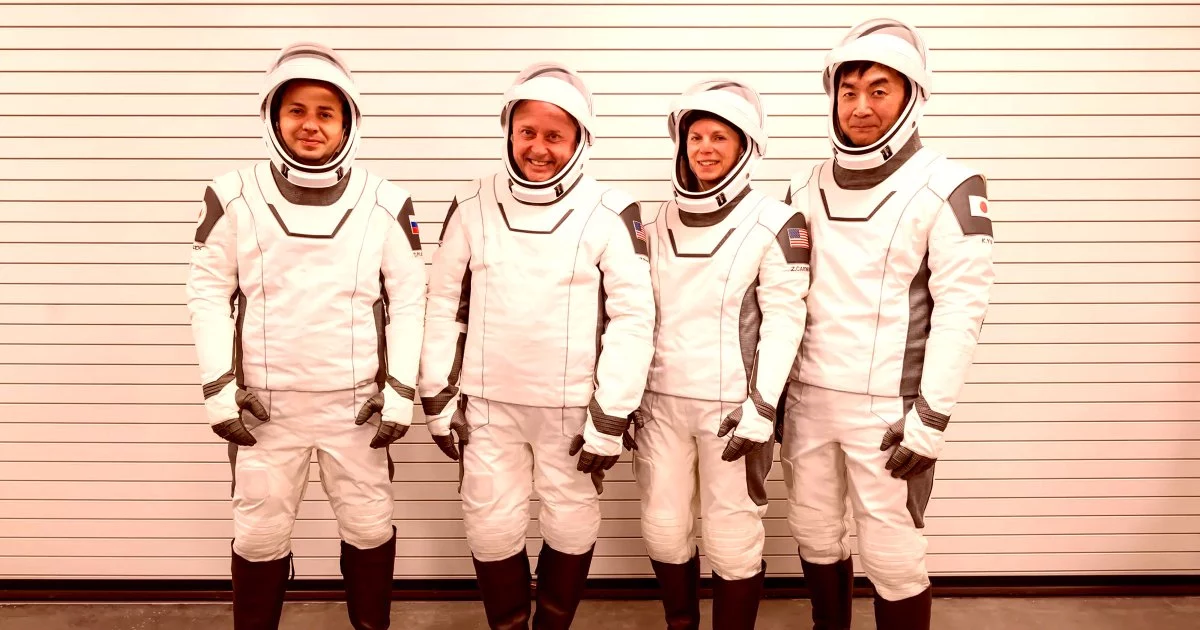
The International Space Station, for nearly a quarter-century, has been a symbol of human persistence—its seven-person crew a testament to the routine, almost mundane, occupation of low-Earth orbit. That routine was quietly upended this week, as NASA announced the Crew-11 astronauts would return to Earth a month ahead of schedule, following the diagnosis of a serious but non-life-threatening medical condition in one crew member. The decision, described by NASA’s new Administrator Jared Isaacman as “precautionary,” is not an emergency evacuation but a calculated, data-driven retreat. For the first time in the ISS’s 23-year history, the rhythm of crew rotation has been disrupted, exposing both the strengths and latent vulnerabilities of a maturing, commercialized space program.
The New Anatomy of Risk: Medical Contingency as Pacing Threat
For decades, the specter haunting human spaceflight was launch risk—catastrophic failure, not a medical anomaly. Yet as space operations have shifted from government monopoly to public-private partnership, with SpaceX’s Crew Dragon now the workhorse of crew transport, the calculus of risk has evolved. NASA’s own models had long predicted that an early crew return was statistically “overdue,” but the reality of such an event exposes a blind spot: medical emergencies, not engineering failures, may now be the pacing threat for long-duration missions.
This incident arrives at a pivotal moment. NASA is accelerating plans to transition from the ISS to privately owned orbital outposts before 2030. The Crew-11 event, then, is not merely an operational hiccup—it is an unplanned, high-fidelity rehearsal for the medical contingency protocols that future commercial operators must master. As the ISS temporarily shrinks to a skeleton crew of three, the agency’s response is being scrutinized not just for its technical adequacy, but for what it reveals about the resilience of the commercial crew paradigm.
Technology, Economics, and the Imperative of Redundancy
The Crew Dragon’s integrated launch-abort and free-flight capabilities enabled NASA to opt for a conservative, non-emergency return. This level of redundancy—once the exclusive domain of government spacecraft—will be mandatory for the next generation of crew vehicles, including Boeing’s Starliner and Sierra Space’s Dream Chaser. The message is clear: in a commercial era, risk mitigation is not optional, but existential.
Yet, the episode also exposes the limits of current in-orbit medical capabilities. The ISS’s “robust suite” of medical tools amounts to little more than advanced first aid. Diagnostic imaging, blood analysis, and surgical interventions remain aspirational in microgravity. This technology gap is now a top-priority pull, with spillover benefits for remote and military medicine on Earth. The urgency is compounded by the promise of AI-driven, latency-tolerant telemedicine—a field already on NASA’s R&D roadmap, and now likely to attract heightened interest from venture investors seeking to bridge spaceflight medicine and terrestrial digital health.
The economic ripples are immediate. Each ISS expedition supports $60–75 million in research payloads; a truncated mission forces triage, potentially requiring full repetition of some experiments. The probable acceleration of Crew-12 compresses launch manifests, with downstream effects on commercial launches, insurance premiums, and even the timing of SpaceX’s revenue streams. Lloyd’s underwriters, ever attuned to actuarial nuance, are likely to inch insurance premiums upward, nudging financing costs for emerging private-station operators.
Policy, Diplomacy, and the Human Factor in Orbital Operations
The early return also reverberates through the policy and diplomatic corridors of the space sector. NASA is newly incentivized to diversify crew access, strengthening the case for continued federal support of alternate crew vehicles, even amid cost overruns. For the ISS’s international partners, the temporary reduction to a three-person crew—especially on the Russian segment—raises maintenance and diplomatic questions, at a time when geopolitical relations are already fraught.
Perhaps most poignantly, the incident underscores the human dimension of spaceflight. Unexpected mission changes strain astronaut families and may deter future commercial-astronaut candidates. As human spaceflight becomes a professionalized, commercial enterprise, agencies and private firms alike must invest in more robust psychological and HR frameworks to support their most valuable asset: people.
The Crew-11 early return is not an aberration, but a harbinger. It validates the necessity of medical contingency planning, stress-tests the commercial crew model, and subtly shifts the investment calculus for next-generation low-Earth orbit infrastructure. For decision-makers—whether at NASA, in the boardrooms of emerging space companies, or among the ranks of investors and insurers—the lesson is unambiguous: resilience, adaptability, and a relentless focus on medical and operational redundancy will define who thrives as human activity in space moves from the experimental to the economically consequential.

 By
By
 By
By

 By
By
 By
By
 By
By
 By
By
 By
By