


A newly mapped “quiet zone” in cis-lunar radiation—and why timing now matters as much as shielding
Fresh analysis from China’s Chang’e-4 lunar lander is sharpening an old truth of spaceflight into a new operational tool: radiation risk is not only about distance and materials, but also about when you move. The data indicate a periodic “cavity” in near-lunar space where galactic cosmic ray (GCR) flux drops by roughly 20%, a meaningful reduction in the background radiation that accumulates over time and drives long-term health concerns for astronauts.
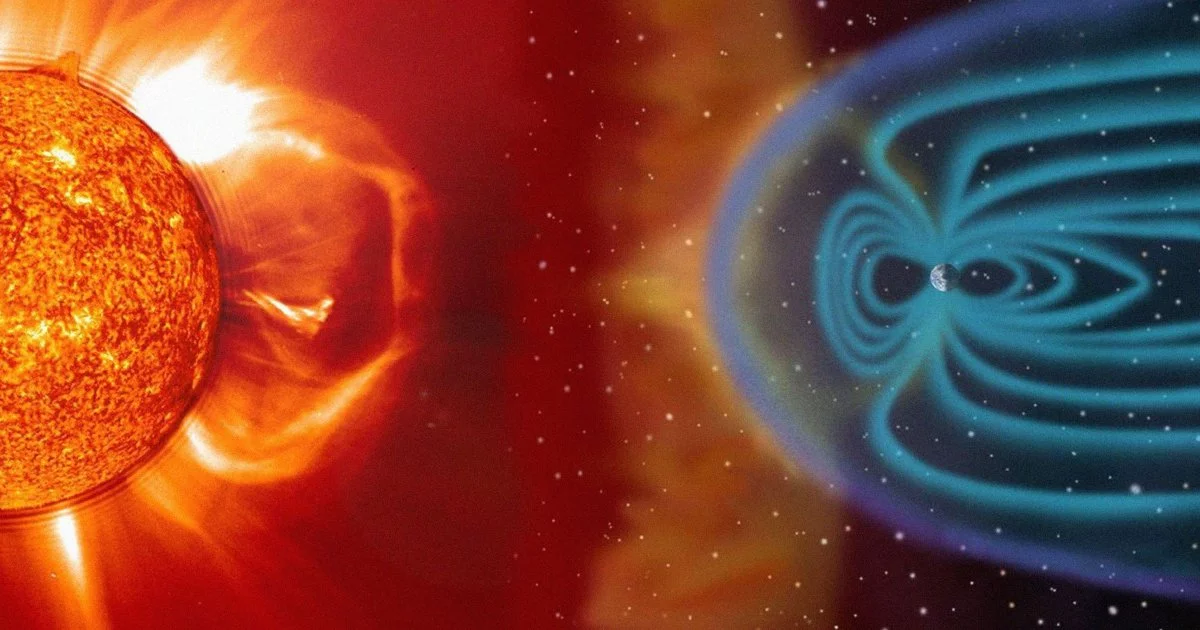
What makes this finding strategically relevant is its cadence and predictability. The reduced-GCR interval appears in the hours after lunar sunrise and persists for about two Earth days each lunar cycle, when the Moon’s orbital position places it within a protective configuration shaped by Earth’s magnetosphere. In effect, Earth’s magnetic field—extended into a long magnetotail—can partially “wrap” the Moon under certain geometries, creating a transient, time-bound reduction in incoming high-energy particles.
As NASA’s Artemis program prepares to send crews farther from Earth than any human mission in decades—starting with Artemis 2—the implication is not that radiation becomes “solved,” but that mission designers may gain a new scheduling lever: a naturally occurring, recurring window in which cumulative exposure can be measurably reduced without adding mass, power draw, or complexity to spacecraft hardware.
From discovery to flight rules: how a two-day window could reshape EVA productivity and mission software
Radiation mitigation has traditionally leaned on three pillars: distance, shielding, and storm shelters. The Chang’e-4-derived cavity adds a fourth: temporal optimization. For lunar surface operations, where extravehicular activities (EVAs) and rover traverses are among the highest-exposure tasks, a 20% reduction in GCR flux—if robustly modeled and repeatable—could translate into tangible operational benefits.
Key technological implications are emerging along three fronts:
- Time-gated operations as a first-class planning constraint
– EVA schedules, rover sorties, and high-exposure construction tasks could be preferentially placed inside the lunar-dawn cavity window.
– Over multi-week missions, even modest reductions in background dose can improve career dose management, especially for repeat flyers and long-duration surface teams.
- Navigation and autonomy systems that treat radiation like weather
– Exploiting a transient cavity requires real-time ephemeris awareness and predictive modeling integrated into guidance, planning, and crew decision-support tools.
– This pushes mission software toward a “radiation-aware autonomy” posture—where orbital mechanics, space-weather forecasts, and operational timelines are continuously reconciled.
- Sensor-driven validation and hybrid protection architectures
– The cavity’s boundaries, depth, and variability will need confirmation via advanced dosimetry on landers, habitats, suits, and orbiters.
– A likely best practice is hybrid protection: combine passive shielding (hydrogen-rich composites, water walls, regolith berms) with schedule optimization to maximize “protection per kilogram,” rather than simply adding mass.
Importantly, GCR reduction does not eliminate the acute threat of solar energetic particle (SEP) events, which can spike rapidly and demand sheltering regardless of the background environment. But treating radiation as a forecastable operational parameter—rather than a static hazard—can improve both safety margins and mission tempo.
The business case: mass efficiency, new analytics markets, and the economics of predictable risk
In lunar exploration, every kilogram saved is a strategic asset. If time-based mitigation reduces the need for incremental shielding—or allows the same shielding to deliver better outcomes—there are direct economic consequences across launch, logistics, and insurance.
Several commercial and financial dynamics stand out:
- Lifecycle cost management through mass-efficiency gains
– Lower shielding mass can reduce launch costs or free payload capacity for science instruments, comms infrastructure, or commercial cargo.
– For sustained lunar operations, small per-mission efficiencies compound into meaningful savings across a program’s lifecycle.
- A new demand curve for radiation analytics and “forecast-as-a-service”
– Mission control will increasingly require predictive analytics platforms that model radiation dynamics in near real time, blending orbital geometry with space-weather inputs.
– This creates room for specialized vendors offering radiation nowcasting, cavity prediction algorithms, and EVA optimization tools—potentially as subscription services to agencies and prime contractors.
- Insurance and liability becoming more quantifiable
– Demonstrable mitigation strategies can improve the predictability of crew health risk, influencing underwriting assumptions for government and commercial human spaceflight.
– Over time, the market could see financing structures that resemble terrestrial catastrophe-risk instruments—where payouts or terms are indexed to radiation exposure thresholds or event probabilities.
This is where the discovery’s “non-obvious” value becomes clearer: it is not merely a physics curiosity, but a potential enabler of operational regularity—the kind of predictability that makes supply chains, staffing models, and commercial service contracts easier to price.
Strategic ripple effects: lunar competition, data diplomacy, and a template for other magnetized worlds
The geopolitical subtext is difficult to ignore. The cavity insight originates from Chinese lunar data, while the most visible near-term crewed lunar push is led by the United States. In a domain where EVA productivity and crew safety can define mission success, the advantage may accrue to whichever ecosystem—national or commercial—can integrate the finding fastest into flight rules, software, and training.
Strategically, several trajectories are plausible:
- Competitive acceleration with selective cooperation
– Radiation data-sharing could become a diplomatic lever: cooperative science that reduces human risk, alongside competition for operational advantage and lunar infrastructure leadership.
- A broader paradigm for magnetotail-driven scheduling
– The underlying concept—using a magnetized environment’s geometry to time exposure—may generalize to other destinations with intrinsic or induced magnetic fields. Bodies such as Ganymede are often cited as candidates where magnetospheric interactions could create analogous planning opportunities.
- Base design and “temporal infrastructure”
– If the cavity proves stable and predictable, future lunar bases may incorporate radiation forecasting infrastructure as a core utility—potentially supported by smallsat constellations mapping the environment continuously.
– Over time, habitat operations could evolve toward “temporal hubs,” where high-exposure work is systematically concentrated in low-risk windows, and maintenance or indoor tasks fill the higher-risk intervals.
The deeper significance is that lunar exploration is moving from heroic sorties to managed operations. In that transition, the most valuable breakthroughs are often not singular technologies but new ways to orchestrate risk, time, and resources. A recurring two-day dip in GCR flux—if validated and operationalized—could become one of those quiet advantages that reshapes how humanity works on the Moon: not by building thicker walls, but by learning to move with the rhythms of the space environment itself.

 By
By
 By
By


 By
By

 By
By
 By
By







