

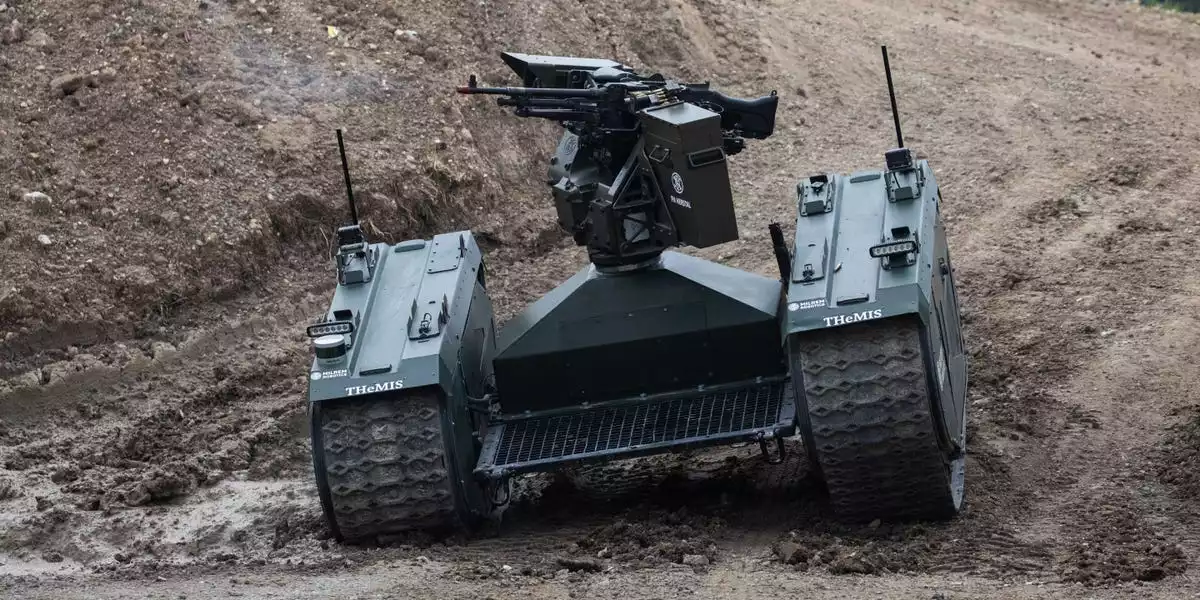

Modular Warfare: The Dawn of Plug-and-Play Defense
A tectonic shift is underway in the world of defense technology, catalyzed by the unforgiving crucible of Ukraine’s battlefields. Gone are the days when Western defense contractors could rely on monolithic, hardware-centric platforms that lumbered through years-long procurement cycles. The new doctrine is modularity—where battlefield assets are no longer static, but living, breathing systems, reconfigurable in days via software updates and interchangeable components. The likes of Milrem Robotics, DroneShield, and Granta Autonomy are leading this transformation, but the implications ripple far beyond any single firm.
The Operating System of War: Modularity and Software Supremacy
The contemporary battlespace is less a chessboard of fixed pieces and more an ecosystem of adaptive organisms. At its core is the concept of the “mission brick”—modular payloads, sensors, and powertrains that can be swapped in and out as easily as apps on a smartphone. This reframes military vehicles and drones not as bespoke machines, but as chassis-agnostic operating systems. The hardware becomes a vessel; the software, its soul.
- Over-the-air (OTA) updates have become the new logistical lifeblood, transforming what once were multi-year refresh cycles into continuous, DevSecOps-driven sprints.
- Digital twins and synthetic ranges are now essential, ensuring that rapid iteration does not come at the expense of MIL-SPEC ruggedness or reliability.
- AI and machine learning at the edge allow for real-time adaptation to adversarial electronic warfare—models can be swapped as quickly as enemy RF signatures change, prioritizing agility over static accuracy.
This software-defined paradigm inverts traditional vendor lock-in: open APIs and data interoperability are now the tickets to adoption, echoing the platform wars of the cloud era. In this world, lethality is measured not just in firepower, but in code velocity.
Economic Disruption: From Cost-Plus to Capabilities-as-a-Service
The modular revolution is not just technological—it is economic. The defense procurement landscape, long dominated by cost-plus contracts and glacial development timelines, is being upended.
- Outcome-based and subscription models are gaining favor, aligning incentives with rapid, field-driven innovation.
- Affordable, attritable platforms—often priced below $50,000—are produced at automotive scale, blurring the line between defense and commercial manufacturing.
- Commercial off-the-shelf (COTS) components sourced from the IoT ecosystem outpace bespoke defense parts, pressuring traditional suppliers to adapt or risk obsolescence.
Perhaps most striking is the talent inversion: embedded software expertise, not metallurgy, is now the critical bottleneck. Wage inflation and cross-sector poaching are rampant as defense primes and startups alike compete for AI and robotics talent. Private equity and venture capital, once wary of the sector’s bureaucratic inertia, now see accelerated exit timelines and dual-use spillovers—autonomous logistics, industrial robotics—as compelling reasons to re-enter the fray.
Strategic Flux: Adaptability as Deterrence, Ethics as Code
The strategic implications are profound. Rapidly upgradable systems complicate adversary intelligence cycles, turning the OODA loop (observe, orient, decide, act) into a weapon in its own right. NATO interoperability is enhanced not through formal treaties, but through shared modular standards. The Ukrainian front lines, where hackers and developers function as a distributed R&D lab, are seeding a new defense innovation diaspora—one that could redraw Europe’s technological map in the post-conflict era.
Yet, this velocity strains the regulatory and ethical fabric of the industry. Export controls, built for static products, struggle to keep pace with software-defined systems that can morph overnight. The rise of AI-enabled autonomy raises urgent questions of proportionality and accountability—questions that, increasingly, must be answered not just in policy, but in firmware.
For decision-makers, the imperatives are clear:
- Re-architect acquisition to favor spiral development and modular open systems.
- Diversify supply chains for critical components, cultivating on-shore micro-manufacturing.
- Embed DevSecOps culture and frontline feedback loops to accelerate fielding.
- Prioritize AI and embedded-systems talent pipelines to secure the future of defense innovation.
The Ukraine conflict has compressed a decade of defense transformation into a handful of years, establishing modularity and software agility as the new determinants of battlefield relevance. Those who embrace this paradigm—who see beyond hardware to the adaptive ecosystem—will not only shape the outcome of today’s conflicts, but also define the contours of tomorrow’s global security economy.

 By
By
 By
By

 By
By

 By
By
 By
By
 By
By







