
From social feeds to daily utility: what Muse Spark signals about Meta’s AI strategy
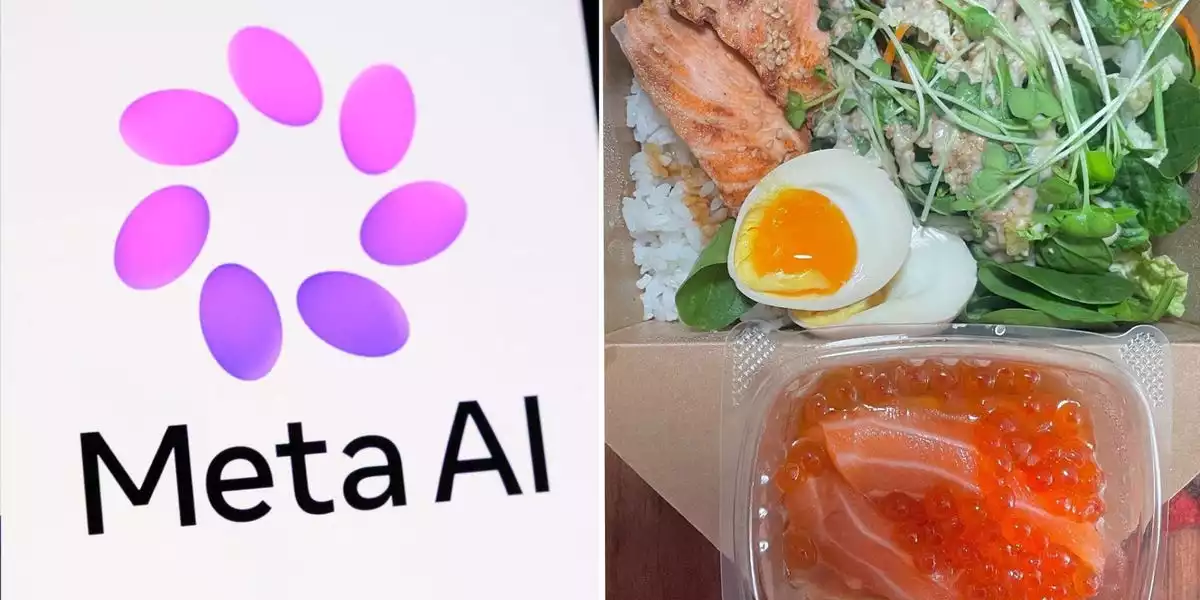
Meta’s unveiling of Muse Spark, a personal AI assistant that can generate real-time nutritional analysis and meal plans from a single photograph, reads less like a feature update and more like a strategic repositioning. The test case—a bento-style lunch assessed for calories and micronutrients—shows how quickly consumer AI is moving beyond chat into decision support: identifying Omega-3 levels, flagging fiber, vitamin C, and calcium shortfalls, warning on sodium, and even assigning a 7.5/10 meal score.
That matters because nutrition is not merely informational; it is behavioral. When an assistant can translate a photo into actionable guidance—then propose dinner recipes that close nutrient gaps while optimizing leftovers—it begins to occupy the kind of high-frequency, high-trust role that historically belonged to clinicians, coaches, or specialized apps. For Meta, whose core business has long been anchored in attention and advertising, Muse Spark hints at a broader ambition: becoming an indispensable layer of everyday life, where utility—not just engagement—drives retention.
The early imperfections are equally revealing. Mislabeling certain items and clumsy visual annotations underscore a central truth of consumer AI: adoption is not gated by novelty, but by reliability, explainability, and user confidence. In health-adjacent contexts, even small errors can feel consequential, because users implicitly treat the output as guidance rather than entertainment.
Multimodal AI in practice: the technical leap—and the trust gap
Muse Spark’s photo-to-nutrition workflow showcases the maturation of multimodal large language models (LLMs)—systems that fuse computer vision, natural-language reasoning, and domain knowledge (here, nutritional science). The promise is clear: a user does not need to log ingredients manually, estimate portion sizes, or interpret nutrition labels. The assistant compresses friction into a single action: take a picture.
Yet the same pipeline introduces technical and product challenges that will define winners in AI nutrition:
- Estimation uncertainty becomes the product. Calorie and micronutrient outputs depend on portion inference, preparation method, and hidden ingredients (oils, sauces, sodium). For sophisticated users, trust will hinge on whether Muse Spark can surface assumptions—e.g., *“estimated 1 tbsp soy-based sauce; sodium range X–Y”*—and allow corrections.
- User interface is not cosmetic; it’s epistemic. Clumsy annotations and misidentified foods are not merely UX blemishes. They weaken the perceived chain of reasoning, making it harder for users to calibrate confidence in the model’s conclusions.
- Edge vs. cloud trade-offs will shape privacy and performance. Real-time photo analysis raises a fundamental architectural question:
– On-device inference can reduce latency and limit data transmission, strengthening privacy posture—but requires efficient models and hardware optimization.
– Cloud processing enables faster iteration, richer integrations, and heavier models—at the cost of compliance complexity and heightened sensitivity around image and health-adjacent data.
In practical terms, Muse Spark’s long-term viability may depend less on raw model intelligence than on how well Meta operationalizes uncertainty, communicates provenance, and gives users control over corrections and preferences.
The business case: digital health meets platform monetization
Muse Spark lands squarely at the intersection of consumer AI, digital health, and commerce enablement. With global healthcare systems under cost pressure and consumers seeking preventive tools, AI-guided nutrition is increasingly positioned as a scalable intervention—particularly for chronic conditions where diet is a primary lever.
From a market perspective, Muse Spark could open several monetization pathways, each with distinct incentives and risks:
- Premium subscriptions for advanced dietary analytics, personalized meal plans, and longitudinal tracking.
- Affiliate and commerce integrations with grocery retailers, meal-kit providers, and food delivery platforms—where each recipe becomes a shoppable funnel.
- Brand partnerships and sponsored recommendations, potentially extending Meta’s advertising engine into the kitchen.
The competitive landscape is crowded and asymmetrical. Meta brings scale, distribution, and a mature ad stack. Rivals bring ecosystem leverage:
- Amazon can connect recommendations directly to purchase and fulfillment.
- Apple can embed nutrition intelligence into device-level health workflows (Apple Health) with a privacy-forward narrative.
- Google can pair search, Android distribution, and health integrations (Google Fit) with best-in-class information retrieval.
- Specialized nutrition startups may outperform on clinical rigor and niche trust.
Differentiation, then, is likely to come down to accuracy under real-world variability, seamless cross-platform experiences, and the ability to prove that recommendations improve outcomes—not just engagement.
Regulation, data stewardship, and the emerging “nutrition intelligence” economy
While nutritional data may not always be classified as medical records, it increasingly intersects with health privacy expectations and regulatory regimes such as GDPR in Europe and, in certain contexts, HIPAA-adjacent considerations in the United States. The more Muse Spark integrates with wearables, biomarkers, or insurer programs, the more it will be treated as part of the health data continuum.
Several second-order implications follow:
- Preventive care alignment: As insurers and employers shift toward wellness incentives, AI nutrition assistants could become partners in population health—if they can demonstrate measurable impact and maintain auditability.
- Data network effects: At scale, aggregated food recognition and consumption patterns could produce valuable macro insights for food manufacturers, retailers, and public health agencies—provided anonymization, consent, and purpose limitation are robust.
- Standards and interoperability pressure: Without shared benchmarks for accuracy, labeling, and data interchange, the AI nutrition market risks fragmenting into closed ecosystems. Meta will face a strategic choice between opening APIs to catalyze an ecosystem or maintaining tighter control to protect margins and data.
Muse Spark’s early performance—useful nutrient gap detection paired with occasional misidentification—captures the moment the category is entering: good enough to be compelling, not yet dependable enough to be authoritative. The companies that turn this into a durable business will be those that treat nutrition not as content, but as a high-stakes domain where transparency, consent, and calibrated confidence are the real product.

 By
By
 By
By

 By
By
 By
By

 By
By
 By
By