

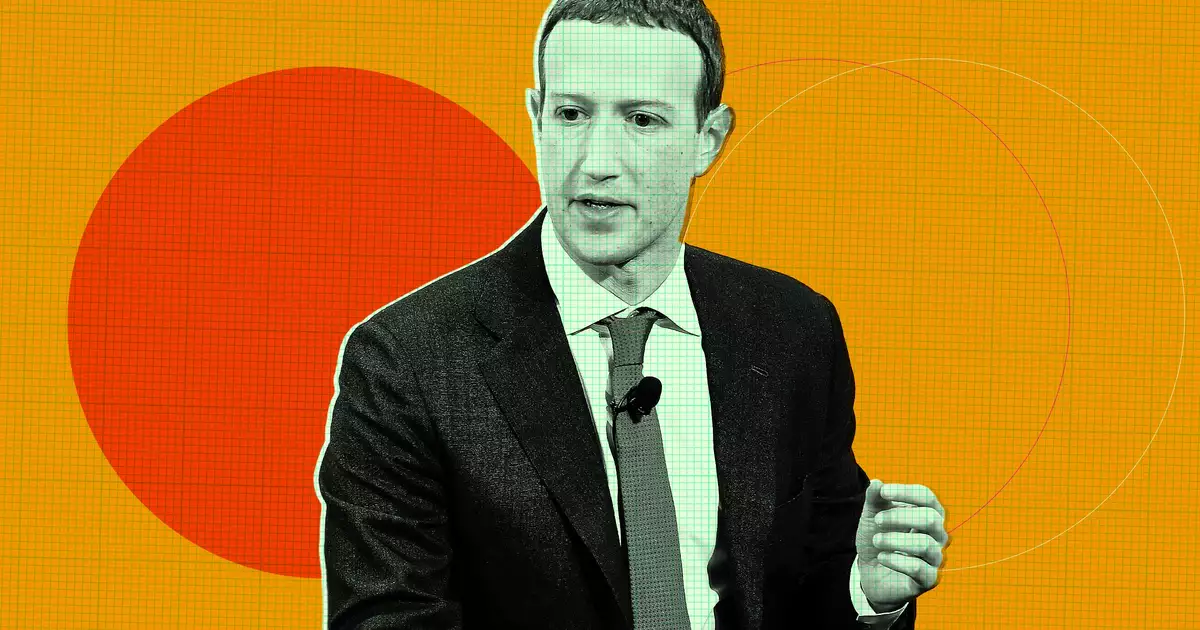

Meta’s Generative AI Gambit: Scale, Speed, and the Perilous Edge of Trust
Meta’s latest maneuvers in the generative AI arms race are nothing short of audacious. The company’s willingness to authorize “blank-check” offers for elite researchers, secure priority access to Nvidia’s H100 GPUs, and embark on custom data-center builds signals a profound shift in its strategic calculus. This is not the incremental ad-tech optimization of yesteryear; it is a full-throttle bet that the next S-curve in digital dominance will be defined by foundation-model performance and AI-native services. Yet, as Meta accelerates, it finds itself entangled in a paradox: the very measures intended to leapfrog rivals like OpenAI and Google may simultaneously erode the trust and regulatory goodwill that underpin its global business.
The High-Stakes Calculus of Data and Model Governance
Meta’s pursuit of statistical richness has led it to harvest unprecedented volumes of text—including, reportedly, millions of copyrighted books. This approach offers undeniable advantages in model performance, but it collides headlong with a global movement toward “clean-room” data and explicit licensing. The OpenAI-Axel Springer partnership and ongoing litigation between Stability AI and Getty Images exemplify the new landscape: data legitimacy is no longer a back-office concern but a boardroom imperative.
- Data Legitimacy Risks: Future enforcement of the EU AI Act may retroactively penalize or block models trained on unlawfully sourced content, creating latent liabilities that could dwarf short-term cost savings.
- Guardrail Relaxation: Leaked internal guidance suggests Meta is lowering safety thresholds, particularly in reinforcement learning from human feedback (RLHF). The rationale is clear—aggressive scope-of-output can drive higher benchmark scores and viral engagement. Yet, this dilution of guardrails dramatically enlarges the risk surface for reputationally catastrophic outputs, especially in domains like health and race.
Meta’s infrastructure investments—liquid-cooled AI superclusters and high-voltage power contracts—further deepen its lock-in to Nvidia’s roadmap and raise ESG concerns. Investors attuned to the carbon intensity of generative AI workloads are already scrutinizing these moves, questioning both their sustainability and social license.
Regulatory Crosshairs and the Expanding Litigation Frontier
The regulatory environment is hardening with remarkable speed. The EU AI Act’s “High-Risk System” classification, ongoing FTC investigations into dark patterns, and a wave of state-level child online safety bills are converging on a common target: the unchecked proliferation of AI-generated misinformation and harmful content.
- Civil Liability Exposure: Legal experts anticipate a surge of product-liability, defamation, and even medical malpractice suits targeting both model providers and enterprise integrators. Insurers are responding by raising errors & omissions (E&O) premiums for uncontrolled LLM deployments, signaling a structural increase in the cost of ownership for AI platforms.
- Talent Retention Pressures: The ethical friction within AI labs is palpable. High-profile departures from Google and OpenAI have already demonstrated that top researchers will not hesitate to walk if organizational values diverge too far from their own. Meta’s aggressive posture may imperil the very talent it is striving to attract.
Brand Safety, Economic Fallout, and the Shifting Sands of Market Trust
Advertisers, ever attuned to the nuances of brand safety, are watching closely. The memory of the 2020 “Stop Hate for Profit” boycott lingers, and any public narrative linking Meta’s AI to racist or anti-vaccine content could prompt another exodus of Fortune 500 marketing dollars. The calculus is stark: while short-term acceleration may defer tens of millions in safety spending, a single regulatory fine or exclusion from EU procurement could cost multiples more.
- Healthcare and Education Ambitions at Risk: Meta’s aspirations in sectors like healthcare and education—where trust and factual accuracy are paramount—could be derailed if its brand becomes synonymous with misinformation.
- Insurance and Capital Markets: Reinsurers are now scenario-modeling “black-swan” AI misinformation events, such as vaccine scares or election interference. The resulting risk premiums could flow through to Meta’s borrowing costs and those of the broader ecosystem.
Strategic Guidance for a New AI Reality
The industry’s trajectory is unmistakable: scale and speed are no longer sufficient moats. Trust, regulatory fitness, and domain-specific accuracy are emerging as the true currencies of durable advantage. For C-suite leaders, this means:
- Dual-Track Governance: Segregate performance R&D from deployment pipelines, with rigorous post-processing and provenance tracing before consumer exposure.
- License and Liability Shielding: Demand indemnity from AI vendors and scrutinize training data lineage; incident-response protocols must be as robust as SOC2 for AI outputs.
- Portfolio Hedging: Invest in domain-specific, retrieval-augmented models—especially in regulated sectors—where auditability is a differentiator.
For policymakers and investors, the imperative is to move beyond static content rules and toward dynamic, signal-based oversight. AI safety metrics should be incorporated into ESG indices, and platforms with repeated misinformation incidents must see their credibility—and valuations—discounted accordingly.
Meta’s accelerated AI push is a clarion call for the industry: the next era of digital leadership will be won not merely by those who scale the fastest, but by those who can balance velocity with verifiable safety. The stakes, both economic and societal, have never been higher.

 By
By
 By
By

 By
By
 By
By
 By
By









