


AI as the New Cornerstone in Home Improvement Retail
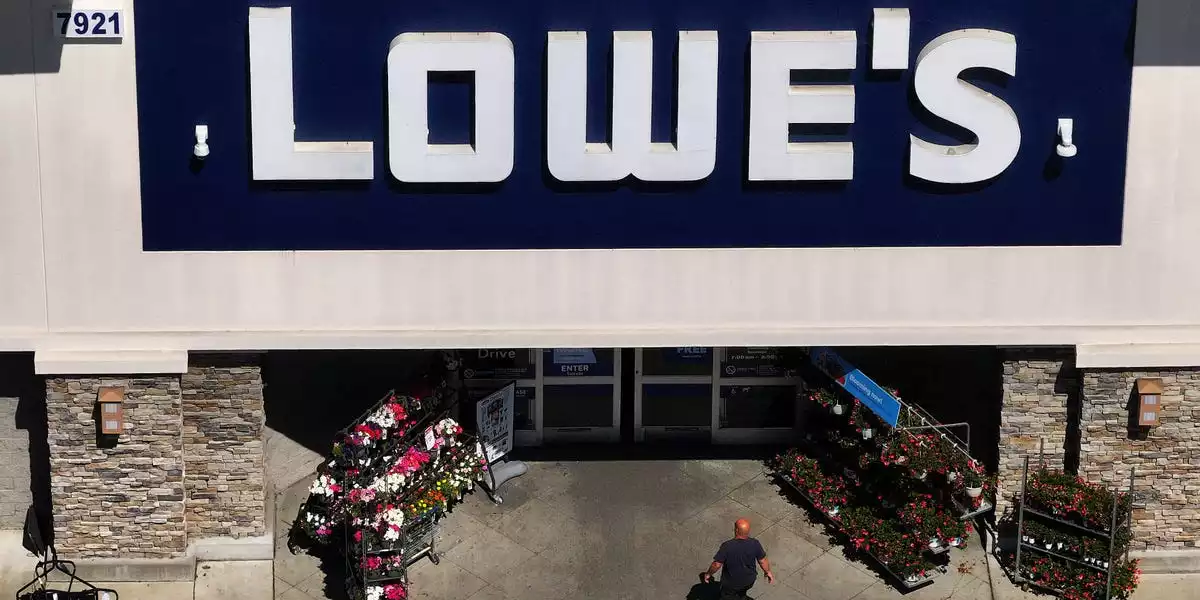
In the shadow of a sluggish U.S. housing market, Lowe’s is orchestrating a striking transformation—one that places artificial intelligence not at the periphery, but at the very heart of its retail strategy. The expansion of “Mylow,” an AI-powered companion app, signals more than a digital facelift; it is a foundational shift in how the company envisions the intersection of physical retail and digital intelligence. Mylow guides both customers and associates through the labyrinth of product discovery, project estimation, and inventory navigation, but its real genius lies beneath the surface: every interaction becomes a data point, every query a training sample.
This approach transforms Lowe’s vast network of stores into a living, breathing data platform. Each footstep in the aisle, each search for a deck screw or a can of paint, feeds a growing reservoir of labeled, domain-specific data. This is the raw material for next-generation recommendation engines, predictive inventory systems, and dynamic pricing models. Unlike pure-play e-commerce rivals, Lowe’s leverages its physical presence to harvest real-time, in-situ behavioral data—an asset that is as defensible as it is difficult to replicate.
Talent Economics: Wage Signaling and the New Tech Labor Market
Perhaps even more telling than the technology itself is Lowe’s aggressive recruitment of digital talent. By offering compensation packages that approach, and sometimes exceed, the high-$200,000s in Charlotte, the company is sending a clear message: technology is a value driver, not a cost center. This deliberate wage signaling does double duty. For investors, it’s a declaration of intent—a commitment to out-innovate competitors like Home Depot. For engineers and data scientists, it’s an invitation to shape the future of retail from a burgeoning southern tech hub rather than the saturated coastal enclaves.
The implications ripple outward. Regional employers, from banks to insurers, are now forced to reconsider their own compensation structures, potentially escalating the local talent cost curve. Public filings reveal a surge in competition for H-1B visa talent, a move that not only addresses domestic shortages but also hedges against U.S. wage inflation. By diversifying its technical workforce across domestic and international lines, Lowe’s is building globally distributed development teams capable of 24-hour release cycles, accelerating innovation at a pace that matches the digital giants.
Strategic Investment: From Concrete to Code
With mortgage rates stubbornly above 7% and renovation spending in retreat, Lowe’s faces the classic challenge of anemic same-store sales. The company’s response is to pivot its capital expenditure from physical store rollouts to digital infrastructure—AI, software, and cloud platforms. This shift is not merely defensive; it’s a recalibration of growth strategy. Digital investments offer faster payback horizons and greater flexibility, preserving free cash flow while still projecting an image of innovation and growth.
The Mylow app, for example, is more than a customer service tool. It is the linchpin of a broader ecosystem that could soon encompass synthetic data for A/B testing store layouts, in-app project estimation that reduces over-buying (and thus carbon emissions), and even embedded financing for high-ticket remodels. These moves position Lowe’s not just as a retailer, but as a hybrid platform—part marketplace, part fintech, part sustainability partner.
The Competitive Horizon: AI Arms Race and Beyond
Lowe’s is not alone in this digital transformation. Home Depot’s Sidekick app and Walmart’s proprietary AI systems underscore a sector-wide pivot toward digitally augmented front-line associates. The competitive advantage will accrue to the retailer that can compress the “time-to-answer” for customers, transforming minutes of uncertainty into seconds of clarity—while simultaneously boosting labor productivity.
Looking further ahead, the convergence of building-information modeling (BIM) with consumer-facing DIY platforms hints at a future where a simple 3-D scan of a room could auto-generate a materials list, ready for purchase and delivery. Lowe’s early moves in data capture and AI development could yield durable intellectual property moats in this emerging “design-to-purchase” pipeline.
For executive decision-makers, the lesson is clear: the battleground has shifted. Capital allocation that once privileged square footage is now tilting toward codebase scale. The organizations that can transform operational exhaust—every customer interaction, every inventory check—into proprietary, monetizable datasets will dictate the margin structure of a retail landscape where housing cyclicality is no longer a reliable growth engine. In this new era, the winners will be those who see their stores not just as points of sale, but as engines of data and innovation.

 By
By
 By
By
 By
By

 By
By
 By
By
 By
By
 By
By







