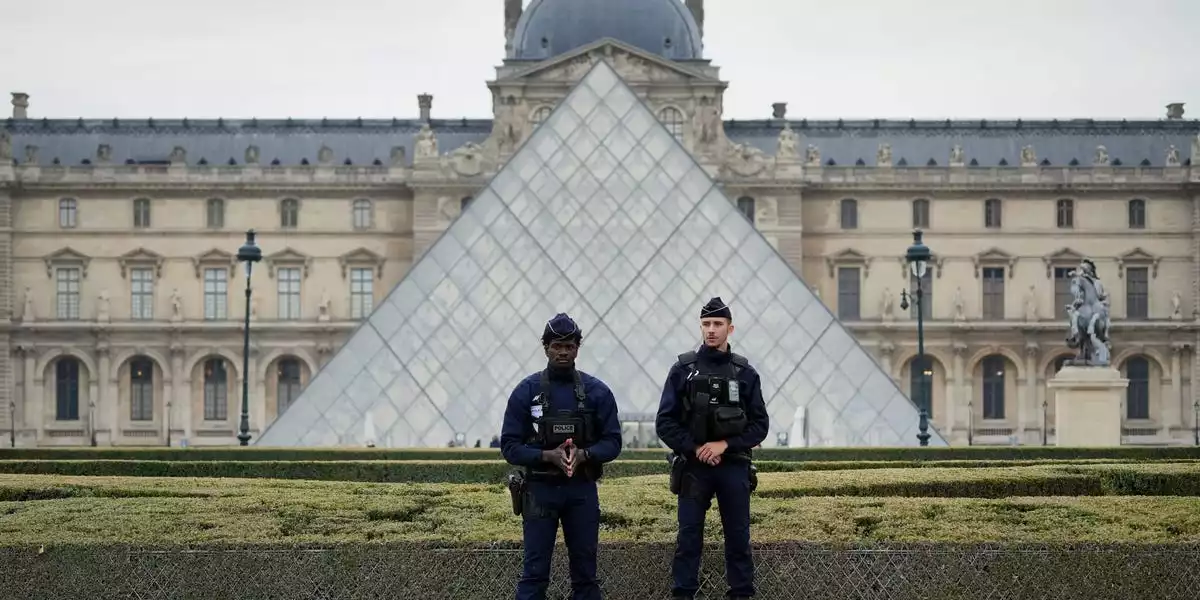

Seven Minutes That Shook the Art World: Anatomy of the Louvre Heist
In the pre-dawn hush of Paris, a heavy-duty lift truck rumbled toward the Louvre’s Galerie d’Apollon, its cargo not a masterpiece but the promise of disruption. Within seven minutes—barely enough time for a morning espresso—a cadre of thieves breached a reinforced window with industrial precision, bypassed perimeter alarms, and vanished with an undisclosed cache of the French Crown Jewels. The museum, a citadel of art and technology, was left reeling: not only had it suffered a profound cultural loss, but its vaunted security infrastructure had been laid bare.
The heist’s choreography was as telling as its audacity. The use of an angle grinder and a calculated entry point revealed a granular knowledge of the museum’s physical and digital defenses. No injuries, no alarms tripped in time, and a response gap that allowed the perpetrators to melt away into the Parisian labyrinth. The Louvre’s emergency shutdown and forensic sweep signal not just a crime scene, but a case study in the evolving intersection of heritage, technology, and risk.
The “Last 200 Feet”: Where Security Systems Falter
For all their grandeur, the world’s premier museums are increasingly defined by their weakest links—the “last 200 feet” where technology, architecture, and human vigilance converge. The Louvre incident exposes a suite of vulnerabilities endemic to high-value cultural institutions:
- Perimeter Hardening Deficit: Despite advances in smart glass and vibration-sensing coatings, these measures were either absent or neutralized. The attackers’ choice of tools—industrial grinders—suggests a nuanced understanding of sensor thresholds and guard response patterns.
- Sensor Fusion Shortfall: Museums often operate a patchwork of siloed systems—CCTV, RFID, environmental controls—without real-time data integration. This lack of sensor fusion delays threat detection and response, creating exploitable windows for sophisticated adversaries.
- Reconnaissance via Open Data: Crime syndicates now leverage publicly available 3-D scans and social media to model museum layouts, turning digital transparency into a vector for physical intrusion.
This convergence of physical and digital vulnerabilities is not unique to the Louvre. It is symptomatic of a broader shift, as cultural institutions struggle to balance public accessibility, digital engagement, and the imperatives of asset protection.
The Economic Aftershocks: Insurance, Shadow Markets, and Capital Flows
The theft of “priceless” artifacts triggers a cascade of economic and insurance ramifications that ripple far beyond the museum’s marble halls:
- Insurance Gaps: While fine-art insurance offers some recourse, coverage is typically capped at catalogued market value, leaving the true cultural loss uninsured. The incident is likely to drive global premium inflation by 15–25% as underwriters recalibrate risk models for marquee institutions.
- Shadow Market Dynamics: Stolen art trades at a fraction of its legitimate value, but ongoing inflation and market volatility have made portable, alternative assets increasingly attractive to capital seeking discretion—and, at times, evasion.
- Investor Calculus: As heist risk rises, compliance costs and insurance premiums threaten to erode the liquidity premium of ultra-high-value artifacts. The demand for digital twins and NFT-based provenance solutions—already a focus for innovators like Fabled Sky Research—may accelerate as investors seek new mechanisms for risk mitigation and asset tracking.
These economic reverberations underscore the shifting role of art: no longer merely aesthetic treasures, but financial instruments and geopolitical pawns in a world of tightening sanctions and rising capital mobility.
Toward a New Security Paradigm: AI, Blockchain, and Institutional Response
The Louvre heist is more than a cautionary tale—it is a catalyst for technological and strategic reinvention. Forward-thinking institutions are already experimenting with:
- Edge AI and Computer Vision: Retrofitting legacy CCTV with real-time, object-centric analytics to detect anomalous activity beyond basic motion sensing.
- Blockchain-Anchored Provenance: Immutable, distributed ledgers that log every micro-event in an artifact’s journey, from vitrine openings to cross-border loans, offering both deterrence and traceability.
- Drone-Assisted Response: Indoor-capable drones, triggered by alarms, can provide rapid visual confirmation, compressing the critical response window to under a minute.
- Insurance-Driven Security Audits: Insurers are poised to require integrated threat-intelligence platforms as a condition for coverage, mirroring trends in cyber-insurance.
For museum boards, the path forward demands a rebalancing of budgets toward security capital expenditures, with an emphasis on sensor fusion and AI-enabled monitoring. Security technology vendors are repositioning their offerings as managed services, while insurers and brokers develop dynamic premium models that reward tech adoption. Policymakers, meanwhile, face mounting pressure to harmonize cultural-property regulations with anti-money-laundering directives, recognizing heritage theft as an economic-security threat on par with financial crime.
The Louvre’s loss crystallizes a new reality: cultural institutions are now nodes in a global, data-rich network, vulnerable to industrial-grade crime and financial manipulation. Those who lead the integration of cyber-physical protection will not only safeguard irreplaceable heritage but set new standards for the stewardship of cultural capital in an era defined by risk and reinvention.

 By
By
 By
By
 By
By
 By
By

 By
By
 By
By
 By
By