

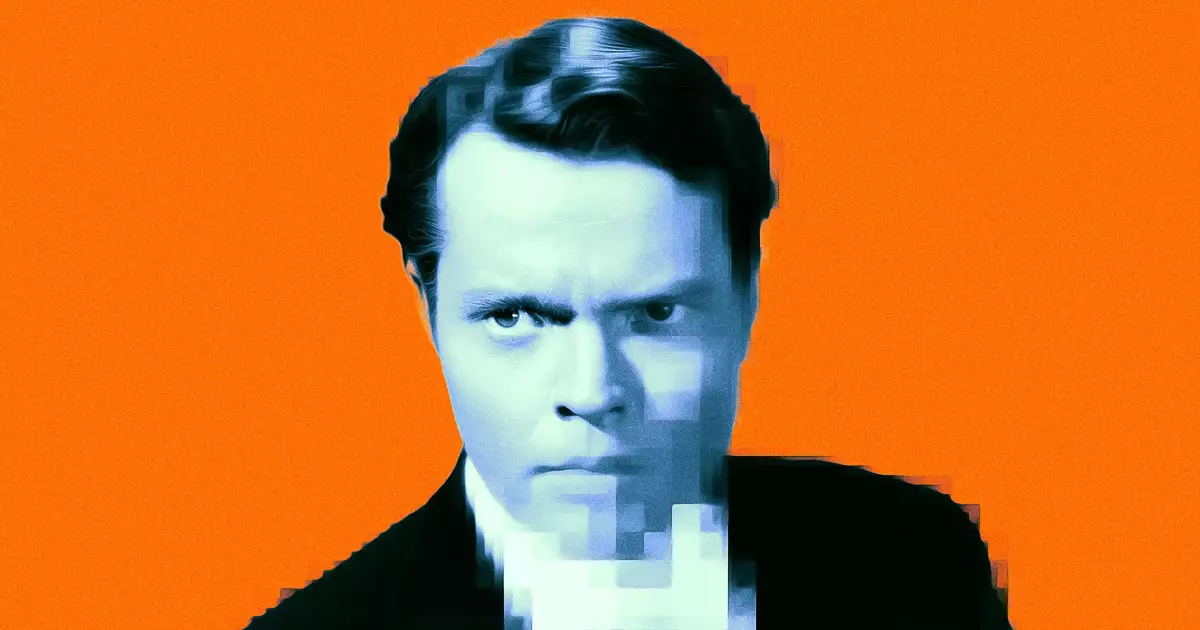

Analog Rediscovery Meets Synthetic Resurrection: Cinema’s New Frontier
The cinematic world finds itself at a rare inflection point, where the ghosts of celluloid past are summoned by both the dust of archives and the circuits of artificial intelligence. Recent developments—archivists unearthing John Woo’s mythic, nearly three-hour workprint of “A Better Tomorrow II,” and the Amazon-backed Showrunner’s audacious project to synthetically reconstruct the missing 43 minutes of Orson Welles’ “The Magnificent Ambersons”—offer a study in contrasts. These parallel efforts illuminate the evolving dialectic between analog authenticity and digital ingenuity, each carrying profound implications for the business, technology, and art of film.
The Dual Engines of Cinematic Resurrection
Analog Restoration’s Renaissance
The Woo workprint’s recovery is a testament to the enduring relevance of traditional archival practices. Physical film—stored in cold vaults, cataloged by hand, and revived through photochemical scanning—remains the gold standard for authenticity. Recent advances in high-resolution photogrammetry and color science now allow archivists to digitize even the most fragile nitrate stock at unprecedented 16-bit depth, enabling 4K and 8K distribution while preserving the original’s tactile provenance. This analog-first approach not only safeguards artistic intent but also cultivates a premium aura around “heritage-grade” restorations.
Generative AI and the Synthetic Assembly Line
In contrast, Showrunner’s initiative signals a new era of synthetic media production. By fusing large diffusion models, facial performance transfer, and volumetric set recreation, generative AI is no longer confined to colorization or upscaling—it is now capable of full-scene generation. The process is strikingly modular:
- Script Ingestion: Feeding original or reconstructed scripts into AI models.
- Style Conditioning: Training on the director’s visual language.
- Synthetic Casting: Generating digital likenesses of actors.
- Scene-Level Rendering: Creating new footage indistinguishable from the original.
- Voice Cloning: Reconstructing lost performances.
Yet, this technological leap is not without risk. Concerns over uncanny-valley aesthetics, model bias, and copyright entanglements loom large. The absence of interoperability standards for AI-native assets—akin to SMPTE’s IMF for conventional digital cinema—further complicates the landscape.
Economic Alchemy and Platform Ambitions
Unlocking the Long Tail
The streaming era has rewritten the economics of dormant intellectual property. Studios now recognize that “new-old” content—such as Woo’s extended cut or an AI-restored “Ambersons”—can drive engagement at a fraction of the cost of new productions. Strategic windowing across theatrical, premium VOD, collector’s editions, and catalog streaming multiplies return on investment. Rights arbitrage becomes a sophisticated game, as niche restorations are repackaged for successive, targeted audiences.
Cultural Capital as Differentiator
Amazon’s involvement with Showrunner is more than a technical experiment; it is a calculated bid to position Prime Video as a steward of cinematic heritage and innovation. Exclusive access to resurrected classics can foster subscriber loyalty and brand Prime as the home of “cultural artifacts.” For Showrunner, the ambition is even broader: to become the “Netflix of AI,” enabling cloud-based rendering, micro-licensing, and user-generated spin-offs. This signals a potential migration of value from traditional studios to tech-enabled prosumers, redrawing the boundaries of creative ownership.
Shifting Cost Curves and Labor Dynamics
AI-driven reconstruction dramatically reduces the marginal cost of visual effects, though it shifts upfront investment into compute, model training, and complex rights clearance. Analog restoration, while labor-intensive, benefits from declining hardware costs and digital editing efficiencies. The labor market itself may bifurcate, with “heritage specialists” preserving analog skills and “synthetic creatives” pushing the boundaries of computational storytelling—a tension likely to reshape guild negotiations and talent contracts.
Navigating Authenticity, Governance, and the Road Ahead
Authenticity as Strategic Moat
In a world awash with synthetic media, provenance and authenticity are poised to become competitive moats. Studios and platforms able to guarantee chain-of-custody and minimal AI adulteration may command trust-driven market share, spurring the rise of “heritage-grade” certification bodies. Much like ESG metrics have redefined corporate value, “Authenticity KPIs” could soon influence content valuation and green-light decisions.
Regulatory and Ethical Imperatives
The regulatory landscape is evolving rapidly. The EU’s AI Act and emerging U.S. deepfake legislation foreshadow mandatory disclosure for AI-generated content. Early adopters of watermarking and blockchain-based provenance may gain a compliance edge, preempting costly retrofits and reputational risk. For rights holders, a forensic audit of vault inventories—paired with modern restoration pipelines—offers asymmetric upside, but only if governance frameworks are in place to protect brand equity and creative legacy.
Collaborative Ecosystem and Business Model Innovation
Forward-thinking organizations are already forging alliances with academic archives, national film institutes, and open-source AI consortia. These collaborations promise not only to crowdsource metadata and restoration best practices but also to co-develop the industry standards that will define the next era of media. Emerging business models—tiered subscriptions, NFT-backed collectibles, data-driven green-lighting—point to a future where the boundaries between analog and synthetic, past and present, are ever more porous.
The rediscovery of Woo’s original vision and the algorithmic resurrection of Welles’ lost masterpiece are not merely technical feats—they are harbingers of a new cinematic order. Those who can balance the imperatives of authenticity and innovation will shape the cultural memory of generations to come, navigating both the promise and peril of synthetic cinema.

 By
By
 By
By
 By
By

 By
By
 By
By
 By
By
 By
By







