

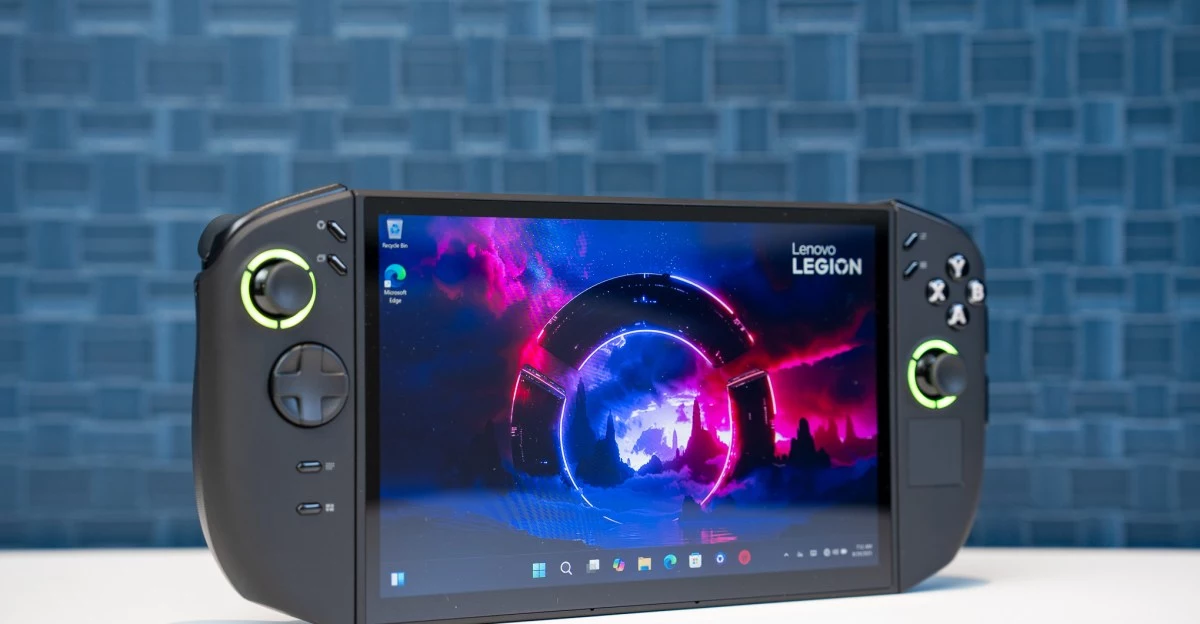

The Legion Go 2: Lenovo’s Calculated Leap into Ultra-Premium Handheld Computing
In the relentless arms race of mobile gaming, Lenovo’s Legion Go 2 emerges not as a mere iteration, but as a statement of intent—a deliberate move to redefine the apex of Windows-based handheld PCs. With its striking 8.8-inch OLED variable refresh display, modular controls, and a 50 percent larger battery, the Go 2 is engineered to seduce both the enthusiast gamer and the productivity-minded early adopter. Yet, beneath the surface of this $1,099 device lies a complex web of technological trade-offs and strategic bets that illuminate the evolving contours of the handheld market.
OLED Displays, AMD’s Z2, and the Art of Performance Trade-Offs
The Legion Go 2’s most conspicuous upgrade is its transition from a 2.5K LCD to a 1920 × 1200 OLED panel. On paper, this appears as a step down in resolution—a rare move in a tech world obsessed with ever-higher pixel counts. In practice, the lower pixel density is a masterstroke of engineering pragmatism. By reducing the GPU workload by nearly 45 percent, Lenovo unlocks higher, more consistent frame rates and, crucially, extends battery life—an existential challenge for any device running at sub-30 watt power budgets.
The hardware heart of the Go 2 is AMD’s new Ryzen Z2 and Z2 Extreme APUs, which, while not a radical architectural leap, represent a carefully tuned evolution of the Zen 4 CPU and RDNA 3 GPU. The absence of a new instruction set architecture signals that AMD, and by extension Lenovo, are content to stretch the current silicon cycle until the next-generation Zen 5 and RDNA 4 arrive. This is not a sign of stagnation but of strategic patience, as the market for handheld gaming PCs, though surging, has yet to reach the scale that would justify annual, bespoke chip development.
Other engineering flourishes abound:
- Variable Refresh Rate (30–144 Hz): Smooths gameplay across a wide spectrum of frame rates, minimizing judder for titles that dip below 60 fps.
- Enhanced Thermal Design: A larger vapor chamber and the more efficient OLED panel translate to a projected 60 percent increase in real-world play time, addressing the thermal throttling that dogged the first generation.
- Modular Controls: Drift-resistant hall-effect sticks and a hidden optical mouse mode signal Lenovo’s intent to court both handheld and desktop-style competitive gamers, echoing Nintendo’s Joy-Con philosophy but with PC-grade precision.
The Economics of Premiumization and the Battle for Ecosystem Supremacy
Lenovo’s pricing strategy—a 55 percent jump over the prior generation—places the Legion Go 2 squarely in the ultra-premium tier, a space where early adopters are willing to pay for bleeding-edge features and uncompromising build quality. This mirrors the smartphone market’s bifurcation, where flagships command four-figure sums while mainstream devices commoditize at lower price points.
Key market dynamics are at play:
- OLED Panel Sourcing: Lenovo’s timing in securing 8.8-inch OLED panels during a transitional phase in the display supply chain likely afforded it cost advantages, a move that may pay dividends as demand for AI-centric “personal agent” devices ramps up.
- Competitive Positioning: The Go 2 is less a direct competitor to Valve’s value-driven Steam Deck and more a challenger to Asus’s ROG Ally and the anticipated next wave of flagship handhelds. Its premium pricing is as much about monetizing early adopters as it is about offsetting the bill of materials for OLED, battery, and advanced sensors.
Yet, perhaps the most consequential decision is Lenovo’s steadfast commitment to full Windows 11, eschewing both SteamOS and Microsoft’s rumored Xbox “Ally” UI. This is a high-stakes gamble: while Windows offers unmatched compatibility, its desktop interface remains suboptimal for touch-first, mobile experiences. Lenovo is wagering that Microsoft’s forthcoming Windows 12—rumored to be more modular and AI-accelerated—will close the gap before user friction erodes its competitive edge.
Edge AI, Cloud Gaming, and the Next Frontier
Beneath the surface, the Legion Go 2 is quietly positioning itself as more than a gaming device. AMD’s RDNA 3 neural processing units, though seldom spotlighted, unlock the potential for on-device AI inferencing—enabling features like offline voice translation or real-time image generation. This opens the door for Lenovo to pivot the same hardware toward enterprise remote work or AI-powered productivity, leveraging its supply chain investments across multiple product lines.
Looking ahead, several inflection points loom:
- Short-Term: Expect aggressive price compression as competitors refresh their lineups, and a shift in differentiation from hardware specs to firmware and software optimization.
- Mid-Term: The arrival of Zen 5 and RDNA 4 APUs will reset the performance landscape, potentially rendering today’s resolution choices obsolete. Meanwhile, the operating system wars—between Windows, SteamOS, and emerging “thin” Linux-based platforms—could reshape the very foundation of the handheld ecosystem.
For decision-makers, the path forward is clear: hedge bets on operating systems, secure OLED supply ahead of the AI-PC wave, and invest in edge-AI features that transcend gaming. The Legion Go 2 is not simply a new gadget—it is a harbinger of the converging futures of mobile gaming, cloud services, and AI-driven personal computing. Whether Lenovo can navigate this convergence will define not only the fate of the Go 2, but the next chapter of portable technology itself.

 By
By

 By
By

 By
By
 By
By

 By
By







