


When recruitment becomes performance art in the AI attention economy
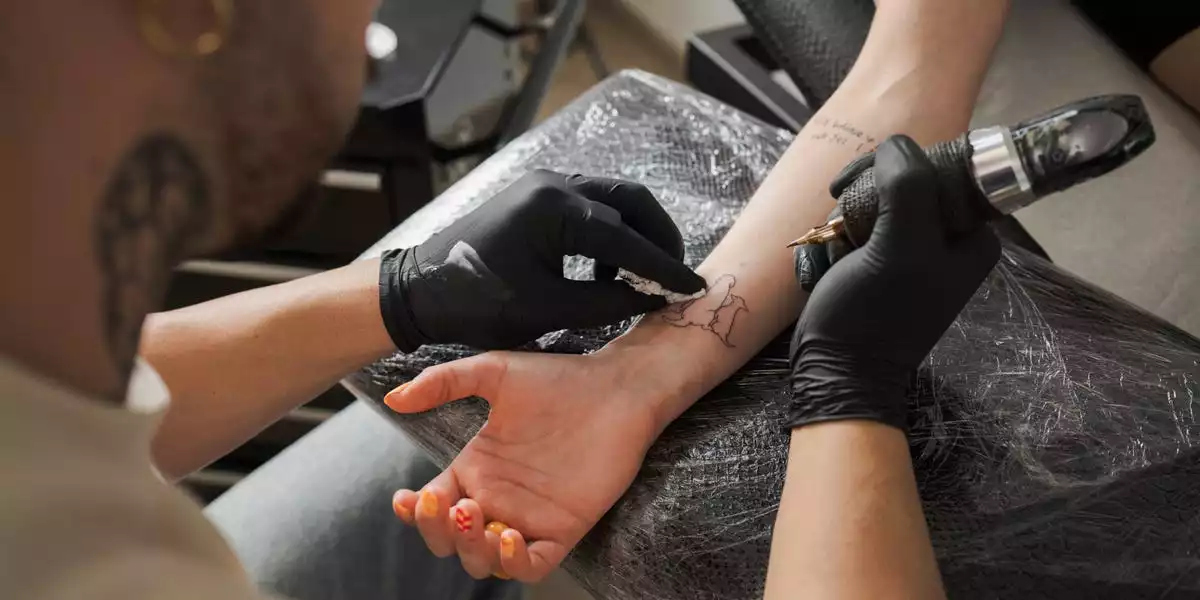
LemonLime, a Y Combinator–backed AI startup founded in 2023 by Jordan Zietz and reportedly staffed by just five employees, has become an unlikely case study in how modern hiring, marketing, and social media dynamics can collide. At a San Francisco after-party, the company offered “instant interviews” to attendees willing to tattoo the LemonLime logo on their bodies. Seven people reportedly did so. The stunt might have been designed as a high-velocity shortcut to visibility in a crowded AI startup landscape—but its aftershocks illustrate how quickly “viral” can turn into reputational volatility.
The controversy escalated when an image of one participant was shared without her consent, prompting calls for removal. While interviews were reportedly offered, follow-through appeared inconsistent, and the episode ultimately ended with Zietz calling it “poorly exercised judgment,” issuing a public apology, deleting posts, and pledging to cover tattoo removal costs for anyone who regretted the decision.
In a sector where attention is often treated as a currency, LemonLime’s approach reflects an extreme interpretation of growth-era logic: if visibility is scarce and competition is intense, then the most shocking act can feel like the fastest route to relevance. Yet the incident also underscores a hard truth about the attention economy in talent acquisition: the same mechanisms that amplify a message can also permanently archive missteps, turning a momentary stunt into a long-lived narrative.
Key tension exposed: startups are increasingly competing on *spectacle* while candidates increasingly evaluate employers on *values*.
—
Consent, coercion, and the fragile line between agency and leverage
The most enduring questions raised by the LemonLime incident are not about marketing taste—they are about power dynamics. Tying access to an interview, even informally, to a form of body modification blurs the boundary between candidate choice and corporate influence. In a tight job market—especially in AI, where roles can be scarce at the entry level and highly competitive at the top—“optional” can still carry the weight of implicit pressure.
This is where the stunt drew some of its sharpest criticism, including labels like “Orwellian.” The critique is less about tattoos per se and more about what the exchange symbolizes: a company effectively asking job seekers to convert their bodies into branded media in return for professional opportunity.
From a candidate-experience perspective, the risks are structural:
- Trust erosion: candidates may question whether leadership exercises sound judgment under pressure.
- Cultural signal: the stunt communicates what the organization rewards—attention over craft, shock over substance.
- Long-tail deterrence: high-caliber technologists often avoid employers that appear to commodify people or treat hiring as a game.
In today’s labor market, employer branding is not merely a recruiting asset; it is a strategic filter. The best candidates often have options, and they increasingly screen for ethical maturity, psychological safety, and leadership credibility. A stunt that reads as exploitative can narrow the funnel—precisely the opposite of what a talent-scarce startup needs.
—
The social-first reputational trap: screenshots are policy now
LemonLime’s episode also highlights a defining feature of the current media environment: digital permanence. Even when posts are deleted and apologies are issued, screenshots and reposts can preserve the original moment indefinitely. For early-stage companies, this creates a new operational reality: communications are no longer ephemeral, and brand risk is no longer confined to press cycles.
Two dynamics matter here for business leaders and founders:
- The audience is broader than investors and customers. Stakeholders now include online communities, prospective employees, industry influencers, and sometimes regulators—each capable of escalating a controversy.
- The “receipts” culture compresses response time. A slow or incomplete response can be interpreted as indifference, while an over-defensive response can deepen backlash.
The non-consensual sharing of an attendee’s image adds another layer: beyond reputational harm, it touches on personal-image rights and consent norms that are tightening across industries. While data privacy frameworks like GDPR and CCPA reshaped how companies handle information, the next frontier may involve clearer expectations—and potentially regulation—around biometric identifiers, personal likeness, and consent-based media use in commercial contexts.
For startups, the lesson is not simply “don’t do stunts.” It is that brand governance must scale earlier than headcount. A five-person company can trigger a global backlash as easily as a Fortune 500 brand, because distribution is algorithmic, not proportional.
—
What the LemonLime backlash signals for AI startups and employer branding strategy
Zooming out, the incident sits at the intersection of three macro trends: the AI talent squeeze, the gamification of human capital, and a growing cultural backlash to perceived tech-industry excess. As compensation packages and equity incentives reach diminishing returns, some companies experiment with unconventional recruitment hooks. But when those hooks treat candidates as props—or reduce opportunity to a spectacle—the cost can exceed any short-term attention gained.
For founders and HR leaders, several strategic takeaways emerge:
- Build employer brand equity through proof, not provocation: publish technical work, open-source contributions, and credible employee narratives rather than chasing shock value.
- Institutionalize ethical guardrails: create a lightweight review process spanning HR, legal, and leadership to evaluate promotions and recruiting campaigns for coercion risk and consent integrity.
- Treat candidate experience as a competitive moat: respectful, transparent processes attract senior talent and reduce churn risk—especially in AI, where reputational signals travel quickly.
- Assume every action is a permanent artifact: operate as if every post, photo, and message will be archived, quoted, and interpreted by multiple audiences.
LemonLime’s tattoo-for-interview episode will likely be remembered less as a quirky footnote and more as a cautionary marker of the moment: a time when the race for AI talent and attention tempted companies to test the limits of spectacle—only to discover that human agency is not a growth hack, and trust is far harder to rebuild than it is to lose.


 By
By

 By
By
 By
By

 By
By
 By
By







