

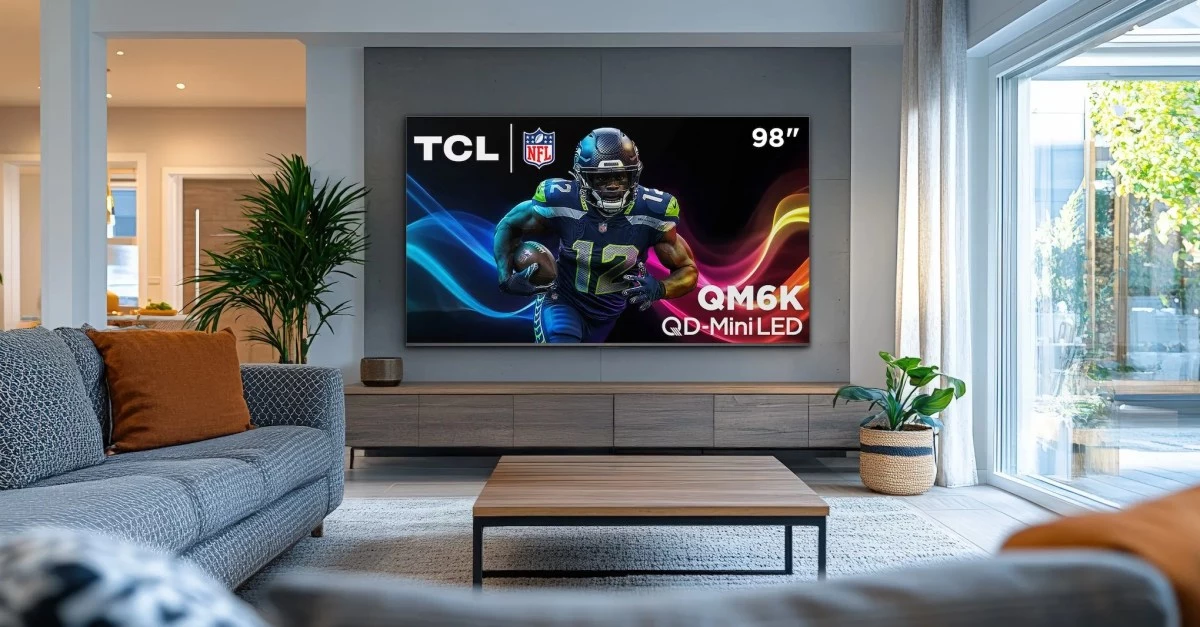

A New Era for Televisions: Price Compression and the Platform Pivot
As Labor Day promotions sweep across North America, the television market finds itself at a pivotal crossroads—a moment where steep discounts and technological leaps are not just reshaping consumer expectations but redefining the very business model of the industry. From budget-friendly 4K sets dipping below the $200 threshold to flagship OLED and AI-driven models slashed by hundreds of dollars, the market’s pricing architecture is undergoing a seismic recalibration. This is not merely a seasonal sales tactic; it is a calculated response to a confluence of factors—inventory overhang, sports-driven demand, and the relentless march of innovation.
The timing is no accident. With the NFL season kickoff, World Cup qualifiers, and MLB playoffs converging on the calendar, manufacturers and retailers are orchestrating an upgrade cycle designed to capture the surge in live-sports viewership. The living room, once a passive space for linear content, is rapidly becoming the command center of the connected home.
—
Technological Crossroads: From Panel Economics to Lifestyle Integration
Beneath the surface of these promotions lies a profound transformation in panel economics and feature differentiation. Over the past 18 months, OLED and QD-OLED yields have improved significantly, empowering industry giants to push premium models below historical price floors without sacrificing margins. The democratization of features—such as 144 Hz refresh rates, once the exclusive domain of gaming monitors—signals a convergence between gaming and living-room displays, blurring the boundaries between entertainment modalities.
Yet, the industry remains riven by subtle but consequential splits. Samsung’s flagship S90D, for example, eschews Dolby Vision in favor of its proprietary HDR10+ format, highlighting a strategic divergence in HDR ecosystems. These proprietary standards act as soft moats, tethering consumers to specific content partnerships and reinforcing brand loyalty through technical lock-in.
The locus of innovation, however, is shifting from hardware to software. AI processors—like those found in Sony’s Bravia 8 II—are redefining the value proposition, moving beyond raw panel quality to deliver real-time image optimization, adaptive room sensing, and personalized picture profiles. Embedded voice assistants are transforming televisions into smart-home hubs, opening new revenue streams in voice-commerce and data aggregation. Even the aesthetics are evolving: features such as “Art Mode” and modular connection boxes position the television as both a technological marvel and a piece of living-room décor.
—
Economic Undercurrents and the Retail Chessboard
This year’s Labor Day markdowns are as much about clearing pandemic-era inventory as they are about stimulating demand. Retailers, burdened with excess 60–75-inch panels, are leveraging aggressive discounts to rebalance their warehouses ahead of the higher-margin holiday cycle. The result? Entry-level 4K TVs under $400 are now the norm, expanding the addressable market and reinforcing the resilience of discretionary spending on home entertainment—even amid persistent inflation.
Manufacturers are using this promotional window as a controlled experiment, testing pricing elasticity and gathering real-time telemetry on SKU velocity. The data harvested during this period will inform Black Friday strategies and shape the Q4 retail landscape. Meanwhile, the competitive dynamic is intensifying:
- Vertical Integration vs. Platform Agnosticism: Samsung’s closed-loop approach, bundling SmartThings and proprietary HDR, stands in contrast to TCL’s platform-agnostic strategy, leveraging Roku and Google TV for cost advantage and flexibility.
- The Streaming and Gaming Arms Race: As live-sports rights migrate to OTT platforms, high-refresh, low-latency panels become critical enablers—bolstering not just hardware sales but also subscription revenues for streaming partners. HDMI 2.1 and 144 Hz readiness, once niche, are now table stakes, aligning with the installed base of next-generation consoles and the rise of cloud gaming.
—
Strategic Inflection Points for Industry Leaders
The implications for decision-makers are as profound as they are urgent. Hardware price compression is accelerating the pivot toward software and services, with OEMs eyeing subscription-based calibration, cloud gaming partnerships, and ad-supported content hubs as new growth engines. Supply chains are realigning, with panel manufacturers ramping OLED capacity while tapering LCD lines—a trend that will shape component procurement strategies well into 2025.
Standards fragmentation, particularly in HDR and AI upscaling, poses a risk of compatibility friction for content providers, making strategic alliances—or, at minimum, dual-format support—essential for global reach. On the retail front, while big-box markdowns remain relevant, the rise of direct-to-consumer online configurators is capturing higher-income segments and threatening to dilute margins for brands lacking robust e-commerce capabilities.
Perhaps most consequentially, televisions are emerging as the anchor nodes in smart-home ecosystems, integrating edge-computing functions and cross-portfolio synergy. This convergence is likely to catalyze a new wave of M&A activity, as appliance makers, security firms, and AI middleware providers vie for a foothold in the living room.
The Labor Day sales are not just a fleeting consumer windfall; they are a harbinger of a deeper industry metamorphosis. As the television evolves from a hardware commodity to a platform for entertainment, gaming, and smart-home intelligence, the winners will be those who can orchestrate this convergence—turning the living room screen into the beating heart of the connected home.

 By
By
 By
By

 By
By
 By
By

 By
By
 By
By







