


A post-AI entry-level market is rewriting what “qualified” means
Kelsey Hightower’s advice lands at a moment when the entry-level technology job market is being reshaped by two forces moving in tandem: economic caution and accelerating generative AI adoption. For new graduates, the traditional promise—degree, internship, junior role, steady progression—has become less linear. The reason is not simply fewer openings; it’s that the *nature* of junior work is changing.
Across software engineering and adjacent technical roles, AI systems now handle a growing share of tasks that once served as apprenticeship staples: boilerplate code, basic testing scaffolds, documentation drafts, and routine troubleshooting. This doesn’t eliminate the need for early-career talent, but it compresses the number of roles designed around repetitive implementation. Employers can increasingly “buy” productivity through tools rather than headcount, especially when budgets tighten.
At the same time, the market is producing a paradox: demand is rising for AI-adjacent skills—from prompt design and evaluation to data labeling workflows and model customization—yet many companies lack mature onboarding playbooks for those roles. The result is a skills pipeline gap: organizations want capability quickly, but hesitate to hire graduates they cannot effectively mentor in fast-evolving disciplines.
Hightower’s core message is pragmatic: in a market where credentials are abundant and tasks are automatable, differentiation comes from evidence of impact, relationships that create trust, and human capabilities that resist commoditization.
Portfolios over pedigrees: why open-source and side projects now function as proof-of-work
The first pillar—treating extracurricular and open-source contributions as core résumé material—reflects a broader recalibration in technical hiring signals. Grades and diplomas still matter, but they increasingly operate as baseline filters rather than decisive indicators. What stands out is verifiable work: artifacts that show how a candidate thinks, collaborates, and ships.
Open-source contributions and real-world projects do something transcripts cannot: they expose decision-making under constraints. They show whether someone can navigate ambiguity, read unfamiliar code, respond to feedback, and iterate in public. In a world where AI can generate plausible code quickly, employers are looking for the ability to judge quality, understand tradeoffs, and own outcomes.
For graduates, this “portfolio of impact” is not limited to GitHub stars. It can include:
- Open-source pull requests that demonstrate collaboration and code review maturity
- Hackathon prototypes that show speed, prioritization, and product instincts
- Community talks or technical write-ups that prove communication and teaching ability
- Volunteer or civic tech work that signals mission alignment and stakeholder empathy
- Cross-disciplinary projects (e.g., design + engineering, data + policy) that show systems thinking
For employers, the implication is equally direct: talent acquisition models that over-index on GPA thresholds or narrow credentialing risk missing candidates who are already operating like professionals. Companies that incorporate project depth, community leadership, and open-source participation into screening criteria can widen the funnel while improving signal quality—often at lower cost than traditional recruiting channels.
The return of social capital: why in-person relationships still outperform digital reach
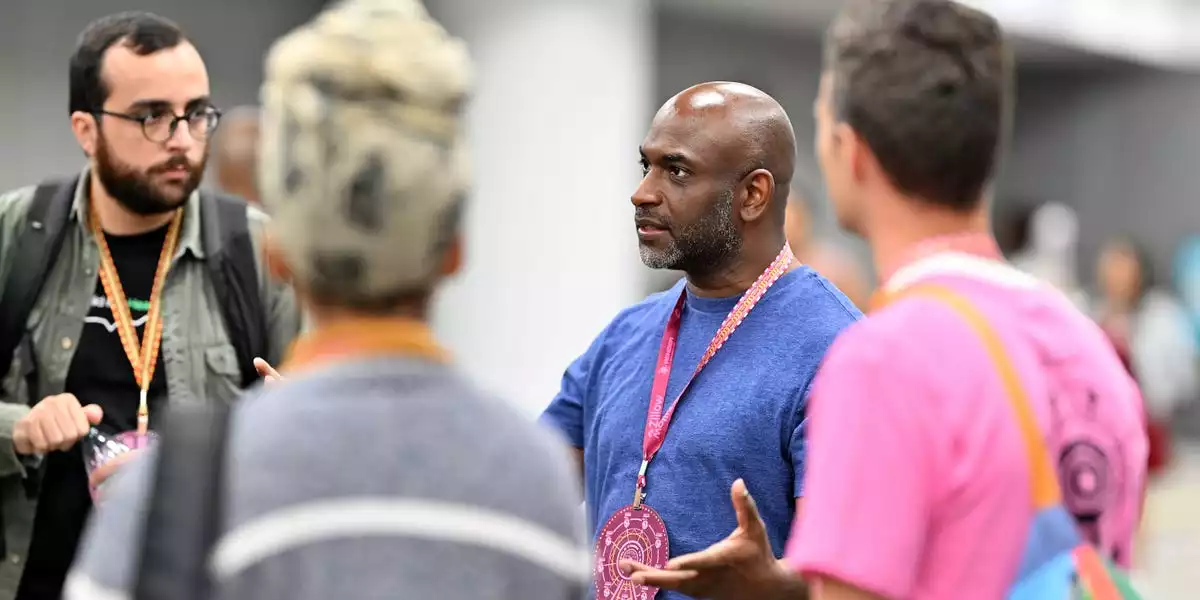
Hightower’s second pillar—building genuine, in-person professional relationships—speaks to a quieter structural shift in the labor market: the erosion of social capital in a hybrid and remote era. Digital networks scale, but they rarely replicate the trust formed through shared physical context: meeting someone at a meetup, collaborating at a hack day, or having an unplanned conversation that reveals competence and character.
This matters because early-career hiring remains disproportionately influenced by referrals and warm introductions. When teams are lean and risk tolerance is low, managers often prefer candidates who arrive with social proof. Remote-first norms can unintentionally disadvantage graduates who have fewer organic opportunities to build that trust.
The strategic takeaway is not that remote work is failing; it’s that relationship-building has become an explicit career skill rather than a passive byproduct of office life. Graduates who balance online presence with targeted in-person engagement are better positioned to access the “hidden job market” where roles are shaped before they are posted.
For organizations, there is an underused lever here: modest investments in community touchpoints can produce outsized returns. Examples include:
- Sponsoring local developer meetups and university community events
- Hosting in-office hack days or “open house” engineering nights
- Creating mentorship circles that pair early-career talent with senior builders
- Running regional innovation offsites that accelerate onboarding and cohesion
These initiatives strengthen employer brand, expand the talent pipeline, and rebuild the relational fabric that remote work can thin out.
The premium on human differentiation: empathy, creativity, and judgment as durable career assets
The third pillar—cultivating inherently human attributes—may be the most forward-looking. As AI automates technical minutiae, organizations increasingly value people who can do what tools cannot: translate messy human needs into coherent decisions. That includes empathy with customers, creative synthesis across domains, ethical reasoning, and narrative clarity that aligns stakeholders.
This is where the concept of the “T-shaped professional” becomes more than a management cliché. Depth in a technical area remains essential, but breadth—product sense, cultural fluency, communication, and systems thinking—becomes the multiplier. These capabilities help teams avoid building the wrong thing faster, a risk that rises when AI accelerates execution.
For technology leaders, the opportunity is to architect roles around human strengths while delegating routine work to automation. For HR and learning teams, it means embedding soft-skill development—design thinking, storytelling, collaboration, and ethical AI literacy—into early-career programs rather than treating them as optional.
Hightower’s counsel ultimately reframes the graduate’s challenge as a strategic choice: don’t compete with AI on speed or volume; compete on credibility, relationships, and judgment. In a labor market defined by scarcity of openings and abundance of automation, the candidates—and companies—who invest in those three assets are the ones most likely to shape, rather than merely endure, the next cycle of technological change.

 By
By
 By
By


 By
By
 By
By

 By
By







