
Voluntary Disclosure as Strategic Imperative: Redrawing the Compliance Map
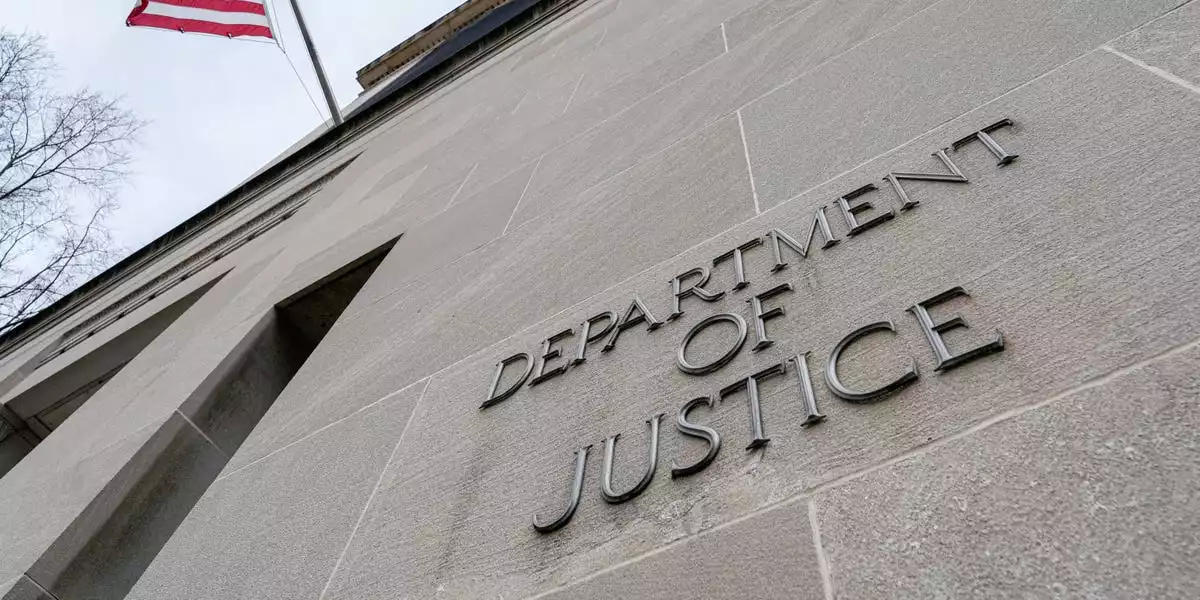
The Justice Department’s recent decision to decline prosecution against the Universities Space Research Association (USRA) and Liberty Mutual marks more than a legal footnote—it signals a recalibration in the U.S. government’s approach to corporate accountability in an era of technological rivalry and regulatory flux. The episode, catalyzed by a single employee’s illicit transfer of sensitive military software to Beihang University in China, is a case study in the evolving economics of compliance, risk, and reputation.
For senior leadership across sectors handling dual-use technologies—where civilian and military lines blur—the message is unmistakable: voluntary disclosure is not merely a legal safeguard, but a strategic lever. The government’s posture now rewards organizations that self-police, swiftly report breaches, and demonstrate “extraordinary cooperation” with investigators. In this new regime, the calculus for compliance investment is shifting from cost containment to value creation, with declination probability itself emerging as a quantifiable benefit.
The New Risk Landscape: Capital, Compliance, and Talent
Regulatory arbitrage is narrowing. While declination letters may spare firms from immediate civil or criminal penalties, they do not erase the shadow of reputational risk. Capital markets, ever attuned to geopolitical tremors, are embedding risk premiums for organizations exposed to advanced aerospace, AI, and related sectors. Treasury-level reviews—such as those conducted by CFIUS—often lag behind DOJ actions, meaning today’s regulatory reprieve does not guarantee tomorrow’s transactional clearance.
Compliance is evolving from operational expense to capital expenditure. The USRA incident underscores a broader industry trend: investment in digital monitoring, insider-threat analytics, and real-time export-license management is no longer discretionary. Early adopters of advanced compliance technologies—AI-driven anomaly detection, blockchain-based audit trails—are poised to realize lower costs of capital by shrinking perceived enforcement tail risk. This is not simply a matter of regulatory box-ticking, but of strategic differentiation in a market where risk-adjusted returns are increasingly dictated by compliance posture.
Talent governance is under the microscope. The mobility of STEM professionals, particularly in dual-use sectors, amplifies insider risk. Boards are re-examining incentive structures, tightening background checks, and segmenting data access—a shift that is driving demand for “zero-trust” architectures and classified IP-sandbox environments. The stakes are especially high for federally funded research centers and NASA contractors, where the margin for error is vanishingly thin.
Geopolitical Decoupling and the Technology Perimeter
The placement of Beihang University on the U.S. Entity List is emblematic of a broader decoupling in quantum computing, hypersonics, and AI chips. The USRA episode demonstrates that even non-profit research consortia are ensnared in the tightening mesh of export controls. For organizations with joint labs or talent exchanges in Greater China, the risk calculus is shifting: research that is benign today may be reclassified as dual-use tomorrow, as geopolitical winds change direction overnight.
Data sovereignty is no longer optional. Sensitive algorithms and intellectual property now demand geo-fencing and software escrow arrangements to prevent uncontrolled propagation. Vendors are responding with compliance-ready software containers, targeting defense-adjacent customers and those seeking to future-proof their operations against regulatory volatility.
Governance, Insurance, and the Compliance Premium
The DOJ’s voluntary disclosure framework is rapidly becoming the new export-control doctrine, echoing the trajectory of the Foreign Corrupt Practices Act (FCPA). This shift carries several secondary effects:
- Director liability is rising: Boardrooms are on notice, with higher expectations for proactive oversight.
- Whistle-blower actions are surging: The incentives for internal reporting have never been stronger.
- Insurance carriers are tightening: Expect export-control risk scoring to become standard, with premiums reflecting the sophistication of compliance infrastructure.
Governance—the “G” in ESG—is being redefined. Institutional investors are beginning to view declination letters as proxies for robust governance, influencing portfolio allocations and valuation multiples. For those at the vanguard, advanced compliance tooling is not just an insurance policy—it is a competitive moat.
The DOJ’s approach is not a retreat from enforcement, but a strategic deputization of the private sector as an extension of the national security apparatus. For executives, the imperative is clear: treat compliance not as a shield, but as an operating system. In a world where regulatory, technological, and geopolitical boundaries are in constant flux, those who internalize this mandate will be best positioned to innovate—and thrive—amid tightening constraints.

 By
By
 By
By
 By
By
 By
By
 By
By

 By
By