

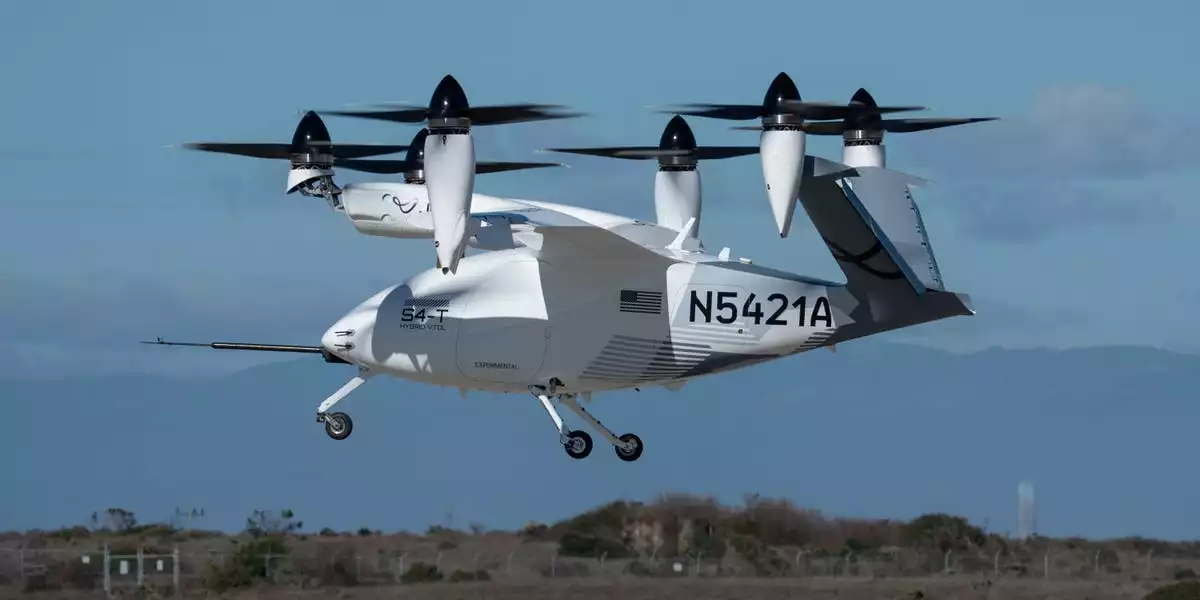

Hybrid-Electric VTOLs: From Urban Air Mobility to the Frontlines of Defense Modernization
The once-futuristic vision of vertical-takeoff-and-landing (VTOL) aircraft—whisper-quiet, electrically powered, and able to leapfrog city traffic—has morphed into a crucible for U.S. defense innovation and global industrial rivalry. The likes of Joby Aviation, Archer, Beta Technologies, and L3Harris are no longer content to chase urban air taxi dreams alone. Instead, they are converging on a dual-use paradigm, where the same core platforms, engineered for FAA certification, are rapidly being adapted to meet the Pentagon’s hunger for stealthier, longer-range, and increasingly autonomous logistics solutions. The stakes are nothing short of a reordering of aerospace’s industrial base, with billions in defense capital flowing from legacy primes to agile, venture-backed disruptors.
The “Hybrid Middle Way”: Engineering for Endurance and Mission Flexibility
The allure of pure-electric VTOLs dims when confronted with the unforgiving realities of military payloads and extended-range missions. Battery energy density, while advancing, still falters past the 100-mile threshold or under the weight of critical cargo. Here, the hybrid-electric architecture emerges as the pragmatic compromise—a “flying range-extender EV” that marries the low-signature benefits of electric propulsion with the reliability and range of mature turbine technology. This hybridization is not mere technical nuance; it is a strategic enabler, allowing VTOLs to operate with reduced acoustic and infrared signatures, threading the needle between commercial viability and contested-logistics doctrine.
Key technical and strategic developments include:
- Hybridization Pivot: Commercial eVTOLs are being up-scaled into gas-electric hybrids, doubling both range and payload.
- Autonomous Overlay: Advanced sensor suites and autonomy stacks, originally honed in the commercial drone and automotive sectors, are being integrated to position these aircraft as critical nodes in the Pentagon’s Joint All-Domain Command and Control (JADC2) networks.
- Certification Milestones: Companies like Joby have cleared four of five FAA certification stages, establishing a formidable moat as dual certification (FAA plus DoD) becomes the gold standard for market entry.
Defense Acquisition Disruption and the Rise of Dual-Use Economics
The Pentagon’s embrace of rapid, milestone-based contracting—leveraging pathways such as AFWERX and DIU—has upended the traditional defense acquisition cycle. No longer are timelines measured in decades; multi-year funding is now being channeled to non-traditional suppliers under flexible Other Transaction Authority (OTA) contracts, compressing development cycles to as little as 36-48 months. This shift mirrors the venture capital model, with tranche funding tied to engineering risk retirement, and is eroding the incumbency advantage of established aerospace giants.
The economic calculus is equally transformative. While commercial air taxi revenues are projected at a modest $1-2 billion per OEM by 2030, defense applications—ranging from logistics lift to intelligence, surveillance, and reconnaissance (ISR) and medical evacuation—offer the potential for nine-figure annual contracts. The true inflection point lies in certification: once FAA airworthiness is secured, each military variant leverages the sunk cost of compliance, flattening the marginal cost curve and opening the door to lucrative DoD lease rates.
Supply Chain Sovereignty, Regulatory Harmonization, and Workforce Transformation
As the VTOL sector scales, the industrial and regulatory terrain is shifting beneath its feet. The U.S. is racing to localize critical supply chains, from rare-earth magnets for high-torque motors to next-generation silicon-rich anode materials, in a bid to reduce dependence on China—a dynamic underscored by EHang’s parallel advances and the broader Sino-American technology rivalry. The Inflation Reduction Act’s incentives for battery components may soon extend to aerospace, accelerating on-shoring efforts.
On the regulatory front, harmonization between the FAA and DoD is anticipated, echoing precedents set by EASA and national authorities in commercial aviation. This reciprocity is essential to prevent market fragmentation and streamline dual-use certification. Meanwhile, the integration of open-source autonomy stacks introduces new cyber-physical vulnerabilities, making compliance with emerging security standards such as CMMC 2.0 a non-negotiable prerequisite for full-rate production.
The industrial base, too, is evolving. VTOL programs are catalyzing a re-skilling wave across traditional aerospace hubs—Fort Worth, Wichita, Philadelphia—creating intense demand for composite technicians, flight-control software engineers, and battery-system integrators. Here, the defense primes’ traditionally thin benches face stiff competition from nimble start-ups.
Strategic Stakes and the New Aerospace Balance of Power
Looking ahead, the trajectory of hybrid-electric VTOLs will be shaped by a complex interplay of regulatory milestones, supply chain localization, and the relentless pace of autonomy innovation. The most probable scenario sees one or two OEMs achieving FAA type certification by 2025, with the Pentagon fielding initial operational assessments in Indo-Pacific logistics missions. Congressional appropriations, such as those under the Replicator Initiative, could further accelerate deployment, while export controls tighten around propulsion IP to constrain Chinese scaling.
For industry leaders and policymakers, the strategic imperatives are clear:
- Corporate Venturing: Tier-1 suppliers must secure subsystem design wins before full-rate production.
- M&A and Portfolio Hedging: Legacy helicopter OEMs should consider acquisitions in autonomy and battery management, while airlines and cargo carriers explore capacity-purchase agreements to hedge against disruption.
- Policy and Standards Engagement: Active participation in standard-setting will be crucial to avoid regulatory divergence and ensure global competitiveness.
- Capital Allocation: Investors must look beyond prototype flight hours to milestones in environmental testing and maintenance planning as true indicators of time-to-cash-flow.
At this inflection point, hybrid-electric VTOLs are not merely a technological curiosity; they are a strategic lever in the contest for aerospace supremacy. The outcome will reverberate far beyond the hangars of California and the assembly lines of Texas, shaping the contours of industrial power and national security for decades to come.

 By
By
 By
By
 By
By

 By
By


 By
By







