

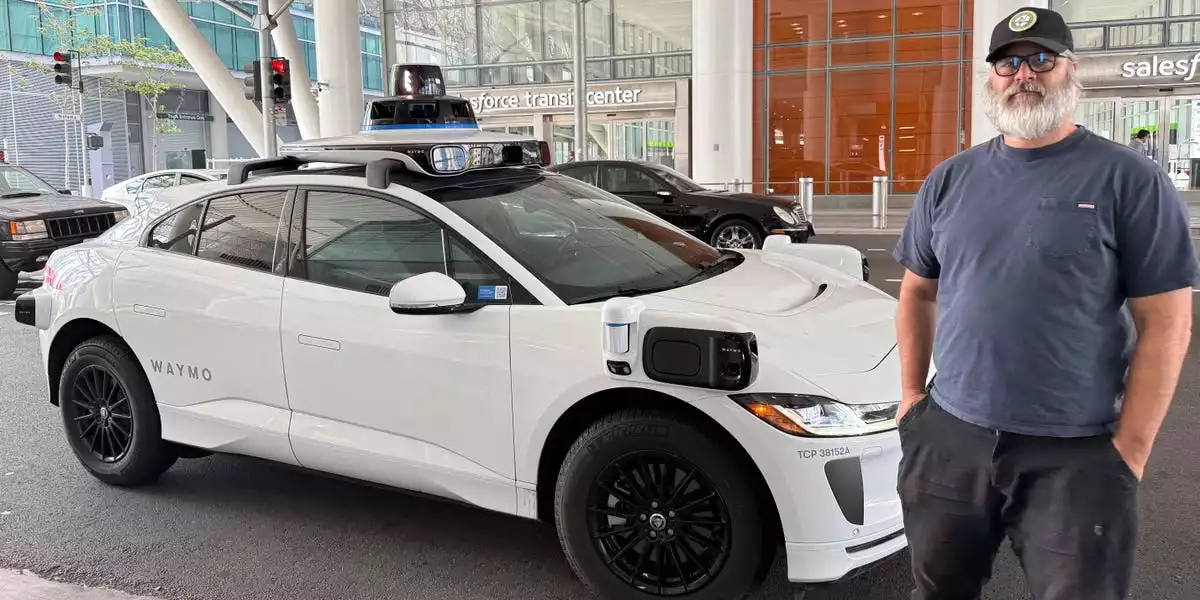

A Veteran Driver’s Encounter with the Autonomous Future
In the labyrinthine streets of San Francisco, where the fog tangles with ambition and every intersection is a test of reflex and intuition, a veteran rideshare driver recently found himself in the backseat—literally—of the future. His appraisal of Waymo’s and Tesla’s driverless services was a study in paradox: he praised the safety, marveled at the smoothness, yet mourned the absence of that ineffable “human connection.” His ambivalence—part awe, part apprehension—mirrors a broader societal tension as autonomous vehicles inch from novelty to inevitability.
This driver, also a union organizer, articulated the unease that shadows technological progress: machines may master the rules of the road, but can they truly navigate the unpredictable, the emotional, the edge cases that define urban life? And as these vehicles multiply, what becomes of the livelihoods that once animated every mile? His experience throws into sharp relief the collision between Silicon Valley’s relentless innovation and the economic, even existential, value of human labor.
Divergent Paths to Autonomy: Waymo and Tesla’s Contrasting Philosophies
The contest for urban mobility supremacy is not merely a race of engineering prowess—it is a philosophical divide. Waymo, the progeny of Google’s moonshot factory, has staked its claim on a Level-4, sensor-laden, geo-fenced approach. Its vehicles are cautious, redundant, and meticulously mapped, their interiors hinting at a future where the ride itself becomes a platform for commerce, entertainment, and data-driven services. Waymo’s conservatism is its strength: every mile is a lesson, every sensor a safeguard.
Tesla, meanwhile, has chosen the path of audacity. Eschewing lidar and heavy mapping, it bets on a camera-first, software-centric architecture, updating its global fleet in real time. The tradeoff is clear: rapid learning and ubiquity, but with a higher tolerance for imperfection. Both companies have turned San Francisco into their proving ground, a crucible of complexity whose outcomes will ripple through regulatory regimes worldwide.
Key distinctions in their approaches include:
- Waymo: Level-4 autonomy, heavy sensor suite, geo-fenced operation, regulatory alignment, and a focus on in-cabin monetization.
- Tesla: Camera-based, scalable software, global deployment ambitions, and a willingness to iterate in real time.
This rivalry is more than technical; it is a contest over the very definition of trust, adaptability, and the future shape of urban life.
Economic Shockwaves and the Unfolding Labor Reckoning
The economic calculus of autonomous vehicles is as stark as it is disruptive. In the traditional ride-hailing model, drivers account for nearly half the operating cost. Remove them, and the variable expense morphs into a fixed, capital-amortized curve—a seductive proposition for investors and operators alike. Yet, the human cost is profound: up to 1.6 million professional driving jobs in the U.S. alone, representing $65 billion in annual income, are at risk of obsolescence.
The transition will not be frictionless:
- Job displacement: Many drivers will face daunting barriers to reskilling, with few clear pathways into the higher-wage technical roles that autonomous fleets demand.
- Economic ripple effects: Reduced household income could compress local consumer spending and erode municipal tax bases.
- Operational hurdles: Early adopters will grapple with insurance premiums, liability frameworks, and infrastructure upgrades that may blunt the anticipated cost savings.
The specter of labor unrest looms, echoing the recent unionization waves in Hollywood and logistics. Companies that neglect the social contract risk not just reputational damage, but regulatory backlash and activist investor scrutiny.
Strategic Inflection Points: Data, Media, and the New Urban Bargain
Beyond the immediate economics, the autonomous revolution is forging new strategic battlegrounds:
- Data as moat: Every autonomous mile generates proprietary data, reinforcing a feedback loop reminiscent of the advantage now seen in large language models. Firms that secure edge-case data will entrench their lead.
- The “third screen” economy: Freed from the act of driving, passengers become a captive audience. The vehicle cabin is poised to become a lucrative stage for targeted media, commerce, and branded experiences.
- City partnerships: Municipalities, balancing congestion, emissions, and public transit budgets, will wield new leverage. Expect negotiations over curb space, tax incentives, and data-sharing in exchange for operational concessions.
- ESG imperatives: With fleets trending electric, scrutiny will extend to battery sourcing, recycling, and lifecycle transparency—especially under tightening EU corporate sustainability mandates.
Forward-thinking executives are already scenario-planning for regulatory shifts, modeling P&L impacts of congestion pricing, AV-specific taxes, and cybersecurity mandates. Hybrid workforce models—remote teleoperation, human concierges—may soften the transition, preserving some employment while reducing downtime.
Robotaxis have crossed their Rubicon. The path ahead is neither linear nor assured, but those who blend technological discipline with social stewardship will shape not just the future of mobility, but the very fabric of urban life.


 By
By
 By
By
 By
By
 By
By

 By
By
 By
By







