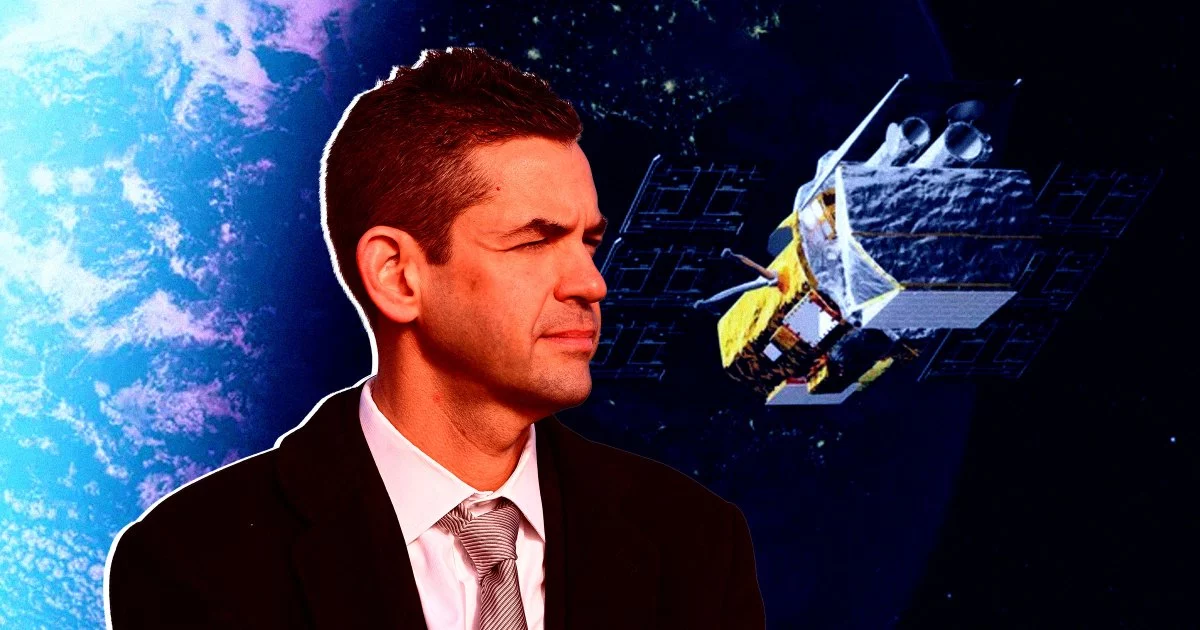

A high-stakes pivot: NASA’s evolving risk calculus under Jared Isaacman
The failed attempt to extend the life of NASA’s Neil Gehrels Swift Observatory via Katalyst Space Technologies’ autonomous spacecraft, LINK, has become more than a single-mission setback. It is an unusually clear signal of a broader institutional transition: a NASA increasingly willing to borrow from Silicon Valley’s rapid-iteration playbook, even as it remains custodian of some of the world’s most expensive and scientifically irreplaceable space assets.
The backstory matters. In 2022, private-sector entrepreneur Jared Isaacman floated a crewed rescue concept for the Hubble Space Telescope, a proposal NASA leadership declined on risk–reward grounds. After Isaacman’s 2024 appointment as NASA Administrator, the impulse to “save” aging observatories resurfaced—this time in a more scalable form: robotic on-orbit servicing. LINK was commissioned to reboost Swift, effectively buying time for a productive science platform that otherwise faces orbital decay.
Instead, LINK experienced an attitude control failure, entered an unrecoverable tumble, and left Swift on a path toward uncontrolled reentry. The episode crystallizes a central tension now facing the agency: how to accelerate innovation without importing failure modes that are tolerable in commercial product cycles but punishing in spaceflight, where single-point failures can erase years of work and compromise public trust.
What LINK’s tumble reveals about autonomous on-orbit servicing readiness
The promise of on-orbit servicing—rendezvous, docking, refueling, robotic manipulation, and orbit-raising—has long been framed as the next great leap in space infrastructure. Yet LINK’s loss underscores that autonomy at close quarters in orbit remains a demanding frontier, especially when missions are designed to operate with limited ground intervention.
Several technical realities stand out:
- Autonomous rendezvous and proximity operations are still brittle at the edges. While programs such as Northrop Grumman’s Mission Extension Vehicle (MEV) and DARPA-led servicing initiatives have demonstrated meaningful progress, fully autonomous servicing across diverse targets is not yet a routine capability. The difference between “works in a constrained scenario” and “works reliably across missions” is where many programs stumble.
- Fault tolerance is not optional in attitude determination and control systems (ADCS). A tumble is often a cascading failure: sensor dropouts, star-tracker blinding, momentum management issues, or software logic that cannot gracefully degrade. LINK’s outcome highlights the premium on:
– Redundant sensor suites
– Robust safe-mode behaviors
– Control architectures designed for recovery, not just nominal performance
- Standardization remains the missing accelerant. Servicing becomes dramatically harder when each target spacecraft is effectively a bespoke interface. The case for open docking adapters, refueling ports, and robotic tool standards is increasingly analogous to the role of USB in consumer electronics or containerization in shipping: interoperability reduces cost, increases competition, and—critically—improves reliability through repetition.
For NASA, the technological lesson is not that servicing is a dead end. It is that the industry is still bridging a Technology Readiness Level (TRL) maturity gap, and that autonomy needs to be validated under the harshest operational assumptions, not the most optimistic ones.
The economics of life extension: market potential meets mission insurance reality
Orbit-raising and life-extension services point to a potentially multi-billion-dollar orbital services market, spanning civil science, commercial communications, and national security satellites. Extending the useful life of high-value spacecraft can be cheaper than replacement—if the servicing mission is sufficiently reliable.
LINK’s failure, however, sharpens the economic questions investors, insurers, and policymakers will ask:
- Patient capital vs. optimistic timelines: Early markets often overestimate near-term reliability and underestimate integration complexity. Servicing ventures may require longer development horizons and more conservative performance expectations than typical venture-backed models prefer.
- Insurance and risk-sharing are becoming central, not peripheral. A credible orbital servicing economy likely depends on specialized insurance products and structured public–private risk pools. Options being discussed in policy circles include:
– Government-backed guarantees for early missions
– Risk-sharing frameworks embedded in NASA contracting
– Export-credit style support mechanisms to lower financing costs
- Opportunity costs under science-budget pressure: The episode lands amid continued NASA science-budget constraints, intensifying scrutiny over whether scarce dollars should be directed toward experimental servicing versus new science missions. The trade-off is not theoretical: diverting funds toward speculative infrastructure can weaken the very research pipeline NASA is mandated to deliver.
Against that backdrop, the Nancy Grace Roman Space Telescope—still tracking toward an August 30 launch—takes on added significance. Roman is positioned to deliver wide-field astrophysics that complements and extends what the James Webb Space Telescope can do, reinforcing that NASA’s scientific leadership still depends on executing flagship missions with disciplined reliability.
Strategic stakes: governance, geopolitics, and sustainable orbital operations
NASA’s cultural shift under Isaacman—toward higher tolerance for risk and faster iteration—will not be judged solely by engineering outcomes. It will be evaluated through governance, geopolitics, and the long-term sustainability of Earth orbit.
Key strategic implications are emerging:
- Governance and accountability will tighten. Congress, the Office of Management and Budget, and external watchdogs will likely press for clearer delineation between “pathfinder” experimentation and missions that put major national assets at risk. A dual-track model—fast prototypes alongside rigorous stage-gated programs—may become the only politically durable compromise.
- International perception matters. High-profile failures can be amplified by strategic competitors as evidence of declining competence. Conversely, a mature U.S. servicing capability would strengthen leadership in space infrastructure, with spillover benefits for civil science, commercial resilience, and national security.
- Orbital sustainability is no longer optional. The inability to extend Swift’s life also highlights the fragility of spacecraft that were not designed for servicing. As orbital congestion grows, future missions will face increasing expectations to include:
– Servicing compatibility
– End-of-life disposal plans
– Debris mitigation requirements baked into procurement
LINK’s loss is a hard data point in a debate NASA can no longer postpone: whether the agency can fuse entrepreneurial speed with aerospace-grade assurance. The next chapter will be written by how NASA structures that balance—protecting flagship science, enabling credible on-orbit servicing, and proving that faster does not have to mean more fragile.

 By
By
 By
By
 By
By


 By
By
 By
By