

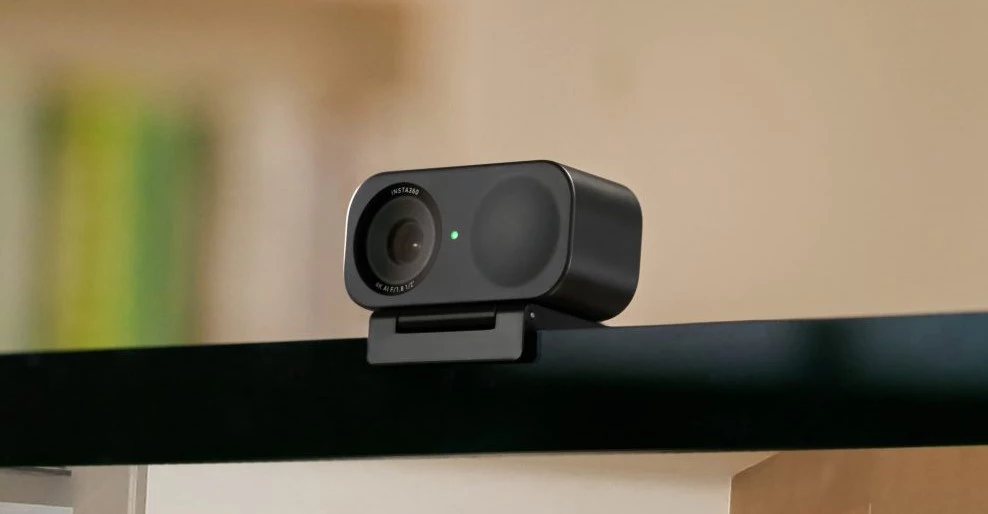

A record-low price that signals a new phase in the webcam market
The Insta360 Link 2C dropping to $119.99—about $30 off and reportedly the lowest price seen this year across major retailers such as Amazon, Best Buy, and B&H Photo—is more than a routine promotion. It reflects a broader recalibration in the sub-$150 webcam segment, where buyers increasingly expect “prosumer” imaging features that were once reserved for premium peripherals.
This price point positions the Link 2C as the most accessible entry in Insta360’s Link lineup, and it arrives at a moment when hybrid work has matured from emergency adaptation into operational default. For many households and small teams, the webcam is no longer a temporary accessory—it’s a daily interface to colleagues, customers, classrooms, and clients. The commercial implication is straightforward: as demand stabilizes, competition intensifies, and vendors are pressured to deliver higher perceived value per dollar.
For procurement teams and individual buyers alike, the key question becomes less about whether a webcam is “good enough,” and more about whether it meaningfully improves outcomes—clearer communication, faster setup, fewer meeting interruptions, and better presentation fidelity—without creeping into enterprise pricing.
Software-first imaging replaces mechanical complexity
The Link 2C’s most telling design decision is what it omits: it forgoes the motorized gimbal found in higher-end models. Instead, it leans into AI-driven auto framing—a computational approach that digitally zooms and centers the subject to keep them in frame.
This is emblematic of a wider shift in imaging hardware: mechanical solutions are increasingly being replaced by software and silicon. As sensors improve and on-device processing becomes cheaper, features that once required moving parts—tracking, stabilization, reframing—can be approximated or reimagined through computation. The same arc has played out in smartphones and action cameras, where digital stabilization and real-time subject tracking have become baseline expectations.
From a technical standpoint, the Link 2C’s imaging stack is positioned to support that approach:
- ½-inch sensor paired with a 26mm-equivalent f/1.8 lens
- Video capture up to 4K at 30 fps or 1080p at 60 fps
- AI auto framing designed to maintain centering through digital zoom
- Noise-canceling audio aimed at improving intelligibility in typical home-office acoustics
The trade-off is also clear: digital framing can’t fully replicate the physical versatility of a gimbal in every scenario, particularly when users want smooth mechanical panning or consistent framing at longer effective zoom levels. Yet for the dominant use case—seated video calls and straightforward presentations—software-first framing often delivers the practical benefit people actually notice: staying centered without fiddling with controls.
Purpose-built modes point to “verticalized” webcams for work and education
Where the Link 2C becomes strategically interesting is not only in its core video specs, but in how it targets specific workflows. Features such as DeskView (for overhead-style desk capture) and Smart Whiteboard (for clearer board framing and stabilization) indicate a move away from the webcam as a generic peripheral and toward the webcam as a role-specific productivity tool.
That matters because the fastest-growing expectations in unified communications (UC) are no longer purely about resolution. They’re about reducing friction for real work:
- Educators need quick transitions between face-to-camera instruction and document or object demonstration.
- Trainers and sales teams need reliable whiteboard capture without spending time correcting angles.
- Remote workers want a camera that “just works” across different setups—laptop, monitor, docking station—without a mini installation project.
In that context, the Link 2C’s magnetic mount and gesture controls are not gimmicks so much as interface decisions aimed at lowering setup and operational overhead. Magnetic mounting addresses a persistent deployment pain point—fast, repeatable placement across devices—while gesture control hints at a future where presenters can adjust framing without breaking flow or hunting through software menus.
Over time, these workflow-specific modes may become a differentiator as meaningful as sensor size. As the market saturates on “4K” labeling, vendors will compete on how well they serve distinct professional segments—education, telehealth-adjacent use cases, training, customer support, and content-heavy internal communications.
Competitive economics: feature proliferation, margin pressure, and ecosystem leverage
The $119.99 pricing also underscores a market reality: the webcam category is experiencing feature proliferation at lower margins. With many laptops still shipping with mediocre built-in cameras, third-party peripherals remain a high-visibility upgrade path—one that brands are fighting to own.
Several forces appear to be converging:
- Normalized post-pandemic logistics and component pricing enabling deeper discounts without proportionate margin collapse
- Continued home-office capital expenditure as hybrid work persists
- Increased importance of platform consistency as users rotate between Zoom, Microsoft Teams, and Google Meet
This last point is especially strategic. UC platforms are increasingly invested in hardware consistency—sometimes through certification programs, sometimes through informal “best experience” recommendations. A webcam that offers distinctive modes (DeskView, Smart Whiteboard) can create leverage for:
- Bundling opportunities with platforms or resellers
- Preferred placement in channel partnerships
- Longer-term differentiation if features become tightly integrated into software workflows
At the same time, the industry’s pricing trajectory raises a familiar question from other consumer electronics categories: if hardware margins compress, where does growth come from? The likely answer is ecosystem expansion and services monetization—optional software layers, premium AI features, or cloud enhancements that turn a one-time purchase into a longer relationship. Even if the Link 2C is positioned as cost-effective hardware today, it can still function as a gateway into a broader product ladder and, potentially, future subscription-driven capabilities.
The Link 2C’s discount, then, reads as both a consumer-friendly deal and a market signal: webcams are becoming computational, workflow-aware endpoints in the modern workplace, and the companies that win won’t just sell sharper video—they’ll sell less friction, more automation, and a clearer path from everyday calls to richer hybrid collaboration.


 By
By

 By
By
 By
By
 By
By
 By
By
 By
By







