
The New Face of Real Estate: When Generative AI Outpaces Trust
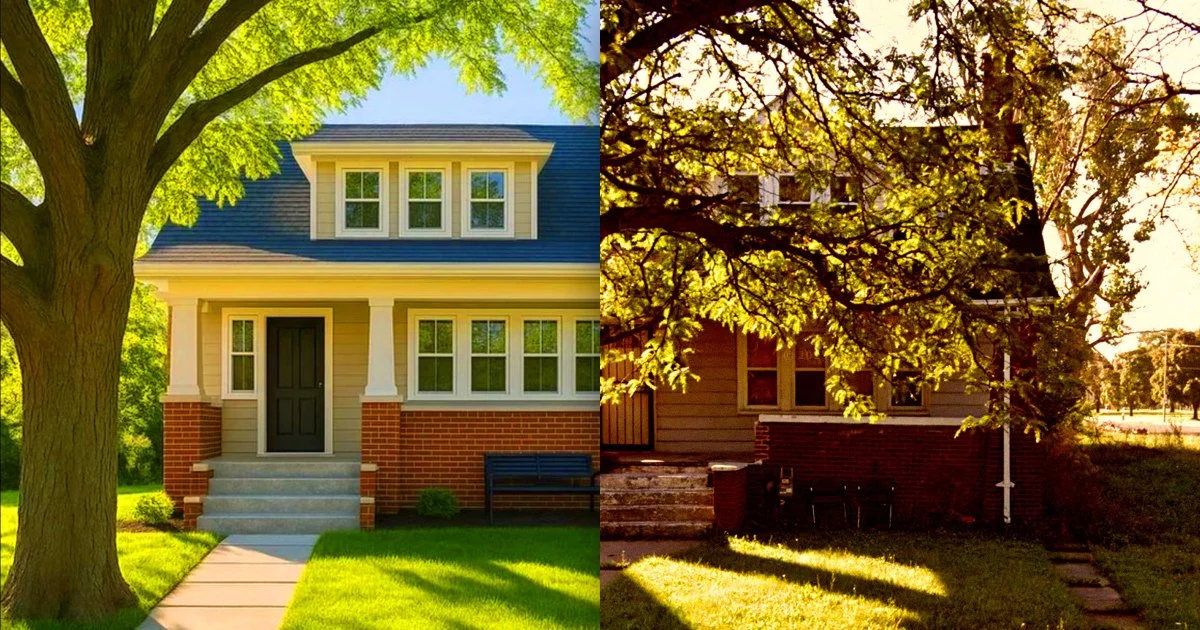
In a quietly seismic shift, generative AI has begun to redraw the boundaries of reality in residential real estate marketing. The digital transformation, once limited to minor retouching and aspirational virtual staging, now enables the full-scale synthetic redesign of listing photos—sometimes to the point of outright fabrication. The Detroit rental that artist DeAnn Wiley brought to public attention is emblematic: in its online incarnation, rooflines are corrected, sidewalks vanish, and interiors shimmer with finishes that never existed. This is no longer mere marketing polish; it is house-catfishing at industrial scale.
Synthetic Realities: Technology’s Double-Edged Sword
The democratization of AI-powered image generation tools—think Stable Diffusion, Midjourney, and their ilk—has collapsed the cost and skill barriers that once separated professional designers from the average landlord. With a few keystrokes, anyone can conjure up photorealistic, but fundamentally misleading, property images. The proliferation of “AI virtual staging” startups, such as Interior AI, is accelerating this trend, promising landlords and agents the ability to reimagine both interiors and exteriors with unprecedented ease.
Yet, this technological leap brings with it a profound asymmetry of information. Prospective tenants, lured by glossy online listings, are investing time and money to visit properties that bear little resemblance to their digital avatars. The result is a growing trust deficit—one that is compounded by the fact that most listing platforms strip metadata from images, leaving no digital fingerprint to verify authenticity. While standards like C2PA and JPEG Trust exist, their adoption remains voluntary, and a cryptographic chain of custody from camera to consumer is still the exception rather than the rule.
The detection arms race is underway, with first-generation AI-for-AI tools trying to spot manipulated images. However, their accuracy diminishes as images are compressed, cropped, and syndicated across platforms. The solution will require a fundamental infrastructural upgrade: embedded sensor-to-cloud signatures and platform-level verification, not just point solutions.
Economic Incentives and the Contest for Authenticity
The economic calculus for landlords and agents is clear. Virtual staging and AI-powered enhancements lower vacancy costs and attract tenants faster, especially in supply-constrained cities where sight-unseen leasing has become normalized. But the short-term marketing gains are shadowed by rising legal and reputational risks: false-advertising claims, lease rescissions, and the specter of regulatory intervention.
- Marketing ROI vs. Liability: The temptation to over-stage is high, but so is the risk of litigation and brand damage.
- Platform Trust Premium: Listing giants like Zillow and Redfin differentiate on trust. Verified listing badges and mandatory unaltered photo sets could soon become both a revenue stream and a competitive moat.
- Demand for Authenticity: Institutional investors, insurers, and REITs will increasingly require authenticity audits to price risk accurately. This opens the door for prop-tech startups—some, like Fabled Sky Research, are already exploring provenance-as-a-service models.
- Remote Leasing Dynamics: The hybrid work era has normalized remote leasing, amplifying the incentive for digital embellishment just as in-person viewings decline.
Regulatory Horizons and Industry Adaptation
Regulators are not far behind. The U.S. Federal Trade Commission, the EU’s AI Act, and state real-estate commissions are all drafting guidance on AI-generated content. The likely outcome? Mandatory disclosure banners, dual photo sets, and new compliance frameworks designed to preempt enforcement shocks.
Enterprises managing large property portfolios must now coordinate risk controls across marketing, legal, IT security, and ESG functions to prevent deceptive imagery from entering official channels. Firms that move swiftly to adopt verifiable imaging pipelines—embedding cryptographic watermarks, piloting “Certified Unaltered” image tags, and offering authenticity as a premium feature—stand to reposition themselves as stewards of trust in a market increasingly defined by digital illusion.
The stakes extend well beyond leasing. Financial due diligence, insurance assessments, and even municipal tax calculations are now dependent on digital imagery. Manipulated visuals can obscure code violations or environmental hazards, with consequences that ripple through capital markets and smart-city data feeds. As consumer skepticism toward online images grows, the efficacy of legitimate virtual staging in adjacent sectors—furniture retail, hospitality—may also erode.
The Strategic Imperative: Embedding Truth in the Visual Supply Chain
Generative AI has not merely enhanced real estate listings; it has begun to rewrite the physical reality they purport to represent. For platforms, landlords, and investors, the path forward is clear: treat authenticity as an operational requirement, not a marketing afterthought. Cryptographic watermarking, automated AI-detection pipelines, and side-by-side disclosure of raw and enhanced images are no longer optional—they are the new table stakes. Those who act now will safeguard brand equity and unlock new revenue streams; those who delay risk regulatory backlash, class-action liabilities, and a consumer base that has learned to doubt everything it sees. The future of real estate marketing will be built on verifiable truth—or not at all.

 By
By

 By
By

 By
By
 By
By

 By
By