


A watershed moment for human spaceflight risk management
NASA’s first-ever medical evacuation from the International Space Station (ISS) is more than a dramatic operational milestone; it is a stress test of the modern architecture of human spaceflight. The January 15 emergency return—triggered by veteran astronaut Mike Fincke’s sudden episode of aphasia—forced the system to do something it has rarely had to demonstrate in real time: treat low Earth orbit not as a distant outpost, but as an extension of an emergency-response network that must function with the rigor of terrestrial critical care.
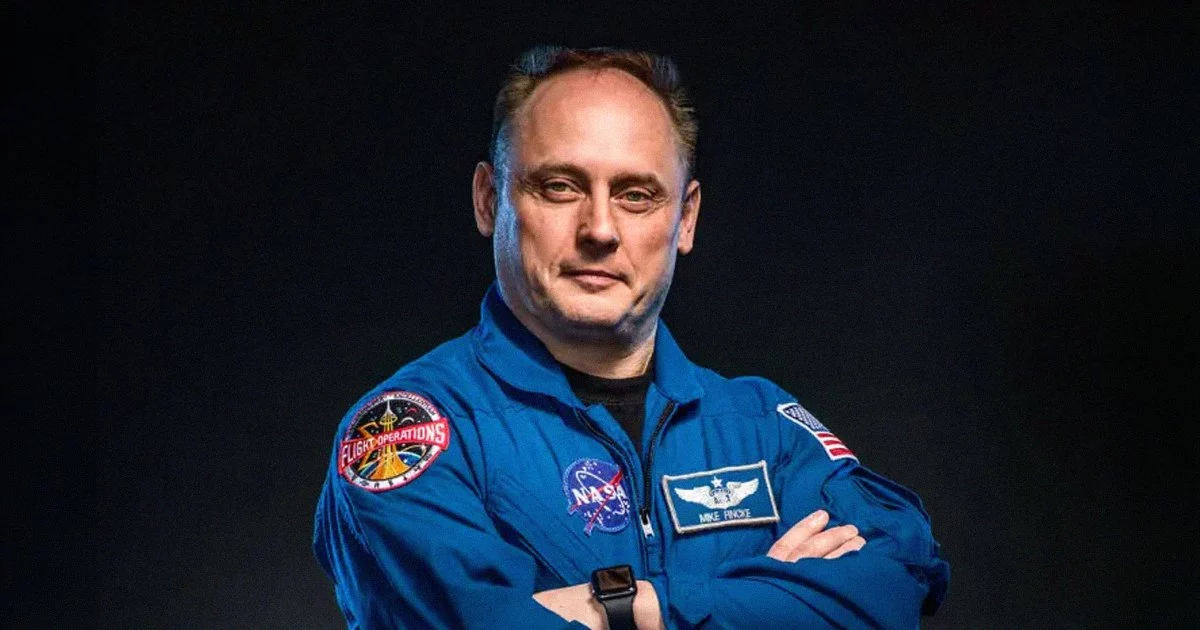
Fincke, a 59-year-old retired Air Force colonel with 549 cumulative days in space, temporarily lost the ability to speak for roughly 20 minutes. Mission controllers canceled a planned spacewalk, and the four-person crew undocked in a SpaceX Crew Dragon capsule, splashing down off the California coast before being transferred quickly to Scripps Memorial Hospital La Jolla. Tests reportedly ruled out choking and cardiac events, yet the underlying cause remains unclear—an ambiguity that is arguably the most consequential detail of all.
For a program that has sustained 25 years of continuous human presence in low Earth orbit, the episode underscores a central truth: the longer humans live and work in space, the more the risk profile shifts from the dramatic and mechanical to the subtle and physiological—especially in the brain.
Commercial Crew under pressure: what the Crew Dragon return signals
Operationally, the evacuation showcased the maturation of NASA’s public-private partnership model. SpaceX’s Crew Dragon—designed primarily for crew rotation—proved capable of supporting an urgent medical contingency with speed and coordination. That matters because resilience is not merely about vehicle reliability; it is about the end-to-end system: spacecraft, communications, recovery teams, medical handoff, and decision authority.
Key operational takeaways likely to shape future mission assurance:
- Contingency readiness is becoming a baseline expectation, not an optional add-on. Even if “medevac” was not a headline requirement in early commercial crew planning, the market and policymakers will increasingly treat it as essential capability.
- Crew-in-the-loop decision frameworks worked, with astronauts, flight surgeons, and mission control coordinating quickly to cancel a spacewalk and prioritize health. The episode validates training and protocols—but also invites scrutiny of how thresholds are defined.
- Schedule fragility is exposed. A single health anomaly can cascade into canceled EVAs, deferred maintenance, and altered mission objectives. That has downstream implications for station utilization, research timelines, and partner commitments.
This is the quiet strategic shift: commercial crew systems are no longer judged only by launch cadence and cost efficiency, but by how well they support mission continuity under medical uncertainty.
The neurological blind spot: why aphasia in orbit changes the health-tech agenda
Fincke’s aphasia places a spotlight on a gap that space medicine has long acknowledged but not fully solved: real-time neurological diagnostics in microgravity. Current ISS biomedical monitoring is strong in areas like cardiovascular metrics, musculoskeletal degradation, and ocular changes. But acute neurological events—transient speech loss, cognitive disruption, subtle cerebrovascular changes—are harder to detect, classify, and triage with today’s on-orbit toolset.
The deeper issue is not simply “what happened,” but how quickly the system can know what is happening. On Earth, aphasia can be associated with transient ischemic attacks, migraines, seizures, medication effects, or other neurological phenomena. In orbit, microgravity introduces additional variables—fluid shifts, intracranial pressure dynamics, sleep disruption, radiation exposure, and stress physiology—complicating differential diagnosis.
This incident is likely to accelerate investment and procurement interest in:
- Non-invasive neuro-monitoring suited to spaceflight, including compact modalities such as functional near-infrared spectroscopy (fNIRS) and advanced EEG approaches.
- AI-assisted anomaly detection that can flag deviations from an astronaut’s baseline cognitive and speech patterns, enabling earlier intervention and clearer go/no-go decisions for high-risk tasks like spacewalks.
- Expanded onboard medical capability, including pharmaceutical storage, administration protocols, and decision support that anticipates neurological contingencies rather than reacting to them.
For NASA and its partners, the practical question becomes: what level of diagnostic certainty is required to continue a mission, postpone critical operations, or initiate a return? In low Earth orbit, evacuation is possible. For the Moon and Mars, it may not be.
Economics, liability, and the Artemis-era reality check
The evacuation will reverberate beyond engineering and medicine into the economics of human spaceflight. As commercial stations, lunar missions, and private astronaut flights expand, insurance markets and contractual frameworks will have to price a more granular understanding of health risk—especially when the triggering event is sudden, ambiguous, and neurologically complex.
Several business and policy implications stand out:
- Insurance and underwriting pressure: underwriters may reassess premiums for crewed missions, with greater emphasis on age profiles, medical screening, and in-flight monitoring capabilities. Expect more demand for specialized astronaut health coverage and clearer indemnification language in contractor agreements.
- Cost-benefit recalibration of “medevac readiness”: the incremental cost of maintaining rapid recovery infrastructure may be justified as a dual-use capability—supporting routine rotations while providing emergency retrieval. That model could influence other high-capex government programs seeking modular, on-demand resilience.
- Deep-space strategy constraints: Artemis and eventual Mars planning cannot rely on terrestrial fallback. The Fincke episode sharpens the requirement for autonomous medical care, robust diagnostics, and mission timelines that include medical fallback windows without collapsing broader exploration objectives.
It also opens a commercial opportunity set. A credible market is emerging for space-qualified telemedicine platforms, wearable neuro-sensing, and AI clinical decision support—with potential terrestrial spillovers in remote neurology, elder care monitoring, and extreme-environment occupational health.
NASA’s first ISS medical evacuation is, at its core, a reminder that the next era of exploration will be defined as much by clinical readiness and neurological insight as by rockets and rendezvous. The organizations that can turn medical ambiguity into actionable, data-driven certainty—on orbit and beyond—will shape not only safer missions, but the economic and strategic viability of sustained human presence off Earth.

 By
By
 By
By

 By
By
 By
By

 By
By
 By
By







