
A boutique Land Rover atelier redefining what “ultra-luxury” means
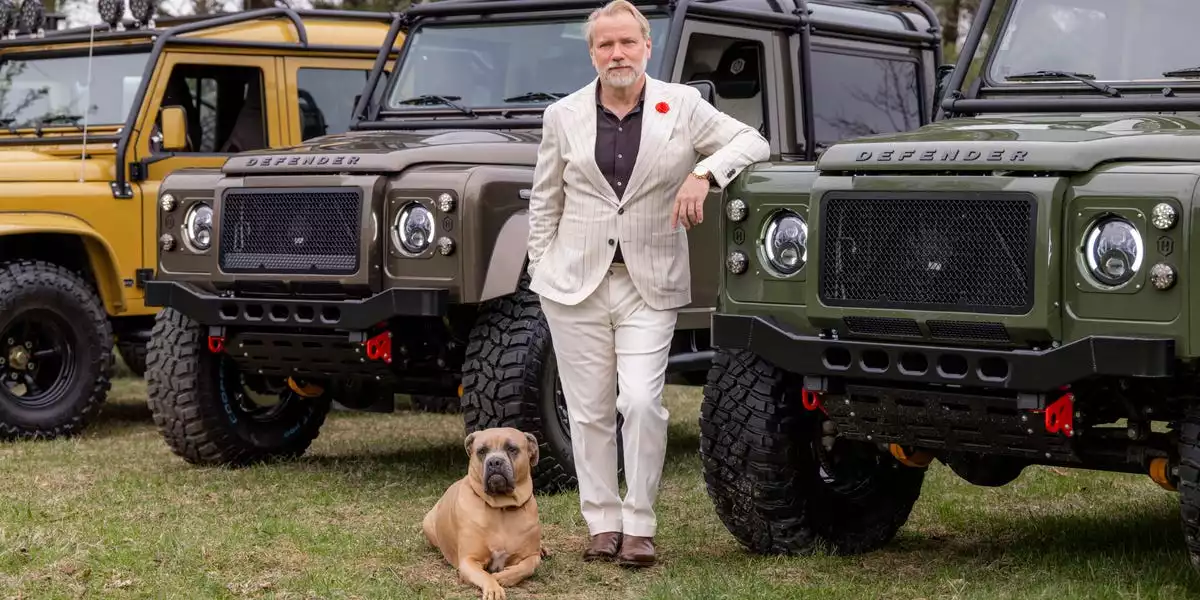
Helderburg, founded by Paul Potratz, sits at a revealing intersection of heritage automotive design, bespoke manufacturing, and the modern experience economy. The company’s core proposition—transforming vintage Land Rover Defenders into deeply personalized overland vehicles—operates less like a traditional car business and more like a high-end atelier. With base pricing around $339,000, build timelines of one to three years, and select commissions reportedly exceeding $600,000, Helderburg’s economics are built on scarcity, craft, and narrative rather than volume.
Potratz’s trajectory—from consulting to full-time builder after a pandemic-era health scare—also mirrors a broader luxury-market shift: affluent buyers increasingly seek products that function as anchors for identity, wellness, and connection, not merely status objects. Helderburg’s stated ethos of “slow living” is not incidental branding; it is the product. The vehicle becomes a “mascot” for a deliberate life, designed to spark conversation and community as much as to traverse trails.
Key signals that make Helderburg strategically notable in the luxury and technology landscape include:
- Scale with intention: roughly 200 builds completed, suggesting a controlled throughput consistent with high-touch customization.
- Extreme personalization: interiors tailored down to seating measurements and control layouts, implying a design process that starts with the owner’s body and habits.
- Hospitality as part of the value chain: clients invited for trail rides and meals, turning delivery into relationship-building and brand reinforcement.
Craft augmented by measurement: where artisanal work meets modern design tooling
Helderburg’s approach highlights a growing manufacturing pattern: hand-built craftsmanship increasingly relies on digital precision. The mention of bespoke seating measurements and ergonomics points to the use—or at least the direction—of anthropometry, 3D scanning, and digital modeling to reduce guesswork and elevate comfort. In ultra-luxury, this is not simply about fit; it is about defensible differentiation. When a product is “one of one,” the process must be repeatable enough to ensure quality while remaining flexible enough to feel personal.
This hybrid model carries broader implications for premium manufacturing sectors:
- Human-centered design as a premium feature: Custom ergonomics can become as important as horsepower, especially for overland vehicles where time-in-seat is central to the experience.
- Digital documentation as future value: A build that is digitally captured—measurements, materials, component specs—can support long-term serviceability and resale confidence.
- Platform optionality: While Helderburg currently focuses on internal-combustion Defenders, the Defender’s modularity raises a strategic question: could the same craftsmanship be applied to electrification or hybrid retrofits without diluting the heritage appeal?
The supply chain dimension is equally consequential. Sourcing vintage donor Defenders requires navigating an often opaque collector market where provenance, condition, and originality can be difficult to verify. That creates both risk and opportunity. A shop that can formalize sourcing—through tighter collector relationships, auction partnerships, or even provenance tracking frameworks—can reduce uncertainty while strengthening trust in a high-ticket purchase.
The economics of scarcity: why high-margin customization is resilient
Helderburg exemplifies a luxury segment where margin is created by labor, time, and story, not by manufacturing scale. This is closer to the business logic of yachts, private aviation interiors, and bespoke watchmaking than to mainstream automotive. In these categories, the buyer’s primary constraints are rarely price sensitivity or immediate delivery; instead, they are authenticity, confidence in the maker, and the emotional payoff of ownership.
Several market dynamics help explain why this model has traction now:
- Post-pandemic reallocation of luxury spending: Many high-net-worth individuals have shifted from conspicuous consumption toward purchases that promise meaning, wellness, and community. An overland vehicle framed as a tool for “slow living” fits that demand profile.
- Relative insulation from cyclical auto markets: Ultra-luxury customization can remain buoyant even when broader auto demand softens, because the client base is less dependent on financing conditions and more motivated by exclusivity.
- Experience bundling as competitive moat: By integrating hospitality—trail rides, shared meals, time at Potratz’s home—Helderburg turns a product transaction into a multi-day experience. That experience is difficult to replicate at scale, and it functions as both customer retention and organic marketing.
This is also a reminder that in modern luxury, brand equity is increasingly built in-person. The workshop and the property become part of the brand’s “interface,” similar to how flagship stores, private showrooms, and invitation-only events operate in fashion and high-end hospitality.
From vehicle builds to a lifestyle platform: strategic paths and technology adjacencies
Helderburg’s most intriguing long-term potential may lie in how easily it can evolve from a builder of vehicles into a lifestyle ecosystem. The company already behaves like a community node—hosting, storytelling, and co-creating with clients—suggesting natural extensions that do not require abandoning its artisanal core.
Forward-looking opportunities, consistent with the brand’s positioning, include:
- Electrification pilots for heritage vehicles: An EV-converted Defender—done with the same obsessive attention to design—could place Helderburg at the convergence of heritage aesthetics and zero-emission mobility, appealing to buyers balancing nostalgia with ESG considerations.
- Digital twin and lifecycle services: A “digital twin” for each build could enable predictive maintenance, remote diagnostics, and periodic refresh programs, creating recurring revenue beyond the initial sale while preserving long-term vehicle integrity.
- Community-driven experiences: Curated overland events, brand retreats, or “slow living” symposiums could monetize Helderburg’s existing community dynamic without turning the business into a mass-market operator.
- Strategic partnerships: Alliances with luxury travel operators, adventure gear brands, or premium interior specialists could expand reach while keeping the brand’s craftsmanship narrative intact.
What makes Helderburg a compelling business and technology story is not only the price tag or the craftsmanship—it’s the way the company treats the vehicle as a relationship artifact. In an era where personalization is often reduced to software settings and configurable options, Helderburg is betting that the next frontier of luxury is slower, more human, and built around the enduring appeal of something made—deliberately—for one person and their life on the road.


 By
By
 By
By

 By
By
 By
By
 By
By